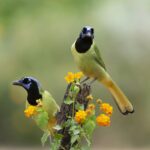
A robin singing before sunrise, a cardinal whistling from a backyard tree, and a tiny wren delivering a surprisingly powerful performance from inside a hedge all belong to one of the most diverse and familiar groups of birds on Earth: the songbirds.
Songbirds inhabit forests, grasslands, deserts, wetlands, mountains, gardens, and cities. Some travel thousands of miles between their breeding and wintering grounds. Others remain in the same neighborhood throughout the year. They include everything from delicate warblers and colorful finches to intelligent crows, secretive thrushes, and even birds that dive beneath rushing mountain streams.
Although their voices often attract the most attention, songbirds are equally fascinating for their nesting habits, migration, social behavior, specialized diets, and ecological importance.
Learning to recognize the major songbird groups can make every walk outdoors more rewarding. With practice, a brief flash of color, a particular movement, or a familiar call may be enough to identify a bird before you even get a clear look.
🐦 What Is a Songbird?
Songbirds are members of the bird suborder Passeri, also known as Oscines. They belong to the larger order Passeriformes, which includes the perching birds.
This distinction matters because the terms “songbird” and “passerine” are often used interchangeably, even though they do not mean exactly the same thing.
All true songbirds are passerines, but not all passerines are true songbirds. The larger passerine group also includes birds known as suboscines, such as many tyrant flycatchers found in North and South America.
Songbirds possess a highly developed vocal organ called the syrinx, which gives many species exceptional control over the sounds they produce. Their songs are frequently learned, rather than being entirely instinctive, and can vary between individuals or geographic regions.
Despite the name, a bird does not have to produce a beautiful melody to qualify as a songbird. Crows, ravens, and jays are all true songbirds, even though their voices may sound more like caws, croaks, or harsh squawks.
Likewise, a bird that sings or produces attractive sounds is not automatically a songbird. Hummingbirds, parrots, and some other birds have impressive vocal abilities but belong to different branches of the bird family tree.
⚡ Songbird Fast Facts
| Fact | Details |
|---|---|
| Scientific group | Suborder Passeri, also called Oscines |
| Larger bird order | Passeriformes |
| Also known as | True songbirds or oscine passerines |
| Number of species | Several thousand worldwide |
| Geographic range | Every continent except Antarctica, with introduced or occasional populations on some remote islands |
| Typical habitats | Forests, woodlands, grasslands, wetlands, deserts, mountains, gardens, and urban areas |
| Common foods | Insects, seeds, fruit, berries, nectar, and other small food items |
| Notable feature | Highly developed syrinx that supports complex vocalizations |
| Familiar examples | Robins, bluebirds, sparrows, finches, wrens, warblers, chickadees, cardinals, jays, and crows |
| Nesting habits | Vary widely; species may nest in trees, shrubs, cavities, grasses, cliffs, or on the ground |
| Migration | Some species migrate long distances; others remain in one region year-round |
| Conservation concerns | Habitat loss, window collisions, outdoor cats, pesticides, climate change, and declining insect populations |
🌎 Where Do Songbirds Live?
Songbirds occupy an extraordinary range of environments. Their success comes partly from the enormous variety of ways they feed, nest, and respond to seasonal changes.
Woodland songbirds may search tree bark for insects, forage among leaves, or build nests high in the canopy. Grassland species often remain close to the ground, disappearing among stems and seed heads. Desert songbirds survive in landscapes where shade, water, and vegetation can be limited.
Mountain songbirds face a different set of challenges, including cold temperatures, changing elevations, short breeding seasons, and sudden storms. The Mountain Chickadee, for example, is closely associated with western conifer forests and survives winter partly by storing food for later use.
Other species have adopted unusual habitats. The American Dipper lives along fast-moving mountain streams and can walk or swim underwater while searching for aquatic insects.
Songbirds also thrive in places shared with people. Gardens, parks, farms, cemeteries, city trees, and suburban neighborhoods can provide valuable habitat when they contain enough food, water, nesting opportunities, and shelter.
🪶 Common Types of Songbirds
Songbirds include many different families, each with its own general appearance, behavior, and habitat preferences.
| Songbird Group | Typical Characteristics | Familiar Examples |
|---|---|---|
| Thrushes | Rounded bodies, relatively large eyes, often musical voices | American Robin, Eastern Bluebird, Mountain Bluebird, Wood Thrush |
| Sparrows | Generally small, often brown or streaked, with seed-eating bills | Song Sparrow, White-throated Sparrow, Chipping Sparrow |
| Finches | Compact bodies and conical bills suited to seeds | American Goldfinch, House Finch, Evening Grosbeak |
| Wrens | Small bodies, active behavior, often cocked tails and loud songs | Carolina Wren, House Wren, Cactus Wren |
| Warblers | Generally small, active, and often associated with insects and vegetation | Yellow Warbler, American Redstart, Red Warbler |
| Chickadees and titmice | Small, energetic woodland birds with bold calls and acrobatic movements | Black-capped Chickadee, Mountain Chickadee, Tufted Titmouse |
| Cardinals and allies | Often colorful birds with strong bills; many eat seeds and insects | Northern Cardinal, Rose-breasted Grosbeak, Indigo Bunting |
| Blackbirds and orioles | Variable in size and color; many have strong voices and social habits | Red-winged Blackbird, Baltimore Oriole, Eastern Meadowlark |
| Jays, crows, and ravens | Intelligent, adaptable songbirds with complex social behavior | Blue Jay, Steller’s Jay, American Crow, Common Raven |
| Nuthatches | Compact birds that climb tree trunks, often headfirst | White-breasted Nuthatch, Red-breasted Nuthatch |
| Larks and pipits | Ground-oriented birds commonly found in open country | Horned Lark, American Pipit |
| Starlings and mynas | Social birds, often talented vocal mimics | European Starling, Bali Myna |
These groups offer a helpful starting point, but individual species do not always fit neatly into expectations. Some finches have unusually large bills, some warblers spend considerable time on the ground, and some true songbirds produce little that most people would describe as singing.
Thrushes and Bluebirds
Thrushes include several of North America’s most familiar birds, such as the American Robin and the three bluebird species.
American Robins have gray-brown upperparts and warm orange-red breasts. They frequently forage on lawns, where they pause, tilt their heads, and pull earthworms from the soil.
Bluebirds usually prefer more open habitats containing scattered trees, fence posts, or other elevated perches.
The Eastern Bluebird combines blue upperparts with a rusty-orange breast, while the male Mountain Bluebird appears almost entirely blue.
Many thrushes are known for rich, musical voices, although the quality and complexity of their songs vary by species.
Sparrows
Sparrows are often dismissed as ordinary little brown birds, but they include a remarkable variety of species, patterns, songs, and ecological preferences.
Some favor marshes, while others live in prairie grasslands, mountain meadows, shrublands, suburban gardens, or woodland edges.
Identification often depends on subtle details such as crown stripes, eye lines, breast streaking, bill color, and tail markings. Habitat and voice can be equally important.
A Song Sparrow, for example, often has a heavily streaked breast with a darker central spot, while a White-throated Sparrow is recognized by its white throat and distinctive facial pattern.
Explore the broader group in our guide to Sparrows: Identification, Species, Behavior & Backyard Guide.
Finches
Finches generally have strong, cone-shaped bills that help them open seeds. Many also eat buds, berries, and insects.
The American Goldfinch is especially recognizable when breeding males appear bright yellow with black wings and a black forehead. House Finches are usually brown and streaked, with males showing variable red, orange, or yellow coloring around the face and breast.
Some finches are much larger and more dramatic. The Evening Grosbeak has a massive pale bill, strong wing markings, and a reputation for appearing unpredictably at northern feeding stations.
Finches can also show striking seasonal variation. Male American Goldfinches lose much of their brilliant yellow coloring outside the breeding season, which can make winter identification more challenging.
Wrens
Wrens are energetic, compact birds that often seem too small to produce such powerful voices.
Many have relatively long, slightly curved bills, short wings, and tails they hold upright or at an angle. They frequently move through thick vegetation, brush piles, shrubs, and other sheltered places.
The Carolina Wren is known for its warm reddish-brown plumage, pale eyebrow, and loud repeated song. House Wrens are smaller and plainer but equally active around gardens and nesting cavities.
The family also includes birds adapted to very different habitats, from wet marshes to desert landscapes.
Learn more in our guide to Wrens: Tiny Birds With Remarkably Big Personalities.
Warblers
Warblers are among the most anticipated birds of spring migration in North America.
Many are small, quick-moving insectivores that spend much of their time searching through leaves and branches. Their colors range from soft olive and gray to vivid yellow, orange, black, and red.
Some species remain high in the forest canopy, while others forage near the ground or along streams.
The Red Warbler is an especially striking example from the mountain forests of Mexico, where its rich red plumage and pale cheek patches make it difficult to mistake for any other species.
Because warblers can move quickly and appear in different seasonal plumages, identifying them often requires a combination of color, behavior, habitat, and song.
Chickadees and Titmice
Chickadees and titmice are small woodland songbirds known for their curiosity, lively behavior, and frequent visits to feeders.
Most have short bills and relatively large heads. Chickadees often show black caps and bibs, while titmice may have pointed crests.
The Mountain Chickadee stands apart from similar species because of its white eyebrow stripe. Other chickadees are identified through differences in range, habitat, voice, and head markings.
These birds frequently join mixed-species flocks during winter. They may travel alongside nuthatches, kinglets, creepers, and other woodland birds as they search for food.
Cardinals, Grosbeaks, and Buntings
Northern Cardinals are among the easiest North American songbirds to recognize. Males are bright red with a black face and pointed crest, while females are softer brown with reddish highlights.
Other members of the broader group include colorful buntings and several grosbeaks.
Rose-breasted Grosbeaks have large bills, and adult males show a striking red patch on the breast. Indigo Buntings can appear deep blue in bright sunlight, although their color may seem much darker under poor lighting.
Many of these birds eat seeds, insects, fruit, or some combination of the three.
Jays, Crows, and Ravens
Jays, crows, and ravens are true songbirds, despite voices that may sound more harsh than musical.
These birds belong to the corvid family, which is known for advanced problem-solving, social behavior, food storage, and impressive memories.
A Blue Jay may imitate a hawk call near a feeder. A crow may recognize a familiar human face. A nutcracker can hide large numbers of seeds and later recover many of them across a broad landscape.
The Mexican Jay often lives in cooperative groups, while Steller’s Jays are familiar birds of western forests with bold blue-and-black plumage.
Their inclusion among songbirds is a useful reminder that scientific classification depends on evolutionary relationships, not whether a bird’s voice sounds pleasant to human ears.
🔍 How to Identify Songbirds
Identifying songbirds becomes easier when you look beyond color alone.
A practical approach is to combine four major clues: overall size and shape, color pattern, behavior, and habitat. Voice, location, and season provide additional information.
Start With Size and Shape
Compare the bird with familiar species.
Is it about the size of a sparrow, a robin, or a crow? Does it have a rounded body or a long, slim profile? Is the tail short, long, forked, or frequently held upright?
Bill shape is especially useful.
A thick, cone-shaped bill often suggests a seed-eating finch, sparrow, or cardinal. A thinner, more pointed bill may suggest an insect-eating warbler, wren, or thrush.
Shape can also help distinguish similarly colored birds. A yellow-and-black American Goldfinch is much smaller and more delicate than a yellow-and-black Evening Grosbeak.
Look for Specific Field Marks
Once you have a general impression, study the details.
Useful field marks include:
- Eye rings or eyebrow stripes.
- Wingbars or contrasting wing patches.
- Breast spots or streaking.
- Facial masks and throat markings.
- Tail color or white outer tail feathers.
- Crests, caps, or crown stripes.
- Bill shape and color.
- Contrasting rump patches.
- Differences between the upperparts and underparts.
Try to notice more than one field mark. A single patch of yellow or red can appear on many unrelated birds.
Watch How the Bird Moves
Behavior often provides an identification clue before plumage does.
A nuthatch walking headfirst down a trunk behaves differently from a chickadee dangling from a twig. A robin running across a lawn moves differently from a sparrow hopping beneath a shrub.
Wrens often disappear into dense vegetation. Bluebirds perch in the open and drop toward the ground to catch insects. Pipits walk briskly across exposed ground while repeatedly moving their tails.
Jays may carry away multiple seeds at once to store elsewhere, while goldfinches often cling to flower heads or seed-bearing plants.
Consider Habitat and Season
A bird’s surroundings help narrow the possibilities.
A small brown bird in a salt marsh is unlikely to be the same species as a similar-looking bird high in a dry mountain meadow. A bright yellow bird seen during spring migration may not remain in the same area throughout the year.
Consider where you are, what vegetation surrounds you, and whether the season matches the bird’s expected range.
Our Bird Identification guide offers a broader introduction to recognizing birds by appearance, behavior, and location.

🎵 Why Do Songbirds Sing?
Birdsong serves several practical purposes.
One of the best-known is territorial communication. A singing bird may announce that a particular nesting or feeding area is occupied, discouraging rivals from entering.
Songs also play an important role in courtship. They can communicate a bird’s identity, location, condition, or readiness to breed.
Some species use songs to strengthen pair bonds or coordinate with a mate. Others sing during social interactions, while traveling, or when responding to nearby birds.
The familiar dawn chorus occurs partly because early morning can be an effective time for communication. Sound conditions, daily activity patterns, territorial competition, and breeding behavior can all contribute.
Different species also sing from different places. Some deliver their songs from prominent branches or fence posts, while others remain concealed inside dense vegetation.
🔊 Songbird Songs vs. Calls
Songs and calls are related, but they often serve different purposes.
Songs are usually more structured and frequently associated with breeding, territory, and courtship.
Calls are often shorter and connected with immediate communication.
A single songbird may produce:
- Contact calls to stay connected with a mate or flock.
- Alarm calls when predators appear.
- Begging calls from hungry young.
- Flight calls during migration.
- Scolding calls when confronting an intruder.
- Calls used to coordinate movement.
- Longer songs associated with breeding or territorial defense.
The distinction is not always absolute. Some calls are complex, and some songs are surprisingly simple.
For a closer look at how these vocalizations developed, read The Evolution of Bird Calls: From Simple Chirps to Complex Melodies.
🎼 How Songbirds Produce Their Voices
Songbirds create vocal sounds using the syrinx, an organ located where the trachea divides into the two main airways leading toward the lungs.
Unlike the human voice box, which sits higher in the throat, the syrinx is positioned deeper within the bird’s respiratory system.
In many songbirds, the two sides of the syrinx can operate with a considerable degree of independence. This allows some species to switch rapidly between sounds or even produce two different tones at once.
The result can be an extraordinary range of whistles, trills, rattles, warbles, buzzes, and imitations.
A Wood Thrush, for example, can produce layered musical phrases. A Northern Cardinal can move through quick changes in pitch. Mockingbirds and thrashers are capable of repeating and rearranging long sequences of sounds.
Not every songbird uses its vocal equipment in the same way, however. Some produce relatively simple whistles, while others rely more heavily on contact calls than elaborate songs.
🐣 How Young Songbirds Learn to Sing
Many young songbirds learn their songs by listening to adults.
The process often begins while a bird is still very young. It hears nearby singers, forms an internal memory of their vocalizations, and eventually begins practicing.
Early attempts may sound soft, disorganized, or incomplete. Over time, the bird refines its performance and develops the patterns typical of its species.
This learning process helps explain why some songbirds have regional dialects. Birds from one area may sing a slightly different version of the same species’ song than birds living farther away.
Song learning also allows certain birds to imitate other sounds.
Northern Mockingbirds may incorporate phrases borrowed from neighboring species. Some jays imitate hawks, while starlings and mynas can copy a wide range of sounds from their surroundings.
The degree of learning and imitation differs substantially between species.
👩🎤 Do Female Songbirds Sing?
Yes. Female songbirds sing in many species, even though bird songs have historically been associated mostly with males.
Female Northern Cardinals are especially familiar examples. They sing recognizable songs and may communicate with their mates while nesting.
Female orioles, blackbirds, and other songbirds also sing, although the timing and purpose vary between species.
Female song is particularly widespread in many tropical regions, where pairs may defend territories throughout the year. In some species, males and females sing coordinated duets.
The assumption that female birds rarely sing arose partly because bird research historically focused heavily on male birds and species from temperate regions.
Listening carefully can reveal that both members of a pair may contribute to the soundtrack of a particular habitat.
🍽️ What Do Songbirds Eat?
Songbird diets are as varied as the birds themselves.
Some species specialize in seeds, while others rely mostly on insects, fruit, nectar, or a mixture of foods that changes throughout the year.
Common songbird foods include:
- Caterpillars and other insect larvae.
- Beetles, ants, flies, and grasshoppers.
- Spiders and other small invertebrates.
- Sunflower seeds and other plant seeds.
- Grass seeds and weed seeds.
- Berries and small fruits.
- Tree buds and young leaves.
- Nuts and acorns.
- Nectar in some species.
- Small aquatic invertebrates in specialized species.
Even birds commonly described as seed eaters often depend on insects during the breeding season. Growing nestlings need protein, and caterpillars can become especially important when adults are feeding young.
Diet also helps explain bill shape. Finches and cardinals have stronger bills for handling seeds, while many insect-eating songbirds have thinner bills suited to picking small prey from leaves or bark.
Some species change their diet with the seasons. Bluebirds may eat large numbers of insects in summer but rely more heavily on berries when colder weather reduces insect activity.
🪺 Songbird Nesting and Breeding
Songbirds use many different nesting strategies.
Some build open cup-shaped nests in trees or shrubs. Others place their nests on the ground, conceal them in grasses, or raise their young inside tree cavities.
Bluebirds, chickadees, wrens, and some other species may use nest boxes when suitable natural cavities are limited.
American Robins often build substantial cup nests from grass and mud. Orioles weave hanging nests from flexible plant fibers. Ground-nesting species depend on camouflage and surrounding vegetation to keep their eggs and young hidden.
Nest construction may involve grasses, twigs, rootlets, moss, leaves, bark strips, feathers, mud, or animal hair.
Most songbird chicks hatch in a relatively helpless condition and require frequent feeding. Parents may make repeated trips throughout the day to deliver insects and other food.
Even after leaving the nest, young birds often continue depending on their parents while they improve their flying and foraging skills.
If you encounter a feathered young bird on the ground, it may be a normal fledgling rather than an abandoned nestling. Adult birds are often nearby, and unnecessary handling can cause more harm than good.
🧭 Songbird Migration
Many songbirds undertake seasonal migrations between breeding and wintering areas.
Warblers, thrushes, orioles, and other species may travel considerable distances across North America and into Mexico, Central America, the Caribbean, or South America.
Some migrate mostly at night, using a combination of environmental cues to orient themselves.
Migration allows birds to take advantage of seasonal food supplies. Northern breeding areas may offer abundant summer insects and long daylight hours, while warmer winter regions provide more reliable food when northern conditions become harsh.
Not all songbirds migrate.
Northern Cardinals often remain in the same general region throughout the year. Chickadees may stay close to their breeding territories, while other species shift only short distances or move to lower elevations during winter.
Some northern finches show a different pattern called irruption. Their movements become unusually extensive in years when natural food supplies are scarce.
The Evening Grosbeak is a well-known example. A species that seems absent from an area for several winters may suddenly arrive in noisy flocks when food conditions change.
🤝 Songbird Social Behavior
Songbirds range from strongly territorial individuals to highly social flocking species.
During the breeding season, many defend nesting territories and limit how close neighboring birds can approach.
Outside the breeding season, those same birds may become much more tolerant.
Winter flocks can include multiple species traveling together. Chickadees, nuthatches, titmice, kinglets, and other woodland birds may benefit from the additional eyes and ears available within a mixed group.
Some songbirds form long-term pair bonds, while others establish new partnerships each breeding season.
Corvids often display particularly complex social behavior. Jays may live in family groups, crows can gather in large communal roosts, and some species cooperate in raising young.
Food caching is another important behavior. Chickadees, jays, and nutcrackers hide seeds or other food for future use.
A bird storing a single sunflower seed beneath a piece of bark may be making a small investment in surviving the next cold spell.
🦋 Why Songbirds Matter
Songbirds contribute to healthy ecosystems in several important ways.
Insect-eating species help regulate populations of caterpillars, beetles, and other invertebrates. Fruit-eating birds distribute seeds across the landscape, helping plants spread into new areas.
Some songbirds contribute to pollination, especially in regions where nectar-feeding songbird families are important parts of the local ecosystem.
Songbirds are also prey for hawks, owls, snakes, and other predators, connecting them to broader food webs.
Their movements link habitats across enormous distances. A migrating warbler may depend on northern breeding forests, several stopover locations, and winter habitat in an entirely different country.
Because songbirds respond to habitat quality, food availability, and changing environmental conditions, population trends can also provide useful signals about the health of natural landscapes.
🏡 How to Attract Songbirds to Your Backyard
The best way to attract a variety of songbirds is to create a small habitat rather than relying on one feeder alone.
Start with native plants appropriate for your region. Trees, shrubs, grasses, and flowering plants can provide insects, seeds, berries, shelter, and nesting opportunities.
A layered garden with vegetation at several heights often supports more bird activity than a yard dominated by short lawn.
Fresh water is another powerful attraction. A shallow bird bath can draw species that rarely visit seed feeders, especially during dry weather.
Feeders can supplement natural food sources when they are maintained responsibly.
Black-oil sunflower seeds attract many finches, chickadees, cardinals, and other birds. Nyjer seed may appeal to smaller finches, while suet can attract insect-eating birds during colder weather.
For help selecting an appropriate setup, see Bird Feeders 101: How to Choose the Perfect Feeder for Your Backyard.
Nest boxes may benefit cavity-nesting species when the entrance size, placement, ventilation, and predator protection match the birds you hope to attract.
Most important, keep feeders and bird baths clean, remove spoiled food, reduce pesticide use, and avoid disturbing active nests.
Our complete Backyard Birding Guide offers additional ideas for creating a safe, welcoming space for birds.

⚠️ Threats Facing Songbirds
Songbirds face a combination of challenges that can affect them during breeding, migration, and winter.
Habitat loss is one of the most significant. Forest clearing, grassland conversion, development, and fragmentation can reduce the places where birds find food and raise young.
Window collisions are another major concern. Birds may mistake reflections of trees or sky for open space, causing them to strike glass.
Outdoor cats can also pose serious risks, especially around feeders, nesting areas, and places where birds forage close to the ground.
Other threats include:
- Pesticides that reduce insect populations or expose birds to harmful chemicals.
- Climate change that shifts habitats or disrupts seasonal timing.
- Light pollution that affects migrating birds.
- Loss of native plants.
- Invasive species that compete for nesting sites or food.
- Disease transmission at crowded or dirty feeders.
- Unsustainable trapping or trade affecting some species.
Certain songbirds face particularly severe pressures. The Bali Myna, for example, has struggled with habitat loss and illegal capture for the wildlife trade.
Conservation solutions often involve protecting habitat, restoring native vegetation, improving migration stopovers, reducing hazards around buildings, and supporting responsible bird-friendly practices at home.
🌿 How to Help Protect Songbirds
You do not need a wildlife refuge or large property to make a meaningful contribution.
Planting native species can support the insects and fruits birds need. Leaving some natural leaf litter or brush can create shelter and foraging opportunities.
Treating problem windows with closely spaced exterior markings can help birds recognize the glass. Reducing unnecessary outdoor lighting during migration can also lower risks.
Keep pet cats indoors or provide supervised outdoor time that prevents hunting.
Clean bird feeders regularly, remove moldy seed, and temporarily stop feeding if local wildlife authorities advise doing so during a disease outbreak.
You can also contribute observations to bird-monitoring and community-science programs. Reports from everyday birdwatchers help researchers understand where birds occur, when they migrate, and how populations change.
The most useful conservation actions are often practical ones repeated consistently: safer windows, healthier habitat, cleaner feeders, and more attention to the birds already sharing your surroundings.
💡 Interesting Facts About Songbirds
Some songbirds can produce two different tones at the same time because the two sides of their syrinx can operate independently.
Crows and ravens are songbirds even though their vocalizations rarely sound conventionally musical.
Female song is widespread and has historically been overlooked in many bird species.
Regional song dialects can develop when young birds learn from local adults.
Some songbirds imitate other birds, animals, or environmental sounds. Mockingbirds, starlings, mynas, and certain jays are particularly well known for mimicry.
The American Dipper is a songbird adapted to swimming and diving in mountain streams.
The Evening Grosbeak belongs to the finch family but does not produce the elaborate territorial songs commonly associated with many other songbirds.
Young songbirds may practice immature versions of their songs before developing the more polished vocalizations heard from adults.
Many familiar backyard birds change their diets throughout the year, eating more insects during the breeding season and relying more heavily on seeds or fruit in colder months.
❓ Frequently Asked Questions
What makes a bird a songbird?
A true songbird belongs to the suborder Passeri, also known as Oscines. Songbirds are part of the larger passerine order and typically possess a highly developed syrinx associated with complex vocal control.
Are all passerines songbirds?
No. All true songbirds are passerines, but not all passerines are songbirds. The passerine order also includes suboscines and other lineages that are not members of Passeri.
Are crows and ravens songbirds?
Yes. Crows, ravens, and jays belong to the songbird group even though their voices may sound harsh or unmusical to people.
Are hummingbirds songbirds?
No. Hummingbirds are not true songbirds, although some hummingbird species produce complex sounds and can learn vocalizations.
Are parrots songbirds?
No. Parrots belong to a separate bird order. Their ability to imitate sounds does not make them members of the songbird group.
What are common backyard songbirds?
Depending on location, common backyard songbirds may include Northern Cardinals, American Robins, House Finches, American Goldfinches, chickadees, wrens, sparrows, bluebirds, nuthatches, and jays.
Do all songbirds sing?
Not all songbirds produce elaborate musical songs. Some communicate mainly through calls, whistles, croaks, or other vocalizations. A bird’s classification as a songbird depends on its evolutionary relationships, not the attractiveness of its voice.
Do female songbirds sing?
Yes. Females sing in many songbird species, including Northern Cardinals, several orioles, blackbirds, and numerous tropical birds.
Why do songbirds sing in the morning?
Morning singing is often associated with territory, courtship, and communication during the breeding season. Early conditions may also support effective sound transmission and increased social activity.
How can I identify a songbird?
Start with the bird’s size and shape, then examine its color pattern, bill, behavior, habitat, and voice. Season and geographic location also help narrow the possibilities.
What do baby songbirds eat?
Many baby songbirds receive large amounts of insects and other protein-rich foods, even when the adults also eat seeds or fruit.
Do songbirds migrate?
Many do, but migration varies by species. Some travel thousands of miles, others move only short distances, and some remain in the same general area throughout the year.
How can I attract more songbirds?
Provide native plants, clean water, safe shelter, appropriate feeders, and suitable nesting opportunities. Reduce pesticide use and make nearby windows safer.
Are songbirds in decline?
Some songbird populations are stable, while others have declined because of habitat loss, window collisions, climate change, pesticides, and other environmental pressures. Conservation status varies substantially between species.
❤️ A World of Birds Worth Listening To
Songbirds are easy to overlook because they are so woven into everyday life. Their voices rise from neighborhood trees, drift across mountain meadows, echo through forests, and filter into ordinary mornings through open windows.
Yet every songbird represents a particular combination of evolutionary history, habitat, behavior, and survival strategy.
A chickadee hiding a seed, a bluebird carrying food to its nest, a wren singing from deep inside a hedge, and a flock of finches passing overhead are all part of the same remarkable story.
The more closely you watch and listen, the more detailed that story becomes.
🔗 Related Articles
- Bird Species Guide
- Bird Identification
- Backyard Birding: How to Attract, Feed & Enjoy Birds at Home
- Sparrows: Identification, Species, Behavior & Backyard Guide
- Wrens: Tiny Birds With Remarkably Big Personalities
- Eastern Bluebird
- Mountain Bluebird
- Mountain Chickadee
- Evening Grosbeak
- American Dipper
- Mexican Jay
- The Evolution of Bird Calls: From Simple Chirps to Complex Melodies
📚 Sources
- Cornell Lab of Ornithology: How and Why Birds Sing
- Cornell Lab of Ornithology: Bird Academy’s A-to-Z Glossary of Bird Terms
- Cornell Lab of Ornithology: Four Keys to Bird Identification
- Cornell Lab of Ornithology: Many Female Birds Sing Beautiful Songs
- Cornell Lab of Ornithology: How to Clean Your Bird Feeder
- Cornell Lab of Ornithology: Why Birds Hit Windows and How You Can Help Prevent It
- Cornell Lab of Ornithology: Seven Simple Actions to Help Birds
- National Audubon Society: How to Make Your Yard Bird-Friendly
- Merlin Bird ID: Identify Bird Songs and Calls With Sound ID
- State of the Birds: 2025 Report