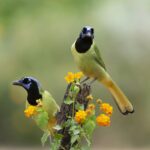
Sparrows are among the most familiar birds in the world. They hop beneath backyard feeders, disappear into roadside grasses, sing from fence posts, and gather in lively flocks around farms, gardens, parks, and city streets. Their brown and gray plumage can make them seem ordinary at first glance, but sparrows are remarkably diverse birds with distinctive songs, markings, behaviors, and habitats.
In North America alone, birdwatchers may encounter Song Sparrows scratching beneath shrubs, White-crowned Sparrows flashing bold black-and-white head stripes, tiny Chipping Sparrows singing from evergreens, or Savannah Sparrows hiding almost invisibly in grasslands.
Yet there is an important detail behind the name sparrow: not all birds called sparrows belong to the same bird family.
The familiar House Sparrow belongs to the Old World sparrow family Passeridae, while most native North American birds called sparrows belong to the New World sparrow family Passerellidae. These birds may look similar because many have evolved strong bills for eating seeds and understated plumage that helps them blend into vegetation, but they represent separate evolutionary groups.
That distinction makes the world of sparrows far more interesting than it first appears.
🐦 What Is a Sparrow?
“Sparrow” is a common name applied to several groups of small songbirds rather than one single worldwide family.
Old World sparrows belong primarily to the family Passeridae. This group includes the House Sparrow (Passer domesticus) and Eurasian Tree Sparrow (Passer montanus), two birds that have been introduced to parts of North America.
New World sparrows belong to the family Passerellidae. This diverse group includes many familiar North American species such as Song Sparrows, Chipping Sparrows, White-crowned Sparrows, Field Sparrows, Fox Sparrows, Savannah Sparrows, and White-throated Sparrows.
The family Passerellidae also includes several birds whose common names do not contain the word “sparrow,” including juncos and towhees.
Despite their differences, many sparrows share a recognizable general appearance. They tend to be relatively small songbirds with compact bodies, strong legs, and short, sturdy bills suited to cracking seeds. Brown, gray, black, rusty red, and cream dominate their plumage, often arranged in intricate streaks and head patterns.
Those subtle markings are exactly what make identifying sparrows such an enjoyable challenge.
🔎 How to Identify Sparrows
Sparrows have a reputation among beginning birdwatchers for being difficult to identify. From a distance, many appear to be simply “little brown birds.”
A closer look reveals otherwise.
Some of the most useful identification clues include:
- Head pattern: Look for crowns, stripes, eyebrows, cheek patches, and eye lines.
- Breast markings: Some sparrows are heavily streaked while others have clear, unstreaked breasts.
- Bill color: Sparrow bills may be pink, yellow, gray, black, or combinations of colors.
- Tail shape and length: Some species have long rounded tails, while others appear compact and short-tailed.
- Size and posture: A Fox Sparrow appears much larger and bulkier than a Chipping Sparrow.
- Habitat: A sparrow hiding in a salt marsh is likely to be different from one feeding beneath a suburban evergreen.
- Behavior: Watch whether the bird scratches through leaves, runs through grass, perches prominently, or remains hidden.
- Song: Vocalizations are often among the best clues for separating similar species.
Learning sparrows becomes much easier when you combine several clues rather than trying to identify a bird from plumage alone.
🎵 Common Sparrows of North America
North America supports an impressive variety of native sparrows. Several are especially familiar to backyard birders and casual observers.
Song Sparrow
The Song Sparrow (Melospiza melodia) is one of the continent’s most recognizable native sparrows.
Its plumage varies geographically, but many Song Sparrows have a gray-and-brown face, heavily streaked chest, and a noticeable dark spot near the center of the breast.
True to their name, males are enthusiastic singers. Their songs generally consist of several clear introductory notes followed by a more complicated series of trills and buzzes.
Song Sparrows inhabit brushy fields, wetlands, gardens, roadsides, stream edges, and suburban landscapes. They frequently forage on or near the ground and often disappear into dense vegetation when disturbed.
White-crowned Sparrow
Few sparrows have a head pattern as striking as the White-crowned Sparrow (Zonotrichia leucophrys).
Adults have bold black-and-white stripes running across the crown, giving the bird an almost helmeted appearance. Immature birds have similar patterns in brown and tan.
White-crowned Sparrows breed primarily across northern and western portions of North America. Many populations migrate considerable distances to winter throughout much of the United States and Mexico.
Their clear, whistled songs are another helpful identification clue.
White-throated Sparrow
The White-throated Sparrow (Zonotrichia albicollis) is a familiar winter bird across much of eastern North America.
Look for its bright white throat, striped crown, and small yellow markings between the eye and bill. Interestingly, White-throated Sparrows occur in both white-striped and tan-striped color forms.
They spend considerable time close to the ground, scratching through fallen leaves beneath shrubs and woodland edges in search of seeds and other foods.
Chipping Sparrow
The tiny Chipping Sparrow (Spizella passerina) is a common bird of open woods, parks, gardens, and suburban landscapes.
Breeding adults have a crisp rusty-red crown, pale eyebrow, dark line through the eye, and relatively plain grayish breast.
Their song is a rapid, mechanical-sounding trill that can carry surprisingly far.
Chipping Sparrows frequently build nests in trees and shrubs, particularly evergreens.
Savannah Sparrow
The Savannah Sparrow (Passerculus sandwichensis) is one of North America’s widespread grassland sparrows.
Its streaky appearance can make identification difficult, but many Savannah Sparrows display a small yellow patch in front of the eye. Their relatively short tails and compact appearance provide additional clues.
Look for them in grasslands, agricultural fields, coastal habitats, and open meadows.
Fox Sparrow
Fox Sparrows (Passerella iliaca) are among the larger sparrows birdwatchers encounter in North America.
Their appearance varies considerably across their wide geographic range. Some populations are beautifully rusty red, while others are gray or dark brown.
Fox Sparrows are famous for their vigorous feeding technique. They often kick both feet backward through leaves and soil, sending debris flying as they uncover seeds and invertebrates.
American Tree Sparrow
Despite its name, the American Tree Sparrow (Spizelloides arborea) spends a great deal of its time on the ground.
These attractive sparrows breed in northern Canada and Alaska, often around or beyond the northern treeline, before moving south for winter.
A rusty cap, rusty eye line, two-toned bill, and small dark spot on the breast can help identify them.
The name resulted from early European settlers noticing a resemblance to the Eurasian Tree Sparrow rather than from the American species having a particularly strong association with trees.

🏘️ What About the House Sparrow?
One of the most familiar “sparrows” in North America is not actually a native New World sparrow.
The House Sparrow (Passer domesticus) belongs to the Old World sparrow family Passeridae.
Native to Eurasia and parts of North Africa, House Sparrows have been introduced to numerous regions of the world. They were deliberately released in North America during the nineteenth century and subsequently spread across most of the continent.
Male House Sparrows are relatively easy to recognize. They have gray crowns, chestnut-colored necks, pale cheeks, and black throat patches. Females and immature birds are more subdued, with brown backs and buffy-gray underparts.
House Sparrows have become extraordinarily successful around people. They nest beneath roofs, inside building openings, in signs, streetlights, barns, and birdhouses.
Their success creates problems for some native cavity-nesting birds. House Sparrows aggressively defend nest sites and may compete with species such as bluebirds and Tree Swallows for available nesting cavities.
For this reason, birders should distinguish House Sparrows from native North American sparrows when managing nest boxes.
🌎 Sparrow Habitats
One reason sparrows are so successful is the extraordinary range of habitats occupied by different species.
Depending on where you live, sparrows may be found in:
- Grasslands and prairies
- Deserts and scrublands
- Forest edges
- Shrubby fields
- Boreal forests
- Arctic tundra
- Agricultural land
- Marshes and wetlands
- Coastal salt marshes
- Parks and gardens
- Suburban neighborhoods
- Cities and industrial areas
Some sparrows are habitat generalists, while others depend on surprisingly specific environments.
Swamp Sparrows, for example, are strongly associated with freshwater wetlands during the breeding season. Savannah Sparrows thrive in open grassy habitats, while Black-throated Sparrows are characteristic birds of the dry American Southwest.
Recognizing the surrounding habitat can dramatically narrow the possibilities when identifying an unfamiliar sparrow.
🌾 What Do Sparrows Eat?
Seeds form an important part of the diet of many sparrows.
Their compact, conical bills are well suited to manipulating and cracking small seeds from grasses, weeds, and other plants.
Natural foods commonly include:
- Grass seeds
- Weed seeds
- Grain
- Berries and small fruits
- Insects
- Spiders
- Beetles
- Caterpillars
- Other small invertebrates
Diet often changes with the seasons.
During fall and winter, seeds may dominate the diet of many species. During spring and summer, insects become especially valuable because growing chicks require protein-rich food.
This is one reason leaving some native grasses, seed heads, fallen leaves, and insect-supporting plants in a backyard can benefit sparrows more than maintaining an entirely manicured landscape.
🍂 How Sparrows Find Food
Spend a few minutes watching sparrows and you will quickly discover that different species have distinctive foraging styles.
Many forage primarily on the ground.
White-throated Sparrows, Fox Sparrows, towhees, and other members of the New World sparrow family frequently scratch through leaf litter to expose hidden food. Others pick seeds directly from grasses or investigate low shrubs.
During winter, flocks may gather wherever seeds are abundant.
Sparrows also commonly appear beneath bird feeders, where spilled seed creates an easy feeding area. Some species readily land directly on platform feeders or large hopper feeders, while others prefer collecting whatever falls to the ground.
🪺 Sparrow Nests and Nesting Behavior
There is no single type of “sparrow nest.”
Nesting strategies vary considerably among species.
Many native New World sparrows build cup-shaped nests on or close to the ground. Vegetation provides camouflage and protection.
Song Sparrows may hide their nests among grasses, weeds, shrubs, or low vegetation. Savannah Sparrows conceal nests within dense grass. White-throated Sparrows commonly nest on or just above the ground beneath protective vegetation.
Chipping Sparrows take a different approach, often placing nests several feet above the ground in trees or shrubs.
House Sparrows are cavity nesters and readily use buildings, nest boxes, and other enclosed spaces.
Nest materials can include grass, stems, bark, rootlets, leaves, hair, feathers, and other available fibers.
Because many native sparrows nest close to the ground, seemingly harmless yard activities such as mowing tall vegetation or clearing brush during nesting season can accidentally destroy nests.
🎶 Sparrow Songs and Calls
Sparrows may look understated, but many possess remarkably beautiful voices.
Songs are particularly important during the breeding season, when males use vocalizations to establish territories and attract mates.
The Song Sparrow is famous for its varied musical phrases. White-throated Sparrows produce clear whistled songs, while Chipping Sparrows give a long, rapid trill. Grasshopper Sparrows produce thin, insect-like songs that can easily disappear into the sounds of a summer prairie.
Learning these songs can transform sparrow identification.
A bird hidden deep in grass or shrubs may be nearly impossible to see clearly, yet its voice can reveal its identity immediately.
Birders who initially find sparrows frustrating often discover that learning a handful of common songs makes the entire group much easier to recognize.
✈️ Do Sparrows Migrate?
Some do, and some do not.
Migration patterns vary enormously among sparrow species and even among populations of the same species.
White-crowned Sparrows breeding in Alaska and Arctic Canada may travel thousands of miles between their breeding and wintering grounds. White-throated Sparrows are familiar winter visitors across much of the eastern and southern United States after breeding primarily farther north.
Other sparrows migrate only short distances, while some populations remain in the same general region throughout the year.
House Sparrows are largely permanent residents wherever they become established.
Because migration changes which sparrows are present throughout the year, the same backyard can host completely different species in January and June.
🏡 How to Attract Native Sparrows to Your Backyard
Sparrows often respond well to yards that provide a mixture of food, water, dense cover, and natural vegetation.
Offer the Right Seeds
Many sparrows readily eat seeds from backyard feeding stations.
Millet is particularly attractive to many ground-feeding species. Sunflower seeds and other quality birdseed can also bring sparrows into a yard.
A platform or tray feeder is often a good choice because it accommodates birds that prefer feeding on broad, open surfaces. Some sparrows also use hopper and tube feeders.
You can learn more about choosing feeding stations in Bird Feeders 101: How to Choose the Perfect Feeder for Your Backyard.
Let Some Seed Fall
A perfectly clean feeding area is not necessarily the most attractive place for sparrows.
Many native species prefer feeding on the ground beneath shrubs or feeders. Seed scattered beneath a feeding station can be particularly attractive during winter.
Keep the area reasonably clean, however, and remove moldy food and excessive accumulations of seed hulls.
Plant Native Grasses and Flowers
Native grasses and seed-producing plants create natural feeding opportunities.
Instead of cutting every plant down immediately at the end of summer, consider leaving some seed heads standing through fall and winter. Sparrows, finches, and other seed-eating birds may take advantage of them.
Native plants also support insects that become valuable food for nestlings during the breeding season.
Provide Dense Cover
Sparrows often appreciate shrubs, brush piles, hedges, grasses, and low vegetation.
Dense cover gives small birds places to escape hawks and other predators while also providing natural foraging and nesting habitat.
A landscape containing several layers of vegetation is generally much more valuable to birds than a yard consisting primarily of closely cut lawn.
Add Fresh Water
A shallow birdbath provides drinking and bathing opportunities for sparrows and many other backyard birds.
Keep the water clean and replace it frequently, particularly during warm weather.

⚠️ House Sparrows and Backyard Nest Boxes
Attracting native sparrows is very different from encouraging House Sparrows.
Because House Sparrows are introduced in North America and may aggressively compete with native cavity-nesting birds, they can cause problems around birdhouses intended for bluebirds and other native species.
If you maintain nest boxes, learn to identify House Sparrows and their nests before nesting season begins.
Never assume every small brown bird using a birdhouse is simply a harmless native sparrow.
Native sparrows such as Song Sparrows, White-throated Sparrows, Savannah Sparrows, and Field Sparrows generally do not compete for bluebird boxes because their natural nesting strategies are very different.
🌿 Why Sparrows Matter
Small birds can play surprisingly large ecological roles.
Sparrows consume enormous quantities of seeds and invertebrates. They are also important prey for hawks, owls, snakes, mammals, and other predators.
Their abundance and diversity connect many levels of the food web.
Native sparrows can also reveal much about the health of their habitats. Grassland specialists depend on functioning prairie and meadow ecosystems. Marsh sparrows reflect the condition of wetlands and coastal habitats. Forest-edge species rely on healthy combinations of shrubs, trees, and ground vegetation.
Protecting sparrows therefore often means protecting entire communities of plants and animals that share their habitats.
🌱 Sparrow Conservation
There is no single conservation story for sparrows.
Some species remain extremely abundant, while others have experienced significant declines as their habitats disappear or change.
Grassland loss is particularly important for species that depend on native prairies and other open landscapes. Wetland drainage threatens marsh specialists, while development can eliminate the dense vegetation required by other sparrows.
Migratory species also face hazards during their journeys, including collisions with buildings and other structures.
Homeowners can help birds by planting native vegetation, reducing unnecessary pesticide use, keeping cats safely contained, making windows more visible to birds, maintaining clean feeding stations, and preserving patches of dense vegetation wherever possible.
Even small areas of good habitat can become valuable resting and feeding places.
💡 Fascinating Sparrow Facts
- The name “sparrow” describes birds from more than one evolutionary family.
- House Sparrows are Old World sparrows, while most native North American sparrows belong to the New World family Passerellidae.
- Juncos and towhees are members of the same family as New World sparrows.
- The American Tree Sparrow usually nests on or close to the ground rather than in trees.
- House Sparrows were introduced to North America during the nineteenth century.
- Eurasian Tree Sparrows were also introduced to the United States, but their North American distribution remains much more restricted than that of House Sparrows.
- Some sparrows migrate thousands of miles between breeding and wintering areas.
- Sparrow songs are often more useful for identification than plumage.
- Fox Sparrows uncover food by enthusiastically kicking through leaf litter.
- Many species that rely heavily on seeds during winter feed their young large quantities of insects during the breeding season.
❓ Frequently Asked Questions About Sparrows
Are all sparrows related?
No. Birds called sparrows belong to several groups. Old World sparrows such as the House Sparrow belong to Passeridae, while most native North American sparrows belong to Passerellidae.
Are House Sparrows native to North America?
No. House Sparrows originated in the Old World and were deliberately introduced to North America during the nineteenth century.
What is the most common native sparrow?
The answer varies geographically, but Song Sparrows are among the most widespread and familiar native sparrows across North America. Chipping Sparrows, Savannah Sparrows, White-crowned Sparrows, and White-throated Sparrows can also be abundant within their respective ranges and seasons.
Why are sparrows so difficult to identify?
Many species share brown, gray, and streaked plumage that provides excellent camouflage. Looking at head patterns, breast streaking, bill color, size, habitat, behavior, and song makes identification much easier.
What seeds do sparrows like?
Many sparrows eat millet, sunflower seed, cracked grains, and naturally occurring grass and weed seeds. Feeding preferences differ among species.
Do sparrows eat insects?
Yes. Although many sparrows eat large quantities of seeds, insects and other invertebrates can become particularly important during the breeding season.
Where do sparrows build their nests?
It depends on the species. Many native New World sparrows nest on or near the ground, while others nest in shrubs or trees. House Sparrows generally use cavities in buildings, nest boxes, and similar enclosed spaces.
Do sparrows migrate?
Many native sparrows migrate, although the distance varies dramatically by species and population. Some travel thousands of miles, others make shorter seasonal movements, and some remain in the same region year-round.
Are sparrows good birds to have in the yard?
Native sparrows are valuable members of backyard ecosystems and can be enjoyable birds to attract. House Sparrows require different consideration in North America because they are introduced and can compete aggressively with native cavity-nesting birds.
❤️ Small Birds Worth a Closer Look
Sparrows are easy to overlook precisely because many of them are so common and so well camouflaged.
But spend a little time watching them and an entirely different world appears.
A collection of brown birds beneath a hedge becomes a mixture of species with different songs, migrations, feeding strategies, habitats, and personalities. The streaky bird beside a marsh may be a Song Sparrow. A winter visitor scratching beneath the leaves could be a White-throated Sparrow. That tiny bird singing from the top of an evergreen may be a Chipping Sparrow.
Learning sparrows teaches one of birdwatching’s most rewarding lessons: sometimes the birds that initially seem the least spectacular become the most fascinating once you begin paying attention.
🔗 Related Articles
- Wrens
- Mountain Bluebird: A Bright Symbol of Open Skies in the West
- Hummingbirds: Species, Identification, Feeding & Backyard Guide
- Bird Feeders 101: How to Choose the Perfect Feeder for Your Backyard
- The Best Places to Hang Your Bird Feeder for Maximum Bird Watching
📚 Sources
- Cornell Lab of Ornithology — New World Sparrows, Passerellidae
- Cornell Lab of Ornithology — House Sparrow
- Cornell Lab of Ornithology — House Sparrow Life History
- Cornell Lab of Ornithology — Song Sparrow
- Cornell Lab of Ornithology — Song Sparrow Life History
- Cornell Lab of Ornithology — White-throated Sparrow
- Cornell Lab of Ornithology — White-crowned Sparrow
- Cornell Lab of Ornithology — American Tree Sparrow
- Cornell Lab of Ornithology — Eurasian Tree Sparrow
- Cornell Lab of Ornithology — Savannah Sparrow Life History
- Cornell Lab of Ornithology — Swamp Sparrow Life History
- National Audubon Society — Bird Feeding and Care