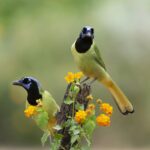
When we think of pollinators, bees usually come to mind first. A honeybee dusted with golden pollen is practically an emblem of spring. Yet bees are only part of a much larger pollination network, and some of its most spectacular participants have feathers.
Birds pollinate flowers throughout many parts of the world. In the Americas, hummingbirds are the best-known examples, hovering beside tubular blossoms and drinking nectar with their long bills. Elsewhere, sunbirds, honeyeaters, white-eyes, lorikeets, and other nectar-feeding birds can perform similar work.
The birds are not deliberately helping the plants. They are looking for food. But as a bird pushes its bill or head into a flower for nectar, pollen may cling to its feathers or bill. When the bird flies to another flower, some of that pollen can be transferred to the flower’s reproductive structures.
Bees accomplish the same basic task in a different way. Together, birds, bees, and many other pollinating animals help flowering plants produce seeds, fruits, and ultimately another generation.
🌸 What Is Pollination?
Pollination is the transfer of pollen from the male reproductive structures of a flower to the female reproductive structures of a compatible flower.
Pollen is produced by the anthers. For successful pollination, pollen must reach a receptive stigma. Once the appropriate pollen arrives, fertilization can follow, eventually allowing the plant to form seeds and, in many species, fruit.
Some plants use wind or water to move their pollen. Others depend heavily on animals.
Animal pollinators include:
- Bees
- Birds
- Butterflies
- Moths
- Beetles
- Flies
- Wasps
- Bats
- Other nectar- or flower-visiting animals
The animal is usually attracted to the flower because there is something worth eating, most commonly nectar or pollen. The plant benefits because its pollen receives transportation.
It is one of nature’s most successful partnerships.
🐦 What Is Bird Pollination?
Pollination carried out by birds is known as ornithophily.
The basic process is remarkably simple.
A bird approaches a flower in search of nectar. To reach the nectar, it places its bill deep inside the flower. The flower’s anthers may brush against the bird’s forehead, throat, bill, or other feathers, leaving pollen behind.
The bird then flies to another flower.
If the pollen it carries touches the stigma of a compatible flower, pollination can occur.
For the bird, the reward is an energy-rich meal. For the plant, the bird has essentially become a flying pollen-delivery service.
🌺 Why Do Birds Visit Flowers?
Nectar is the main attraction.
Flower nectar is rich in sugars, making it an especially valuable energy source for birds with demanding lifestyles. Hummingbirds are a perfect example. Hovering flight requires enormous amounts of energy, so hummingbirds repeatedly visit flowers and other nectar sources throughout the day.
That constant movement between blossoms makes them excellent candidates for transporting pollen.
Birds may also eat insects found around flowers. Hummingbirds, despite their famous association with nectar, require insects and other tiny arthropods as sources of protein and other nutrients.
A flowering garden can therefore offer birds much more than colorful scenery. It can function as a miniature feeding habitat.
🌷 What Do Bird-Pollinated Flowers Look Like?
Plants that depend heavily on birds often display a collection of characteristics that make their flowers particularly attractive or accessible to avian visitors.
There are plenty of exceptions, but classic bird-pollinated flowers are often:
- Bright red, orange, pink, or similarly conspicuous colors
- Tubular or trumpet-shaped
- Rich in nectar
- Positioned so a bird brushes against the anthers and stigma while feeding
- Relatively sturdy
- Less strongly scented than many insect-pollinated flowers
The familiar red tubular flower visited by a hovering hummingbird is not an accident of nature. Flower shape, nectar placement, bird anatomy, and feeding behavior can work together remarkably well.
Many hummingbird flowers place their nectar deep within a tube. When the bird reaches inside, the flower can deposit pollen in a predictable place on the bird’s head or bill.
The next flower may then collect that pollen in almost exactly the same place.
🐝 How Do Bees Pollinate Flowers?
Bees approach the process differently.
Many bees actively collect pollen as food, especially to provision their developing young. Their often-hairy bodies are extremely effective at picking up pollen grains as they move around a flower.
A bee visiting one flower may emerge covered in pollen. As it visits more flowers of the same species, some of those grains are transferred to receptive stigmas.
Certain bees can perform an even more specialized behavior known as buzz pollination. The bee grips a flower and vibrates its flight muscles, shaking pollen loose from the anthers. Plants such as tomatoes and blueberries are well-known examples of flowers that can benefit from this kind of pollination.
Birds generally are not gathering pollen intentionally. Their role is more incidental: they pick it up while pursuing nectar.
Both strategies can be remarkably effective.
🐦🐝 Birds vs. Bees: Which Are Better Pollinators?
There is no single winner.
Bees pollinate an enormous diversity of flowering plants and are especially important in many agricultural and natural ecosystems. Their small size, hairy bodies, pollen-collecting behavior, and tendency to visit many flowers make them highly effective.
Birds have different advantages.
A hummingbird can travel farther between individual plants than many small insects, potentially moving pollen across greater distances. Birds also remain active under some environmental conditions in which insect activity may be lower.
Their larger bodies can carry substantial quantities of pollen, and the close fit between certain birds and flowers can make pollen transfer highly efficient.
The important point is that ecosystems rarely depend on just one type of pollinator.
Birds and bees occupy different ecological niches, and both can contribute to the reproductive success and genetic diversity of flowering plants.
🌎 Which Birds Pollinate Flowers?
Hummingbirds are the most familiar bird pollinators in North America, but they are far from the only birds that visit flowers.
Hummingbirds
Hummingbirds are found naturally only in the Americas, and their relationship with flowers is extraordinary.
Their ability to hover allows them to feed without landing, while their long bills and tongues can reach nectar hidden deep inside narrow flowers.
Many hummingbird-pollinated plants have evolved red or orange tubular flowers containing generous supplies of nectar.
Sunbirds
Sunbirds occur primarily across Africa and Asia. Their colorful plumage and nectar-feeding habits sometimes make them look superficially similar to hummingbirds, but the two groups are not close relatives.
Most sunbirds perch while feeding rather than hovering continuously. Their bills can nevertheless reach deeply into flowers, allowing them to transport pollen efficiently.
Honeyeaters
Honeyeaters are especially important flower visitors in Australia, New Guinea, and surrounding regions.
Many species possess specialized tongues that help them consume nectar. As they move through flowering trees and shrubs, pollen can accumulate on their bills and facial feathers.
Honeycreepers
Several nectar-feeding birds traditionally referred to as honeycreepers have important relationships with flowering plants on tropical islands and in tropical forests.
The Hawaiian honeycreepers provide particularly fascinating examples of birds evolving alongside distinctive island vegetation, although many members of this remarkable bird radiation have suffered severe population declines.
Parrots and Lorikeets
Some parrots also feed extensively on flowers and nectar.
Lorikeets are especially well adapted for nectar feeding, using specialized brush-tipped tongues to gather nectar and pollen. Their feeding movements can transfer pollen between flowers.
White-Eyes and Other Flower Visitors
White-eyes and numerous other small birds may also visit flowers regularly. Even birds that are not dedicated nectar specialists can occasionally become useful pollinators if their feeding behavior places them in contact with pollen.
Bird pollination is therefore considerably more diverse than the familiar backyard image of a hummingbird at a trumpet flower.
❤️ Hummingbirds and Flowers: An Extraordinary Partnership
Few pollination relationships are as visually striking as the one between hummingbirds and flowers.
A hummingbird may hover almost motionless while inserting its bill into a blossom. Hidden from view, its forehead or bill is brushing against pollen-covered anthers. Seconds later, it may be visiting another flower several yards away.
Some plants and hummingbirds have influenced each other’s evolution over enormous spans of time.
A flower with a longer or more curved tube may favor visits from birds capable of reaching its nectar. Likewise, birds with particular bill shapes may gain better access to certain flowers.
Over generations, these pressures can produce remarkably close matches between a flower and its pollinator.
Heliconias of the tropics provide some of the most famous examples, with flower shapes that correspond closely to the bills and feeding behavior of particular hummingbirds.
🌼 Flowers Commonly Visited by Hummingbirds
Gardeners hoping to watch pollination in action have plenty of options.
Depending on the region, hummingbirds frequently visit plants such as:
- Cardinal flower
- Bee balm
- Trumpet honeysuckle
- Columbine
- Salvia
- Penstemon
- Coral bells
- Trumpet vine
- Firecracker plant
- Fuchsia
Native plants are usually the best starting point because they have evolved as part of the local ecological community and can provide resources for birds, insects, and other wildlife.
A garden containing several species with overlapping flowering seasons can offer nectar over a much longer period than a single mass planting.
🐝 Can Birds and Bees Pollinate the Same Flowers?
Absolutely.
Plants do not always rely exclusively on one pollinator.
A flower may be visited by hummingbirds during one part of the day and bumblebees later. Butterflies, moths, or other insects may join them. Different pollinators can vary in how much pollen they transport, where pollen lands on their bodies, and how far they travel between plants.
Jewelweed provides an interesting example. Both hummingbirds and bumblebees can visit its flowers, although research described by the Smithsonian has found hummingbirds can be particularly effective pollinators under certain circumstances.
This overlap is one reason a diverse pollinator community can be so valuable.
Instead of viewing birds and bees as competitors, it is often more accurate to see them as different participants in the same ecological network.
🌿 Why Bird Pollination Matters
Pollination is ultimately about much more than flowers.
Once a flower is successfully fertilized, it may develop seeds or fruit. Those seeds and fruits can then become food for birds, mammals, insects, and countless other organisms.
Seeds produce new plants.
Plants create habitat.
Flowers feed pollinators.
Fruits feed wildlife.
The cycle continues.
Pollinators therefore help support entire food webs. The effect of a hummingbird carrying a dusting of pollen between two flowers may seem tiny, but multiplied across millions of flowers and generations of plants, these interactions help shape landscapes.
Bird pollination is particularly important in ecosystems where specialized relationships have developed between nectar-feeding birds and native plants.
🌱 How to Create a Garden for Birds and Bees
A wildlife-friendly garden does not have to choose between hummingbirds and bees. In fact, one of the best approaches is to provide flowers for many different pollinators.
Plant Native Flowers
Native plants are among the most useful additions to a wildlife garden because they support relationships that developed within the local ecosystem.
Choose species appropriate for your region rather than simply buying plants marketed as “pollinator friendly.”
Provide Different Flower Shapes
Tubular flowers can be particularly attractive to hummingbirds, while open or clustered flowers provide easy access for many bees and butterflies.
A mixture provides more opportunities for different visitors.
Keep Something Blooming
Try to create a progression of flowers from spring through fall.
Early flowers provide resources when pollinators are becoming active or returning from migration, summer blooms support peak activity, and late flowers can provide important fuel before winter or migration.
Reduce Pesticide Use
Insecticides can affect beneficial insects as well as unwanted pests.
Remember that insects are also an important part of many birds’ diets. A garden rich in insects can help support nesting birds that need protein-rich food for their chicks.
Add Water and Shelter
Flowers are only one component of good habitat.
Birds also benefit from fresh water, shrubs, trees, nesting areas, and places where they can escape predators and harsh weather.
Our Backyard Birding guide explores how these different habitat features can work together.
🏡 Are Hummingbird Feeders a Substitute for Flowers?
Hummingbird feeders can provide a useful supplemental source of energy, but they are not a complete replacement for natural habitat.
A garden filled with appropriate flowering plants offers birds nectar while simultaneously supporting insects and the broader food web. Plants also provide shelter, nesting materials, perches, and other ecological benefits that a feeder cannot reproduce.
The best hummingbird-friendly yards combine natural food sources with responsibly maintained feeders.
For more on feeding hummingbirds safely, see our complete Hummingbirds: Species, Identification, Feeding & Backyard Guide.
🔍 How Can You Tell When a Bird Is Pollinating a Flower?
You may actually be able to see the evidence.
Watch a hummingbird feeding closely through binoculars or a camera lens. After visiting several flowers, the bird may have visible patches of yellow, orange, white, or cream-colored pollen on its forehead, crown, throat, or bill.
The exact location depends on the flower’s structure.
That pollen can reveal just how precisely flowers use their visitors. A blossom whose anthers touch the top of a hummingbird’s head may place pollen in a completely different location from one that brushes against the lower bill.
The bird may unknowingly carry several tiny botanical packages at once.
🌺 Pollination Is a Partnership Hidden in Plain Sight
A hummingbird hovering at a flower is beautiful enough on its own. But understanding what is happening makes the moment even more extraordinary.
The bird is feeding.
The flower is reproducing.
Pollen is moving across the landscape.
Bees may be performing the same task only a few feet away, joined by butterflies, beetles, flies, moths, and other pollinators.
What looks like a quiet patch of flowers is actually a busy transportation network connecting plants and animals.
Birds and bees are not simply visitors to a garden. They are participants in one of the fundamental processes that keeps flowering ecosystems alive.
❓ Frequently Asked Questions
Do birds really pollinate flowers?
Yes. Numerous bird species carry pollen between flowers while feeding on nectar. Bird-mediated pollination is called ornithophily.
Are hummingbirds pollinators?
Yes. Hummingbirds are among the most important bird pollinators in the Americas. Pollen sticks to their bills and feathers as they drink nectar and can be transferred when they visit subsequent flowers.
What part of a hummingbird carries pollen?
Pollen may adhere to the bill, forehead, crown, throat, or facial feathers. Where it lands depends largely on the structure of the flower the hummingbird visits.
Why are so many hummingbird flowers red?
Red and orange are common among flowers adapted for hummingbird visitation. Hummingbirds use vision extensively when locating food, and brightly colored flowers can provide an obvious visual signal. Color is only one part of the relationship, however; flower shape, nectar supply, and placement are also important.
Do hummingbirds only visit red flowers?
No. Hummingbirds regularly feed from flowers of many colors. Red and orange are strongly associated with classic hummingbird-pollinated flowers, but the birds will visit suitable nectar sources in pink, purple, yellow, white, and other colors.
Do birds eat pollen?
Some nectar-feeding birds may ingest pollen while feeding, and certain species obtain nutrients from it. However, the ecological importance of birds as pollinators comes primarily from transporting pollen between flowers.
Are bees more important pollinators than birds?
Bees pollinate an enormous number of wild and cultivated plants and are exceptionally important globally. Birds are particularly significant for certain plant communities and species, especially those that have evolved specialized relationships with nectar-feeding birds. Their ecological roles are complementary rather than interchangeable.
What birds pollinate flowers besides hummingbirds?
Sunbirds, honeyeaters, lorikeets, white-eyes, honeycreepers, and various other nectar-feeding or flower-visiting birds can transport pollen.
Can I attract both birds and bees to my yard?
Yes. Planting a variety of native flowering plants with different shapes and bloom times can support hummingbirds, bees, butterflies, and other pollinators. Adding water, natural shelter, and minimizing pesticide use can make the habitat even more useful.
🔗 Related Articles
- Hummingbirds: Species, Identification, Feeding & Backyard Guide
- The Ruby-Throated Hummingbird: Behavior, Habitat, and Conservation
- Bumblebee Hummingbird
- Backyard Birding: How to Attract, Feed & Enjoy Birds at Home
- The Best Places to Hang Your Bird Feeder for Maximum Bird Watching
📚 Sources
- U.S. Fish & Wildlife Service — Bird Pollinators
- Smithsonian’s National Zoo — Hummingbirds
- Smithsonian National Museum of Natural History — Pollinators + Plants
- Smithsonian Gardens — The Why, What, When, Where, Who, How of Pollination
- USDA Natural Resources Conservation Service — Insects and Pollinators
- New Phytologist — How the Switch to Hummingbird Pollination Has Contributed to Our Understanding of Evolutionary Processes