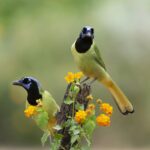
Feathers are one of the defining features of birds. From the soft down that keeps a chick warm to the stiff flight feathers that carry an eagle through the sky, these remarkable structures perform an extraordinary variety of jobs.
A feather may look simple at first glance, but under magnification it reveals an intricate system of shafts, branches, microscopic hooks, pigments, and specialized structures. Together, a bird’s feathers create a lightweight covering capable of providing insulation, producing aerodynamic surfaces, repelling water, communicating with other birds, and helping the bird disappear into its surroundings.
Understanding how feathers are built also makes bird identification easier. Colors, wing patterns, tail shapes, feather wear, and seasonal plumage changes can all provide clues about a bird’s species, age, sex, or stage of molt.
🪶 What Are Bird Feathers?
Feathers are specialized structures that grow from follicles in a bird’s skin. They are made primarily from tough keratin-based proteins and become lightweight, durable structures once fully formed.
A bird’s complete covering of feathers is known as its plumage.
Although feathers are closely associated with flight, flight was probably not their original function. Feather-like structures appeared among dinosaur ancestors long before modern birds evolved. Early feathers likely played roles in insulation, display, or other functions before increasingly specialized feathers became involved in flight.
Modern birds have taken the basic feather design and adapted it into many different forms.
Some feathers are stiff and aerodynamic. Others resemble fluffy insulation. Some are almost hairlike, while others have been transformed into spectacular ornaments used during courtship.
Despite those differences, most feathers share the same fundamental structural plan.
🔬 Bird Feather Structure
Look closely at a typical contour or flight feather and you will see a central shaft surrounded by a broad surface called the vane.
Magnification reveals another level of complexity.
| Feather Part | Function |
|---|---|
| Calamus | Hollow base of the feather that sits in the feather follicle |
| Rachis | Main shaft supporting the feather above the skin |
| Vane | Broad surface extending from either side of the rachis |
| Barbs | Branches extending outward from the rachis |
| Barbules | Smaller branches extending from each barb |
| Hooklets (hamuli) | Tiny hooks that help neighboring barbules interlock |
The calamus, sometimes casually called the quill, is the hollow base of the feather. Above it, the shaft continues as the rachis.
Hundreds of barbs extend from the rachis. Each barb carries even smaller branches known as barbules.
On many feathers, microscopic hooklets on the barbules attach to neighboring barbules. The result resembles an extremely fine biological zipper.
This interlocking structure creates the smooth feather vane that is so important for flight and protection from wind and water.
If you have ever seen a bird pull a feather through its bill while preening, part of what it is doing is realigning these tiny structures.
🧩 Pennaceous vs. Plumulaceous Feathers
Two important terms describe the way the barbs and barbules are arranged.
Pennaceous feather structure produces a firm, smooth vane. The barbules interlock tightly, creating the surface found on flight feathers and much of a bird’s exterior plumage.
Plumulaceous feather structure is loose and fluffy. Its barbules do not lock together into a solid vane. Instead, they trap pockets of air.
That trapped air makes plumulaceous feathers excellent insulation.
Many individual feathers actually combine both forms. The visible outer portion may be smooth and pennaceous while the base hidden beneath neighboring feathers is fluffy and plumulaceous.
🪶 Types of Bird Feathers
Birds have several specialized feather types, and each performs a somewhat different job.
Flight Feathers
Flight feathers are among the largest and strongest feathers on a bird.
The wing flight feathers are collectively known as remiges. They include several groups.
Primary feathers are found along the outer part of the wing. They play a major role in generating thrust and controlling airflow.
Secondary feathers are positioned closer to the bird’s body. They form much of the wing’s lifting surface.
Tertials are the innermost flight feathers and help smooth the transition between the wing and the body.
Flight feathers usually have strong shafts and tightly interlocking vanes capable of resisting the forces generated during flight.
Tail Feathers
The large feathers forming the tail are called rectrices.
Tail feathers function somewhat like the control surfaces on an aircraft. Birds can spread, close, raise, lower, and twist their tails to help steer and stabilize themselves.
A bird braking before landing may fan its tail dramatically. Raptors soaring on rising air currents continually make subtle tail adjustments to maintain their position.
Tail feathers can also have important display functions. In species such as peacocks, specialized tail-related feathers have evolved into spectacular ornaments used during courtship.
Contour Feathers
Contour feathers form most of the smooth outer surface of a bird.
They give the bird its recognizable shape while helping streamline its body. Their exposed tips generally form firm vanes, while the hidden bases may be softer and more insulating.
Because contour feathers overlap one another much like roof shingles, relatively few gaps are exposed directly to the environment.
Some contour feathers are called coverts because they cover the bases of larger flight feathers on the wings and tail.
Down Feathers
Down feathers are the bird world’s insulation.
Instead of forming a flat, tightly connected vane, their barbs remain loose and fluffy. This structure traps layers of air close to the body.
The bird warms this trapped air with its own body heat, creating an insulating barrier between its skin and the surrounding environment.
This is why down is particularly important to birds living in cold climates and why humans have long valued down as insulation.
Semiplume Feathers
Semiplumes combine characteristics of contour feathers and down.
They generally have a recognizable central shaft but possess loose, fluffy barbs rather than a tightly interlocking vane.
Semiplumes contribute to insulation while also helping fill out the bird’s body shape beneath the outer contour feathers.
Filoplumes
Filoplumes are small, slender feathers with a long shaft and only a few barbs near the tip.
They are often found near larger contour or flight feathers.
Filoplumes appear to act as sensory structures, helping birds detect the position and movement of nearby feathers. This feedback may be especially important when a bird is adjusting its plumage or controlling feathers during flight.
Bristles
Bristle feathers resemble stiff hairs and occur most commonly around the head.
They typically consist of a stiff rachis with few or no barbs along much of its length.
Depending on the species, bristles may help protect the eyes or nostrils and may have sensory functions. They are especially noticeable around the mouths of some insect-eating birds.
Powder Down
Some birds possess specialized feathers known as powder down.
Instead of molting in the same way as ordinary feathers, the tips continually break down into a fine powder-like material.
Powder down occurs in several groups of birds, including herons and some parrots, and may contribute to feather maintenance.
✈️ How Feathers Make Flight Possible
A bird wing is far more than an arm covered with feathers.
Its feathers form a carefully arranged aerodynamic surface capable of changing shape while the bird is flying.
The primary feathers near the wingtip are particularly important for generating thrust and controlling airflow. Birds can rotate and separate individual primaries, which is why the wingtip of a soaring hawk often appears to have several “fingers.”
The secondaries form much of the inner wing surface and contribute substantially to lift.
Meanwhile, smaller coverts smooth the surface where larger feathers overlap the wing.
Together these feathers create an airfoil.
As air moves around the wing, differences in airflow and pressure—combined with the bird’s wing movements and angle of attack—produce the aerodynamic forces required for flight.
Feathers provide another major advantage: they are both strong and lightweight.
A solid wing surface with comparable strength would be far heavier. The branched structure of a feather provides rigidity where it is needed without adding excessive mass.
❄️ How Feathers Keep Birds Warm
Flying is only one function of feathers.
For many birds, insulation is equally important.
Birds maintain high body temperatures, and losing heat rapidly could be dangerous, particularly for small birds because their bodies have a large surface area compared with their volume.
Down and the fluffy bases of other feathers trap pockets of air close to the skin.
A bird can increase this insulating layer by fluffing its feathers.
That is why chickadees, sparrows, and other backyard birds sometimes appear unusually round on cold winter mornings. They are not suddenly gaining weight—they are raising their feathers and increasing the amount of insulating air surrounding their bodies.
When temperatures rise, birds can compress their plumage and use other cooling strategies to release excess heat.
💧 How Feathers Help Birds Stay Dry
A well-maintained feather coat can provide an effective barrier against water.
The tightly interlocking barbules of contour feathers help create smooth surfaces that encourage water to roll away instead of reaching the skin.
Many birds also have a uropygial gland, commonly known as the preen gland, near the base of the tail. During preening, birds may distribute gland secretions through their plumage.
The relationship between these secretions and waterproofing is more complicated than simply “oiling the feathers.” Feather microstructure, cleanliness, alignment, and species-specific adaptations all contribute to how water interacts with plumage.
Waterbirds are especially well adapted for life around water, although the degree of water resistance varies among species.
🎨 Why Bird Feathers Have So Many Colors
Bird plumage contains nearly every color imaginable, but those colors are not all produced in the same way.
There are two major mechanisms: pigments and structural coloration.
Pigment Colors
Pigments absorb some wavelengths of light and reflect others.
Melanins produce many blacks, grays, browns, and reddish-brown colors. Melanin can also strengthen feathers and make them more resistant to wear.
Carotenoids contribute many bright yellows, oranges, and reds. Birds generally obtain carotenoid precursors through their diets and may modify them before depositing them into growing feathers.
Other specialized pigments occur in particular groups of birds.
Structural Colors
Some of the most brilliant feather colors are not produced by colored pigments at all.
Instead, microscopic feather structures interact with light.
Many blue feathers are examples of structural coloration. Their microscopic architecture scatters particular wavelengths of light so that the feathers appear blue.
That means a Blue Jay’s feather does not simply contain ordinary blue pigment.
Iridescent colors take structural effects even further.
The shimmering throats of hummingbirds, glossy starling plumage, and many other iridescent feathers contain microscopic structures that reflect light differently depending on the angle of illumination and viewing.
As the bird moves, the perceived color can change dramatically.
🦚 Feathers for Display and Communication
Feathers are also visual communication tools.
Bright plumage may advertise health, maturity, social status, or readiness to breed.
Male birds-of-paradise provide some of the most spectacular examples. Their feathers have evolved extraordinary shapes and optical properties that create elaborate courtship displays.
Peacocks, pheasants, hummingbirds, ducks, and numerous songbirds also use distinctive plumage during courtship.
Not every signal is colorful.
Raised crests, spread tails, wing patches, and changes in feather posture can communicate aggression, alarm, territorial ownership, or interest in a mate.
Even a bird’s silhouette can change dramatically when it raises or compresses particular feathers.
🌿 Feathers for Camouflage
While some birds use feathers to attract attention, others use them to disappear.
Camouflage plumage can make a bird extremely difficult to detect.
Owls often have mottled patterns resembling tree bark. Ground-nesting birds may possess brown, tan, or speckled plumage that blends into leaves, gravel, grasses, or soil.
Female birds of species in which females perform most of the incubation are frequently more cryptically colored than males.
Camouflage is especially valuable while birds are resting, nesting, or avoiding predators.
🤫 Feathers Can Help Birds Fly Quietly
Some feathers have evolved specialized adaptations that alter the sound of flight.
Owls are famous for this ability.
Specialized structures along portions of owl flight feathers help reduce the noise created as air passes over the wings. Their velvety feather surfaces and wing-edge adaptations also help suppress sound.
Quiet flight allows an owl to approach prey without creating the loud wing noises that might otherwise reveal its position.
It may also help the owl hear faint sounds produced by prey while it is flying.
🧼 Why Birds Preen Their Feathers
A bird spends a surprising amount of time maintaining its plumage.
This behavior is known as preening.
During preening, a bird uses its bill to straighten feathers, clean them, remove debris, and realign barbs and barbules that have become separated.
Imagine opening and closing a tiny zipper thousands of times across a bird’s body. That gives some sense of the maintenance involved in keeping a complex feather coat functioning properly.
Birds may also bathe in water, dust, snow, or even sunlight as part of broader feather-maintenance behaviors.
Healthy plumage is critical. Damaged or poorly aligned feathers can reduce insulation and may interfere with efficient flight.
🔄 What Is Molting?
Feathers are extremely durable, but they do not last forever.
Sunlight, vegetation, dirt, parasites, friction, and the stresses of everyday flight gradually wear them down.
A mature feather is largely a dead keratinized structure. Although a bird can reconnect separated barbules through preening, it cannot biologically heal a badly broken mature feather in the way skin heals a wound.
Instead, birds periodically replace worn feathers through molting.
A molt may replace only part of the plumage or nearly all of it, depending on the species, age, season, and molt strategy.
Many birds replace their feathers after the breeding season. Others undergo additional partial molts before breeding, sometimes producing dramatically different seasonal plumages.
The process requires considerable energy because producing new feathers demands proteins and other nutrients.
Most flying birds replace major flight feathers in patterns that allow them to continue flying.
Some waterfowl use a different strategy. Ducks, geese, and swans may shed their major flight feathers within a relatively short period and temporarily become flightless until replacements grow.
🌱 How a New Feather Grows
New feathers develop inside follicles in the bird’s skin.
Early in development, a growing feather is supplied with blood and nutrients. At this stage it may be called a blood feather or pin feather.
The developing feather is enclosed in a protective sheath.
Inside, the intricate branching structure of the future feather forms as the tissue grows. Eventually the feather emerges, the sheath breaks apart, and the barbs spread outward into their mature arrangement.
Once growth has finished, the blood supply recedes and the exposed mature feather becomes a nonliving keratinized structure.
This explains an apparent contradiction: a finished feather is not alive, but a growing feather is living tissue connected to the bird’s circulatory system.
🐦 Feathers and Bird Identification
Plumage is one of the most important tools birdwatchers use to identify birds.
Useful features include:
- Overall plumage color
- Wing bars
- Eye stripes and facial markings
- Spots or streaks
- Tail patterns
- Wing patches
- Primary feather shape
- Seasonal plumage
- Differences between males and females
- Differences between juveniles and adults
Feathers can also reveal much more subtle clues.
Experienced birders sometimes recognize whether a bird is juvenile or adult based on feather shape, wear, molt limits, and coloration.
Researchers can examine feathers for information about migration, diet, environmental exposure, genetics, and other aspects of a bird’s life.
Even microscopic feather structure can help identify the type of bird from which a feather came.
⚖️ Can You Keep a Bird Feather You Find?
Finding a beautiful feather on a trail may make you want to take it home, but doing so can be illegal.
In the United States, feathers from many native birds are protected under federal wildlife laws, including the Migratory Bird Treaty Act. Protection can apply even when a feather was naturally molted and simply found on the ground.
There are exceptions and different rules for certain species and circumstances, but it is safest not to assume that a wild bird feather is legal to possess simply because you found it.
Photographing the feather where you discovered it can be a great alternative.
For North American feathers, the U.S. Fish and Wildlife Service’s Feather Atlas can also be useful for learning about feather identification.
🌎 Why Feathers Are Such an Important Evolutionary Adaptation
Feathers are remarkable because evolution has repeatedly modified the same fundamental structure for completely different purposes.
A down feather and an eagle’s primary feather may look nothing alike, yet both are variations on the same branching biological design.
Through changes in the rachis, barbs, barbules, pigmentation, microscopic architecture, and overall shape, feathers have become tools for:
- Flight
- Insulation
- Water resistance
- Camouflage
- Courtship
- Communication
- Sensory feedback
- Protection
- Species recognition
Few structures in the animal kingdom combine so many functions while remaining so lightweight.
💡 Fascinating Facts About Bird Feathers
A feather’s apparent simplicity hides remarkable engineering.
Blue feathers usually are not blue because of blue pigment. Their color commonly comes from microscopic structures that scatter light.
Birds cannot permanently repair a broken mature feather. They can realign separated barbules, but major structural damage generally remains until the feather is replaced.
Some feathers act like sensory equipment. Filoplumes may help birds detect how nearby feathers are positioned.
Feathers can change appearance without changing pigment. Structural colors may look completely different depending on lighting and viewing angle.
A bird may look considerably larger in cold weather. Fluffing its plumage creates additional insulating air space.
Molting can temporarily prevent some birds from flying. Certain waterfowl replace their major flight feathers almost simultaneously.
Feather structure can be useful forensic evidence. Specialists can use microscopic characteristics to help determine what type of bird a feather fragment came from.
❓ Frequently Asked Questions About Bird Feathers
Are bird feathers alive?
A fully developed feather is largely a nonliving keratinized structure. However, a feather is living and supplied with blood while it is actively growing.
What are bird feathers made of?
Feathers consist primarily of specialized keratin-based proteins arranged into an extremely strong but lightweight branching structure.
What is the difference between a feather and plumage?
A feather is an individual structure. Plumage refers collectively to the feathers covering a bird.
What are the main types of bird feathers?
Major feather types include flight feathers, tail feathers, contour feathers, down, semiplumes, filoplumes, bristles, and specialized forms such as powder down.
Why do birds have down feathers?
Down feathers trap air next to the bird’s body, creating an insulating layer that helps reduce heat loss.
What are flight feathers called?
The major flight feathers of the wings are called remiges, while the major tail feathers are called rectrices.
Why are bird feathers so lightweight?
Their branched architecture provides considerable strength without requiring a heavy solid structure. This combination of strength, flexibility, and low weight is particularly valuable for flight.
Why do birds molt?
Feathers gradually become worn and damaged. Because mature feathers cannot heal themselves, birds periodically shed them and grow replacements through the process known as molting.
Do birds lose all their feathers at once?
Usually not. Many birds replace their feathers gradually so they can continue flying. Some waterfowl, however, replace their major flight feathers in a relatively short period and become temporarily flightless.
Can birds repair damaged feathers?
Birds can use their bills to reconnect barbules that have separated, restoring the feather’s smooth vane. A seriously broken shaft or heavily damaged mature feather cannot truly heal and eventually must be replaced.
Why do feathers repel water?
The tightly arranged microscopic structure of many contour feathers helps prevent water from easily penetrating the plumage. Preening and other species-specific feather adaptations also contribute to keeping plumage in good condition.
Why are some feathers iridescent?
Iridescent feathers contain microscopic structures that interact with light. Different wavelengths are reflected depending on the angle, producing colors that appear to shimmer or change as the bird moves.
🪶 Final Thoughts
Feathers helped transform the evolutionary story of birds and remain essential to almost every part of their lives.
They can become the rigid outer surface of a falcon’s wing, the insulating down beneath a chick’s contour feathers, the nearly silent edge of an owl’s wing, or the dazzling display plumage of a bird-of-paradise.
Their effectiveness comes from their structure. A central shaft branches into barbs, barbs divide into barbules, and microscopic connections can transform those delicate pieces into a strong, flexible surface.
Yet that same basic blueprint can be loosened to trap warmth, altered to create color, shaped for courtship, or specialized for sensory functions.
The next time you watch a bird preening, fluffing itself against the cold, spreading its tail before landing, or flashing brilliant colors in the sunlight, you are seeing one of nature’s most versatile biological structures at work.
🔗 Related Articles
- Bird Identification
- Birds With Red Chests: Identification Guide
- Birds of New York State: Common Species & Best Birdwatching Spots
- Yellow and Black Birds: Identification Guide With Photos
- How Do Birds Build Nests? Nest Types, Materials & Construction
- Why Do Birds Flock Together? Bird Behavior, Benefits & Avian Communities
📚 Sources
- Cornell Lab of Ornithology — Everything You Need to Know About Feathers
- Cornell Lab of Ornithology — How Feathers Are Built
- Cornell Lab of Ornithology — How Birds Make Colorful Feathers
- Cornell Lab of Ornithology — The Basics: Feather Molt
- Cornell Wildlife Health Lab — Molting
- U.S. Fish & Wildlife Service — The Feather Atlas
- U.S. Fish & Wildlife Service — Feather Atlas Glossary
- U.S. Fish & Wildlife Service — Feathers and the Law