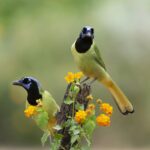
From the wooded mountains of the Adirondacks to the salt marshes of Long Island, New York State offers an extraordinary variety of habitats for birds. Even New York City becomes an important refuge for migrating songbirds each spring and fall.
More than 450 bird species have been observed across New York State, according to the New York State Department of Environmental Conservation. The state’s combination of Atlantic coastline, Great Lakes shoreline, forests, mountains, wetlands, farmland, rivers, urban parks, and suburban neighborhoods gives birdwatchers an impressive variety of species to discover.
Some New York birds are familiar year-round backyard residents. Others arrive for the summer breeding season, pass through during migration, or appear only during the colder months.
Whether you are watching chickadees at a backyard feeder, searching for warblers in Central Park, scanning Montezuma’s wetlands for waterfowl, or exploring the Adirondacks in hopes of finding a Black-backed Woodpecker, New York has something to offer birdwatchers in every season.
🐦 Why New York State Is So Good for Birdwatching
Few states combine such dramatically different environments within a relatively compact area.
Northern New York contains extensive coniferous forests and boreal wetlands. The Catskills and Adirondacks provide mountain habitats. Central and western New York contain productive agricultural areas, lakes, marshes, and forests. The Hudson River creates another major wildlife corridor, while New York City contains surprisingly productive pockets of urban habitat.
Continue south and east and the landscape changes again. Long Island provides ocean beaches, tidal flats, dunes, salt marshes, bays, grasslands, and maritime forests.
Much of New York also lies along the Atlantic Flyway, one of North America’s great bird migration routes. Each spring and fall, huge numbers of birds travel through the region between breeding and wintering grounds.
This seasonal movement is one reason an ordinary-looking park can suddenly become filled with warblers, thrushes, vireos, flycatchers, and other migrants.
⚡ New York Birds at a Glance
| Habitat | Birds You Might See |
|---|---|
| Backyards & suburbs | Northern Cardinal, Blue Jay, Black-capped Chickadee, American Robin, Mourning Dove |
| Deciduous forests | Scarlet Tanager, Wood Thrush, Red-eyed Vireo, Ovenbird |
| Adirondack boreal forests | Black-backed Woodpecker, Boreal Chickadee, Canada Jay, Spruce Grouse |
| Wetlands | Great Blue Heron, Red-winged Blackbird, Wood Duck, American Bittern |
| Lakes & rivers | Bald Eagle, Osprey, Common Merganser, Belted Kingfisher |
| Grasslands & farmland | Eastern Bluebird, Bobolink, Eastern Meadowlark, American Kestrel |
| Atlantic coast | American Oystercatcher, Piping Plover, Sanderlings, terns, gulls |
| Urban parks | American Robin, Northern Cardinal, Gray Catbird, warblers, sparrows |
| Migration hotspots | Warblers, vireos, thrushes, hawks, shorebirds and waterfowl |
🏡 Common Birds of New York State
You do not have to visit a wildlife refuge to experience New York’s birdlife. Some of the state’s most recognizable birds live remarkably close to people.
Northern Cardinal
Few backyard birds are easier to recognize than the Northern Cardinal.
Adult males are brilliant red with a black mask around the face and a prominent crest. Females are mostly warm brown with reddish highlights on the wings, tail, and crest.
Cardinals are common around woodland edges, parks, gardens, suburban neighborhoods, and shrubby areas. Unlike many migratory songbirds, they remain in New York throughout the year.
Their rich whistled songs can sometimes be heard even during the colder months.
American Robin
The American Robin is one of New York’s most familiar birds.
Its rusty-orange breast, gray-brown back, and upright posture make it relatively easy for beginners to recognize. Robins are frequently seen hopping across lawns while searching for earthworms and other invertebrates.
Although often associated with spring, some robins remain in New York during winter, particularly where berries and other food remain available.
Blue Jay
With bright blue upperparts, a white underside, black markings, and a noticeable crest, the Blue Jay is difficult to overlook.
Blue Jays inhabit forests, suburban neighborhoods, parks, and backyards throughout much of New York.
They are intelligent members of the crow family and have a remarkably varied collection of calls. Their loud alarm calls can sometimes alert other animals—and birdwatchers—to the presence of a hawk or owl.
Black-capped Chickadee
The tiny Black-capped Chickadee is another classic New York bird.
Its black cap and throat contrast sharply with white cheeks, while the body is mostly gray with buff-colored sides.
Chickadees commonly investigate bird feeders, branches, tree bark, and shrubs in search of seeds and insects.
Their recognizable chick-a-dee-dee-dee call makes them one of the easiest birds to identify by sound.
American Goldfinch
American Goldfinches bring flashes of yellow to New York’s fields and gardens.
Breeding males are bright yellow with black wings and a black forehead. Females and winter birds are considerably duller.
Goldfinches feed heavily on seeds and are particularly associated with plants such as thistles and sunflowers.
They are frequent visitors to feeders containing nyjer or sunflower seeds.
Mourning Dove
The soft, mournful cooing of the Mourning Dove is familiar across much of New York.
These slender, tan-gray birds often feed on the ground beneath feeders and can also be seen sitting on telephone wires, rooftops, fences, and exposed branches.
Their pointed wings produce a distinctive whistling sound during takeoff and flight.
Downy Woodpecker
One of North America’s smallest woodpeckers, the Downy Woodpecker is a frequent visitor to wooded neighborhoods and backyard feeders.
Its black-and-white plumage resembles that of the larger Hairy Woodpecker. Male Downy Woodpeckers have a small red patch on the back of the head.
They frequently search tree trunks and branches for insects but will also visit suet feeders.
Red-bellied Woodpecker
Despite its name, the most noticeable red on a Red-bellied Woodpecker is usually on its head rather than its belly.
These medium-sized woodpeckers have striking black-and-white barred backs. Adult males show red extending from the forehead over the crown and onto the back of the head.
Once more strongly associated with regions farther south, Red-bellied Woodpeckers are now familiar residents across much of New York.
White-breasted Nuthatch
Watch a tree trunk closely and you may see a White-breasted Nuthatch walking headfirst toward the ground.
These compact birds have bluish-gray backs, white underparts, and dark caps. They search bark for insects and seeds and are common visitors to feeders.
Their ability to climb downward headfirst helps distinguish them from woodpeckers and Brown Creepers.
Song Sparrow
Song Sparrows are among the most widespread sparrows in New York.
Look for a streaked brown bird with heavy markings across the breast, often forming a darker central spot.
They inhabit an enormous variety of environments, including gardens, marsh edges, brushy fields, parks, and streamside vegetation.
Canada Goose
Canada Geese are among New York’s most visible waterbirds.
They can be found on lakes, rivers, ponds, reservoirs, golf courses, agricultural fields, and city parks.
Migrating formations of geese are a classic sight during spring and autumn, although many Canada Geese now remain in parts of the state throughout the year.
Mallard
The Mallard is one of New York’s most familiar ducks.
Adult males have glossy green heads, yellow bills, chestnut breasts, and gray bodies. Females are mottled brown with orange-and-dark bills.
Mallards occupy everything from remote wetlands to small urban ponds.
Great Blue Heron
Standing several feet tall with long legs, an elongated neck, and a dagger-like bill, the Great Blue Heron is one of New York’s most impressive wetland birds.
Herons often stand nearly motionless beside shallow water before striking rapidly at fish, frogs, and other prey.
Look for them along lakes, rivers, marshes, estuaries, ponds, and tidal areas.
Eastern Bluebird
The Eastern Bluebird holds a special place in New York: it is the official state bird.
Adult males have brilliant blue backs and wings with rusty-orange breasts. Females are more subdued but retain blue on the wings and tail.
Bluebirds prefer open habitats containing scattered trees and are commonly associated with fields, farms, orchards, roadsides, parks, and nest-box trails.
🌳 Forest Birds of New York
New York’s forests become particularly exciting during spring and summer.
As trees leaf out, migrants arrive from Central America, South America, the Caribbean, and the southern United States to breed or continue traveling north.
Scarlet Tanager
Few eastern forest birds are as spectacular as the male Scarlet Tanager.
Breeding males are brilliant scarlet with contrasting black wings and tails. Females are yellowish-green.
Despite their vivid colors, Scarlet Tanagers can be surprisingly difficult to find because they frequently remain high in the forest canopy.
Wood Thrush
The flute-like song of the Wood Thrush is one of the characteristic sounds of mature eastern forests.
These thrushes have warm brown upperparts, white underparts, and bold dark spots across the breast.
Wood Thrushes are especially associated with large, shady deciduous and mixed forests.
Red-eyed Vireo
During summer, the repetitive song of the Red-eyed Vireo can continue for hours from the treetops.
These olive-green and gray birds spend much of their time searching foliage for insects.
They are much easier to hear than to see.
Ovenbird
The Ovenbird is a warbler that behaves more like a tiny thrush.
Instead of constantly moving through treetops, it often walks across the forest floor searching through leaves.
Its loud teacher-teacher-teacher song can carry surprising distances through the woods.
🌈 Warbler Migration in New York
For many birdwatchers, spring warbler migration is the highlight of the year.
Dozens of species can pass through New York, including:
- Yellow Warbler
- Black-and-white Warbler
- Black-throated Blue Warbler
- Black-throated Green Warbler
- Blackburnian Warbler
- Chestnut-sided Warbler
- Magnolia Warbler
- Cape May Warbler
- Northern Parula
- American Redstart
- Common Yellowthroat
- Ovenbird
Some continue north, while others remain to breed within the state.
Migration can concentrate birds dramatically when weather conditions are favorable. A patch of woodland that seemed quiet the previous afternoon may be filled with migrants the next morning.

🦅 Birds of Prey in New York
New York supports an impressive selection of hawks, falcons, eagles, and owls.
Red-tailed Hawk
The Red-tailed Hawk is perhaps the state’s most familiar large hawk.
Look for it perched beside highways or circling over fields. Adults typically show a broad reddish tail that can be particularly noticeable when sunlight shines through it.
Bald Eagle
The recovery of the Bald Eagle is one of New York’s great wildlife conservation successes.
Today these enormous raptors can once again be observed along major rivers, lakes, reservoirs, and wetlands around the state.
Their white heads and tails become unmistakable once the birds reach adult plumage.
Peregrine Falcon
Peregrine Falcons demonstrate how some birds have adapted to city environments.
Cliffs are their traditional nesting habitat, but tall buildings and bridges can serve as artificial substitutes. New York City therefore offers opportunities to observe one of the world’s fastest birds living among skyscrapers and urban infrastructure.
American Kestrel
The American Kestrel is North America’s smallest falcon.
Look for kestrels around open fields, farms, grasslands, roadsides, and utility lines, where they hunt insects and small vertebrates.
Their pointed wings and ability to hover while searching for prey can help identify them.
🦆 Wetland and Water Birds
New York’s lakes, rivers, marshes, ponds, estuaries, and coastline add an entirely different collection of birds.
Depending on the habitat and season, birdwatchers may encounter:
- Wood Ducks
- Hooded Mergansers
- Common Mergansers
- Green Herons
- Great Egrets
- American Bitterns
- Common Gallinules
- American Coots
- Pied-billed Grebes
- Belted Kingfishers
- Ospreys
- Double-crested Cormorants
- Red-winged Blackbirds
Spring and fall migration can dramatically increase both numbers and diversity.
🌊 Shorebirds and Coastal Birds of Long Island
Long Island is one of the most important areas in New York for coastal birding.
Sandy beaches, barrier islands, salt marshes, bays, mudflats, dunes, and tidal creeks attract numerous shorebirds and seabirds.
Species may include:
- American Oystercatcher
- Piping Plover
- Sanderling
- Ruddy Turnstone
- Semipalmated Plover
- Black-bellied Plover
- Willet
- Least Sandpiper
- Common Tern
- Least Tern
- Black Skimmer
- Brant
- Northern Gannet
Jones Beach State Park is particularly productive. New York State Parks specifically notes birds such as oystercatchers, terns, skimmers, plovers, Brant, gulls, and Northern Harriers among the birds visitors may encounter there.
Coastal birdwatchers should be especially cautious around roped-off nesting areas. Beach-nesting birds can be extremely vulnerable to disturbance.
🌲 Birds of the Adirondacks
The Adirondack Mountains provide some of New York’s most distinctive birding.
Northern coniferous forests, bogs, wetlands, lakes, and high-elevation habitats create conditions that resemble regions much farther north.
Birders visiting the Adirondacks may search for species such as:
- Black-backed Woodpecker
- Boreal Chickadee
- Canada Jay
- Spruce Grouse
- Yellow-bellied Flycatcher
- Lincoln’s Sparrow
- Winter Wren
- Swainson’s Thrush
- Blackburnian Warbler
The Spruce Grouse is particularly special. In New York, it is endangered and survives primarily in parts of the Adirondack region where appropriate coniferous habitat remains.
The New York State Birding Trail highlights places such as Paul Smith’s College Visitor Interpretive Center and Bloomingdale Bog Trail for Adirondack birding. Black-backed Woodpeckers are among the birds that may be encountered around suitable boreal habitat.
📍 Best Birdwatching Spots in New York State
You could spend years exploring New York’s birding locations. These destinations provide an excellent introduction to the state’s diversity.
1. Central Park
New York City
Central Park proves that excellent birdwatching does not require wilderness.
Situated along the Atlantic Flyway and surrounded by Manhattan’s dense urban landscape, the park functions as an important patch of habitat for migrating birds.
More than 210 species make an appearance in Central Park each year, according to the Central Park Conservancy. Particularly productive locations include the Ramble, North Woods, Hallett Nature Sanctuary, the Pond, and the Pool.
Spring migration—especially May—can be spectacular.
Look for warblers, vireos, thrushes, flycatchers, sparrows, orioles, tanagers, woodpeckers, waterfowl, and raptors.
2. Jamaica Bay Wildlife Refuge
Queens, New York City
It is difficult to imagine such an extensive wildlife area existing within New York City until you visit Jamaica Bay.
The refuge contains salt marshes, ponds, fields, woods, open water, shoreline, and other habitats used by both resident and migratory birds.
More than 300 bird species have been observed at Jamaica Bay Wildlife Refuge, making it one of the outstanding urban birdwatching destinations in the United States.
Depending on the season, visitors may encounter shorebirds, herons, egrets, ducks, Ospreys, gulls, terns, raptors, and migrating songbirds.
3. Montezuma National Wildlife Refuge
Central New York
Wetland enthusiasts should put Montezuma near the top of their list.
The larger Montezuma Wetlands Complex provides habitat for enormous numbers of migrating waterfowl as well as shorebirds, marsh birds, raptors, and songbirds.
Spring brings geese, ducks, shorebirds, and migrating warblers. Late summer and fall can be particularly productive for southbound shorebirds and waterfowl, while Bald Eagles can be observed throughout much of the year.
4. The Adirondacks
Northern New York
For birders interested in boreal species, the Adirondacks offer an experience unlike most of the state.
Paul Smith’s College Visitor Interpretive Center, Bloomingdale Bog, and other northern forest locations provide opportunities to explore spruce-fir woods, marshes, bogs, lakeshores, and mountain habitats.
Rather than expecting huge concentrations of birds, Adirondack birding often rewards patience and careful listening.
5. Braddock Bay Wildlife Management Area
Near Rochester
Braddock Bay sits along the southern shore of Lake Ontario and is particularly famous for migration.
Its combination of grasslands, marshes, woodland, and open water makes it attractive to songbirds and waterfowl, but raptor migration is the major draw.
New York’s birding resources identify Braddock Bay as an important Atlantic Flyway stopover where migrating raptors, waterfowl, and songbirds can gather during spring and fall.
6. Jones Beach State Park
Long Island
Jones Beach is much more than a famous swimming destination.
Its coastal environment can produce shorebirds, gulls, terns, waterfowl, raptors, and other maritime species.
Winter can be especially interesting for coastal waterfowl, while migration and breeding seasons bring very different bird communities.
7. Derby Hill Bird Observatory
Lake Ontario
Birders who love raptors should know Derby Hill.
Located near the southeastern corner of Lake Ontario, Derby Hill is one of the Northeast’s celebrated spring hawk-watching locations.
Migrating birds of prey can become concentrated along the lakeshore rather than crossing the large expanse of open water, creating excellent observation opportunities.
8. Bashakill Wildlife Management Area
Southeastern New York
Bashakill combines wetlands, forest, and open areas and is particularly productive during migration.
More than 200 species have been documented in the area, and Bald Eagles, Ospreys, waterfowl, marsh birds, and migrating songbirds are among its attractions.
It is an excellent destination for birders traveling between the New York metropolitan area and the Catskills.
🌸 Best Time for Birdwatching in New York
There is no bad season for birding in New York, but every season offers something different.
Spring: March Through May
Spring is arguably the most exciting season.
Waterfowl begin moving north early in the season, followed by shorebirds and waves of songbirds.
April and especially May bring warblers, vireos, thrushes, orioles, tanagers, flycatchers, and many other migrants.
Early mornings can be spectacular at migration hotspots.
Summer: June Through August
By early summer, migration slows and breeding activity becomes the focus.
Listen for singing forest birds, watch swallows feeding over wetlands, look for herons around marshes, and search open country for bluebirds and grassland species.
The Adirondacks can be particularly rewarding during this period.
Fall: August Through November
Fall migration actually begins earlier than many people realize.
Southbound shorebirds can appear by late summer, followed by songbirds, hawks, waterfowl, and other migrants.
September and October are particularly productive across much of the state.
Winter: December Through February
Winter birding can be quieter, but it should not be overlooked.
Ducks gather on open water, northern birds occasionally move south, and feeders attract chickadees, nuthatches, woodpeckers, finches, cardinals, and sparrows.
Long Island’s coast can be particularly rewarding for winter waterfowl and seabirds.
🔭 Tips for Birdwatching in New York
You do not need expensive equipment to start birding.
A pair of binoculars and curiosity are enough.
For better results:
- Go out early in the morning when birds are particularly active.
- Learn common bird calls as well as visual identification.
- Check ponds, wetlands, forest edges, and flowering or fruiting trees.
- Scan exposed branches and utility poles for raptors.
- Look upward periodically for migrating hawks and vultures.
- Visit different habitats rather than repeatedly birding the same environment.
- Check migration conditions during spring and fall.
- Record your observations in a notebook or birding app.
- Move slowly and quietly.
- Give birds plenty of space.
Birding becomes much easier once you stop trying to identify everything at once.
Start by noticing size, shape, color, bill shape, behavior, habitat, and sound. Those clues can quickly reduce the possibilities.
🪺 Birdwatch Responsibly
Finding an unusual bird can be exciting, but the welfare of the bird should always come first.
Never approach nests closely, handle eggs or young birds, or repeatedly flush a bird simply to obtain a photograph.
Stay outside fenced nesting areas, especially along beaches.
Avoid excessive use of recorded bird calls. Playback can cause territorial birds to divert time and energy away from feeding, resting, nesting, and caring for young.
If a bird repeatedly looks toward you, gives alarm calls, stops feeding, retreats, or flies away as you approach, increase your distance.
A successful birding encounter is one in which the bird can continue behaving naturally.
🌿 Attracting New York Birds to Your Backyard
You can experience New York’s birdlife without leaving home.
A bird-friendly yard provides food, water, shelter, and nesting habitat.
Native plants are especially valuable because they support insects, berries, seeds, and other natural foods.
Consider adding:
- Native flowering plants
- Berry-producing shrubs
- Native trees
- Dense shrubs for shelter
- A clean bird bath
- Bird feeders
- Nest boxes where appropriate
- Areas of fallen leaves beneath plants
- Seed-producing flowers left standing through winter
Avoid pesticides whenever possible. Insects are essential food for many adult birds and are particularly important when songbirds are feeding their young.
A yard does not need to be large to become useful habitat.
Even a small collection of native plants, clean water, and safe cover can make a difference.

❓ Frequently Asked Questions
What is the state bird of New York?
The Eastern Bluebird is the official state bird of New York.
How many bird species are found in New York State?
More than 450 bird species have been recorded across New York State, reflecting the state’s enormous variety of habitats and its position along major migration routes.
What are the most common birds in New York?
Common species include Northern Cardinals, American Robins, Blue Jays, Black-capped Chickadees, Mourning Doves, American Goldfinches, Downy Woodpeckers, Song Sparrows, Canada Geese, and Mallards.
Exact species vary according to habitat, location, and season.
What birds stay in New York all year?
Many species can remain year-round, including Northern Cardinals, Black-capped Chickadees, Blue Jays, White-breasted Nuthatches, Downy Woodpeckers, Red-bellied Woodpeckers, and several raptors.
Other birds are primarily summer residents, winter visitors, or migrants.
When is spring bird migration in New York?
Migration builds during March and April and reaches one of its most exciting periods during May, when numerous warblers and other Neotropical migrants pass through the state.
The exact timing varies according to species, location, and weather.
Where is the best place to see birds in New York City?
Central Park and Jamaica Bay Wildlife Refuge are two of the premier birdwatching destinations in New York City.
Central Park is especially famous for migrating songbirds, while Jamaica Bay is outstanding for shorebirds, waterfowl, wading birds, raptors, and other wetland species.
Where can I see Bald Eagles in New York?
Bald Eagles can be found near suitable lakes, rivers, reservoirs, and wetlands across parts of New York.
The Hudson and Delaware river systems, Montezuma Wetlands Complex, and other areas with plentiful fish and suitable nesting or wintering habitat can be productive.
Are there rare boreal birds in New York?
Yes. Northern New York—especially the Adirondacks—supports several species associated with boreal forests, including the Black-backed Woodpecker, Boreal Chickadee, and the endangered Spruce Grouse.
Is Central Park really good for birdwatching?
Yes. Central Park sits along the Atlantic Flyway and provides woodland, water, shrubs, and other habitat amid the densely developed landscape of Manhattan. More than 210 species make an appearance there during a typical year.
❤️ A State Full of Birds
New York may be famous for Manhattan, Niagara Falls, the Adirondacks, and the Finger Lakes, but its birdlife deserves just as much attention.
Few places allow a birder to experience such variety within a single state.
One morning might begin with Northern Cardinals and chickadees outside a kitchen window. Another could involve colorful warblers filling Central Park during migration. Farther north, Black-backed Woodpeckers inhabit quiet Adirondack forests, while Long Island beaches host plovers, oystercatchers, terns, and migrating shorebirds.
Wetlands such as Montezuma can fill with waterfowl, Lake Ontario concentrates migrating raptors, and even the skyscrapers of New York City provide nesting opportunities for Peregrine Falcons.
That variety is what makes birdwatching in New York so rewarding.
You do not have to see every species to appreciate it. Start with the birds around you, learn their voices and habits, and gradually explore new habitats.
There will almost always be another bird waiting to be discovered.
🔗 Related Articles
📚 Sources
- New York State Department of Environmental Conservation — Birding
- New York State Department of Environmental Conservation — New York State Birding Trail
- New York State Department of Environmental Conservation — Birds
- New York State Department of Environmental Conservation — Spruce Grouse
- Central Park Conservancy — Birdwatching Guide
- U.S. Fish & Wildlife Service — Birding at Montezuma National Wildlife Refuge
- National Park Service — Jamaica Bay Wildlife Refuge
- New York State Parks — Jones Beach State Park