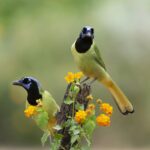
Few things make a backyard feel more alive than watching chickadees dart between branches, cardinals settle onto a feeder, or goldfinches squabble over sunflower seeds just outside the window.
But where you put your bird feeder matters almost as much as the feeder itself.
The best location gives birds easy access to food while protecting them from predators, bad weather, and dangerous window collisions. At the same time, a thoughtfully positioned feeder can give you a fantastic view from your kitchen, living room, patio, or favorite backyard chair.
If you’re still deciding what kind of feeder to use, start with our guide to Bird Feeders 101: How to Choose the Perfect Feeder for Your Backyard.
Then use this guide to find the perfect place to put it.
🐦 So, Where Is the Best Place to Hang a Bird Feeder?
For most backyards, an excellent feeding station has several characteristics:
- You can easily see it from your favorite bird-watching spot.
- Birds have nearby trees or shrubs they can retreat to.
- Dense vegetation does not give outdoor cats an easy hiding place directly beside the feeder.
- Squirrels cannot easily jump onto it from nearby branches, fences, or structures.
- The feeder is protected reasonably well from strong wind and heavy rain.
- You can reach it easily for filling and cleaning.
- Nearby windows have been considered and made safer for birds.
There isn’t one universally perfect location. Your yard, the birds you hope to attract, your feeder design, and nearby windows all affect the ideal setup.
The goal is to create a location that is visible to you, attractive to birds, and as safe as possible for your visitors.
🪟 Put Your Feeder Where You Can Actually Watch It
If bird watching is the goal, don’t hide your feeder in the farthest corner of the yard.
Before installing anything, walk through your home and look outside from the places where you spend the most time.
Your kitchen window may be perfect.
Perhaps you have a favorite chair beside a living-room window. Maybe you spend summer evenings on the patio or drink coffee on the porch every morning.
Positioning the feeder within your normal line of sight means you’ll notice far more activity than you would if you had to deliberately go outside every time you wanted to see the birds.
A good viewing location can turn everyday moments into bird-watching opportunities.
You might suddenly notice:
- a Downy Woodpecker visiting the suet,
- a Northern Cardinal feeding just before sunset,
- chickadees carrying individual sunflower seeds away,
- migrating birds appearing for only a few days,
- or a species you’ve never seen in your yard before.
When you spot an unfamiliar visitor, our Bird Identification Guide can help you figure out what you’ve found.
🪟 Be Especially Careful Around Windows
Windows are one of the most important factors to consider when deciding where to hang a bird feeder.
Birds do not always perceive glass as a solid barrier. Reflections of trees, vegetation, and sky can make a window appear to be open habitat, while transparent glass can create the illusion of a clear flight path.
The U.S. Fish & Wildlife Service recommends keeping feeders and water sources within about 3 feet of glass when they are positioned near windows. At that short distance, birds leaving the feeder have less opportunity to build up speed before a potential collision.
Older advice often suggested either placing feeders within 3 feet of a window or more than 30 feet away. However, Cornell’s more recent discussion of bird-window collisions cautions that older feeder-distance recommendations should not be relied upon as the entire solution. Making dangerous windows visible to birds remains extremely important.
Exterior screens, closely spaced exterior markings, films, cords, or other effective bird-friendly treatments can help break up reflections and make glass more obvious to approaching birds.
If you love extremely close-up bird watching, another option is a feeder mounted directly to the glass. Learn more in How to Attract Colorful Birds to Your Backyard with a Window Feeder.
🌳 Give Birds Cover — But Not Too Much Cover
Birds generally appreciate having somewhere to escape.
A chickadee may grab a seed and immediately retreat to a nearby branch. Cardinals often approach feeders cautiously from surrounding vegetation. Other species may sit nearby for several minutes before deciding that it is safe to land.
Trees and shrubs therefore make valuable additions to a bird-friendly feeding area.
However, there is an important distinction between nearby escape cover and dense vegetation directly underneath the feeder.
Thick shrubs can conceal cats and other predators.
Cornell recommends balancing the birds’ need for cover with their need to see approaching danger. Around 10 feet between a feeding station and dense cover can be a useful starting point, although every landscape is different.
Rather than hanging your feeder deep inside a shrub, try positioning it in a relatively open area with trees or shrubs nearby.
That gives birds both visibility and somewhere to escape.
🐈 Keep Bird Feeders Away From Cat Ambush Areas
A feeding station concentrates birds in one location, which means predator safety deserves special attention.
Avoid putting your feeder immediately beside:
- dense shrubs,
- thick groundcover,
- sheds with hiding spaces underneath,
- wood piles,
- tall vegetation where cats frequently hide,
- or other concealed approaches to the feeder.
The U.S. Fish & Wildlife Service recommends keeping pet cats indoors, leashed, or contained in a secure outdoor enclosure to reduce predation on birds.
If roaming cats regularly visit your property, moving the feeder into a more open location may allow feeding birds to detect them sooner.
A feeder should attract birds—not create an easy hunting ground.
🐿️ Think About Squirrels Before You Hang the Feeder
If you have squirrels, feeder placement becomes a geometry problem.
Squirrels can leap from trees, fences, roofs, railings, garden structures, and other surprisingly distant launching points.
Cornell recommends positioning feeders roughly 10 feet away from potential squirrel jumping-off points when you’re trying to reduce squirrel access.
A pole-mounted feeder in an open section of the yard is often easier to protect than a feeder hanging directly from a tree.
A properly positioned squirrel baffle can make the setup even more difficult to climb.
Watch for nearby:
- branches,
- fences,
- deck railings,
- sheds,
- roofs,
- pergolas,
- clotheslines,
- and neighboring feeders.
You may think you’ve found the perfect squirrel-proof location only to discover that your local squirrels are considerably more athletic than anticipated.
Moving the feeder a few feet can sometimes make an enormous difference.
📏 How High Should You Hang a Bird Feeder?
There is no single height that is perfect for every bird feeder or every bird species.
For a typical hanging seed feeder, roughly 5 to 6 feet above the ground is a practical starting point. It keeps the feeder at a convenient height for filling and cleaning while making it harder for pets and some ground predators to reach.
But feeder style matters.
| Feeder Type | Practical Placement |
|---|---|
| Tube feeder | Often about 5–6 feet high |
| Hopper feeder | Pole-mounted or hanging several feet above ground |
| Suet feeder | Tree, pole, or feeding station several feet high |
| Platform feeder | Ground level or elevated depending on target species |
| Window feeder | Mounted directly to or immediately beside a window |
| Hummingbird feeder | Convenient viewing and maintenance height with open approach space |
Don’t become too concerned about finding an exact number.
Birds naturally forage at many different heights, and the safest, easiest-to-maintain location is often more important than whether a feeder hangs at exactly five feet or six.
🌻 Match the Feeder Location to the Birds You Want to Attract
Different birds use feeders differently.
Chickadees and nuthatches frequently grab food quickly and retreat to nearby vegetation, making a feeding station with trees nearby appealing.
Finches can gather in groups around tube feeders and often readily use feeders in relatively open locations.
Cardinals are comfortable using platform and hopper-style feeders and may approach from nearby shrubs or low vegetation.
Woodpeckers readily use suet feeders and are naturally accustomed to feeding vertically on tree trunks.
Doves, juncos, and many sparrows frequently forage on or near the ground and may eat seed spilled underneath elevated feeders.
That’s one reason a backyard feeding station can become more interesting when it contains several types of feeders rather than one.
Explore the larger Backyard Birding Guide for more ideas about attracting and observing the birds around your home.
🌦️ Look for Some Protection From the Weather
Feeders don’t necessarily need to be completely sheltered, but avoiding the most exposed part of your property can make feeding more comfortable for birds and maintenance easier for you.
Strong wind can make lightweight hanging feeders swing dramatically.
Heavy rain can soak exposed seed.
Persistent moisture can encourage seed to spoil or become moldy.
A location with some protection from prevailing winds can therefore be useful, particularly during winter.
Trees, shrubs, walls, or other landscape features may provide shelter, but make sure those features don’t create new predator or squirrel problems.
Covered hopper feeders can also help protect seed during wet weather.
☀️ Consider Sunlight and Your View
Here’s a placement factor bird guides don’t always mention:
Where will the sun be when you’re watching the feeder?
A feeder that is permanently backlit may make identification and photography frustrating.
If possible, position your feeder so morning or afternoon light illuminates the birds from the front or side when you’re most likely to watch them.
Good lighting makes it easier to see details such as:
- wing bars,
- eye rings,
- breast patterns,
- subtle plumage colors,
- bill shape,
- and patches of color on the head or tail.
Those little clues become especially valuable when you’re trying to identify an unfamiliar bird.
🌧️ Don’t Hang Feeders Over Permanently Wet Ground
Seed inevitably falls from feeders.
So do hulls and bird droppings.
Placing your feeder over an area with reasonable drainage makes maintenance easier and helps prevent an unpleasant accumulation of wet seed underneath.
Periodically rake or sweep up old seed and hulls, particularly when they begin accumulating. The U.S. Fish & Wildlife Service also recommends removing excess seed beneath feeders as part of responsible wildlife feeding.
Moving feeders slightly from time to time can also prevent one small patch of lawn or garden from becoming heavily worn.
🧼 Put the Feeder Somewhere You Can Easily Clean It
The most beautiful feeder location isn’t very useful if reaching it requires a ladder, hiking boots, and an expedition through the flower bed.
Bird feeders need regular maintenance.
Wet or spoiled food should be discarded, accumulated debris removed, and feeders cleaned periodically. If sick birds begin appearing, additional precautions—including temporarily removing feeders—may be appropriate. Cornell and the U.S. Fish & Wildlife Service both emphasize feeder hygiene as part of safer backyard bird feeding.
Choose a location you can easily reach with fresh food and cleaning supplies.
Convenience matters because a feeder that’s easy to maintain is much more likely to actually be maintained.
👀 Five Great Bird Feeder Locations
If you’re still unsure where to start, consider these options.
1. A Pole-Mounted Feeder in an Open Yard
This is one of the most versatile setups.
A freestanding pole gives you considerable control over height, squirrel protection, visibility, and distance from nearby vegetation.
Add several feeder styles to the same station and you can create a miniature bird-watching center.
2. Just Outside a Frequently Used Window
For maximum viewing opportunities, this can be hard to beat.
Keep bird-window collision safety in mind, make problem glass visible to birds, and consider placing feeders very close to the glass when using a near-window setup.
You’ll get extraordinarily detailed views of visiting birds without leaving the house.
3. Near — But Not Inside — Shrubs and Trees
Nearby vegetation gives birds places to perch, rest, and escape.
Leave enough open space around the feeder that birds can see potential predators approaching.
This arrangement can be particularly appealing to smaller songbirds.
4. Beside a Patio or Deck
A feeder visible from an outdoor living area lets you combine bird watching with time spent outside.
Just avoid placing it directly above seating or dining areas. Seed hulls and droppings underneath an active feeder can accumulate quickly.
Give the birds a little breathing room and enjoy watching from nearby.
5. A Window Feeder
If space is limited—or you simply want incredibly close views—a window feeder can be a wonderful option.
They are especially useful for apartments, patios, small gardens, and homes where a traditional pole-mounted station isn’t practical.
🚫 Places You Should Avoid Hanging a Bird Feeder
Some locations create more problems than they’re worth.
Avoid putting feeders:
- immediately beside dense hiding places used by outdoor cats,
- within easy jumping distance of squirrel launch points,
- above outdoor dining or seating areas,
- in spots that remain constantly damp,
- where strong wind repeatedly empties or swings the feeder,
- somewhere difficult to access for cleaning,
- near untreated reflective or transparent glass without considering collision risk,
- or in places where pets regularly disturb feeding birds.
A few feet of relocation can sometimes solve several problems at once.
🌿 Make the Area Around Your Feeder Bird-Friendly Too
A feeder is only one part of a great backyard habitat.
Birds also need water, shelter, natural food, resting places, and appropriate habitat.
Native plants can provide seeds, berries, nectar, insects, nesting materials, and protective cover. Trees and shrubs create perching opportunities. Even allowing a small corner of the yard to remain less manicured can provide additional habitat.
Adding water can be especially effective because some birds that rarely visit seed feeders may still visit a bird bath.
Read Creating Your Own Oasis: The Benefits of Having a Bird Bath in Your Garden for another easy way to make your backyard more welcoming.
You can also explore our complete collection of Attracting Birds guides.
🏡 The Best Bird Feeder Setup Is Usually a Feeding Station
Once you’ve experimented with one feeder, you may discover that the best solution is not finding one perfect spot but creating a small feeding station.
For example, you might combine:
- a sunflower-seed tube feeder,
- a platform feeder,
- a suet cage,
- a finch feeder,
- and a nearby bird bath.
Different birds can then use the setup in different ways.
You can also spread feeders slightly apart if one aggressive species begins dominating the entire feeding area.
Over time, you’ll learn which birds visit your yard, which foods they prefer, where they like to perch before approaching, and which feeder locations get the most activity.
That observation is part of the fun.
❓ Frequently Asked Questions
Where is the best place to put a bird feeder?
A good location is visible from your home, relatively open, near enough to vegetation that birds have escape cover but not so close that predators can hide beside the feeder, protected from severe weather, and easy for you to clean and refill.
How high should a bird feeder be off the ground?
There is no universal requirement, but around 5 to 6 feet is a convenient starting point for many traditional hanging and pole-mounted feeders. Ground-feeding platforms and specialized feeders may be positioned differently.
Should bird feeders be in the sun or shade?
Either can work. Partial shade may help protect seed and make the feeder more comfortable during hot weather, while good natural light can improve bird watching and photography. Keeping food dry and fresh is more important than choosing full sun or full shade.
Should a bird feeder be close to a tree?
Nearby trees can provide valuable perches and escape cover, but placing a feeder directly beside branches can make it easier for squirrels to reach and may create predator hiding opportunities. Cornell suggests roughly 10 feet from jumping-off points when squirrel control is a priority.
How long does it take birds to find a new feeder?
Sometimes birds discover a feeder surprisingly quickly. Other times it may take days or even weeks. Keeping the feeder consistently stocked, using appropriate food, and placing it where birds already travel can improve your chances.
Should I move my bird feeder if no birds are coming?
Yes. If you’ve given birds sufficient time to discover it, experiment. Moving a feeder even a short distance closer to useful habitat or into a quieter part of the yard can change how comfortable birds feel using it.
What is the best place for a feeder if I want to photograph birds?
Choose a location with an unobstructed view, attractive natural vegetation in the background, and favorable light during the hours you normally photograph. Nearby natural perches can also encourage birds to pause before landing at the feeder.
❤️ Finding Your Backyard’s Sweet Spot
The perfect bird feeder location isn’t determined by one magic measurement.
It’s a balance.
Birds need food, visibility, escape cover, and protection from predators and hazards.
You need a clear view and easy access for maintenance.
Start with a location that meets those needs, then watch what happens.
Birds themselves will tell you a great deal. Notice where they perch before visiting, which direction they approach from, whether squirrels are getting easy access, and whether certain feeders receive more traffic than others.
Don’t hesitate to experiment.
Moving a feeder five or ten feet may completely change the activity you see.
And once your feeding station becomes busy, pull up a chair, grab your binoculars, and enjoy one of the easiest ways to experience the fascinating world of birds right outside your home.
🔗 Related Articles
- Backyard Birding: How to Attract, Feed & Enjoy Birds at Home
- Bird Feeders 101: How to Choose the Perfect Feeder for Your Backyard
- How to Attract Colorful Birds to Your Backyard with a Window Feeder
- Creating Your Own Oasis: The Benefits of Having a Bird Bath in Your Garden
- Bird Identification Guide
- Bird Species Guide
📚 Sources
- Cornell Lab of Ornithology — Where to Put Your Bird Feeder
- Cornell Lab of Ornithology — Why Birds Hit Windows—and How You Can Help Prevent It
- Cornell Lab of Ornithology — How to Clean Your Bird Feeder
- U.S. Fish & Wildlife Service — To Feed or Not to Feed Wild Birds
- U.S. Fish & Wildlife Service — Bird-Friendly Home Toolkit