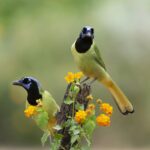
Water birds are among the most fascinating and diverse birds on Earth. Some paddle peacefully across quiet ponds, while others plunge headfirst into the ocean, stalk fish through ankle-deep marshes, or disappear beneath the surface for surprisingly long underwater hunts. From tiny sandpipers racing along the surf to massive pelicans soaring above coastal lagoons, these birds have evolved remarkable ways to live around water.
The term water bird does not describe a single scientific family. Instead, it is a broad term for birds that depend heavily on aquatic environments for feeding, nesting, resting, or some combination of the three. Water birds can be found around freshwater lakes, rivers, marshes, swamps, estuaries, tidal flats, rocky coastlines, and the open ocean.
Their lifestyles are just as varied as their habitats. A Great Blue Heron may stand nearly motionless before striking at a fish, while a cormorant pursues prey underwater. A dabbling duck feeds close to the surface, a tern dives from the air, and a sandpiper probes wet mud for tiny invertebrates.
Together, water birds provide some of the best opportunities for anyone interested in observing birds in the wild.
🌊 What Is a Water Bird?
Water birds are birds that spend a significant portion of their lives in or around aquatic habitats. The category includes species from many unrelated bird families.
Waterfowl—ducks, geese, and swans—are water birds, but they are only part of the larger group. Herons, grebes, loons, pelicans, cormorants, rails, coots, gulls, terns, shorebirds, spoonbills, ibises, and many seabirds may also be considered water birds.
Depending on the species, a water bird may live around:
- Freshwater lakes and ponds
- Rivers and streams
- Marshes and swamps
- Flooded forests
- Estuaries
- Coastal lagoons
- Mudflats
- Beaches
- Mangrove forests
- Rocky shorelines
- Salt marshes
- Open ocean
Some species remain closely associated with water throughout their lives, while others rely on wetlands primarily during breeding or migration.
🦆 Major Types of Water Birds
The incredible diversity of water birds becomes easier to understand when they are divided into several broad groups.
| Water Bird Group | Familiar Examples | Typical Lifestyle |
|---|---|---|
| Waterfowl | Ducks, geese, swans | Swimming, dabbling, diving, grazing |
| Wading birds | Herons, egrets, bitterns | Walking through shallow water |
| Diving birds | Loons, grebes, cormorants | Pursuing prey underwater |
| Large fish-eaters | Pelicans | Scooping or diving for fish |
| Marsh birds | Rails, coots, gallinules | Living among dense wetland vegetation |
| Long-legged wetland birds | Ibises, spoonbills, storks, cranes | Wading and probing for food |
| Shorebirds | Sandpipers, plovers, avocets | Feeding along mudflats and shorelines |
| Coastal birds | Gulls and terns | Surface feeding, scavenging, or plunge-diving |
| Seabirds | Puffins, boobies, albatrosses | Feeding and traveling over marine waters |
There is considerable overlap between these categories. A bird may qualify as a water bird, shorebird, seabird, or wetland bird depending on how the terms are being used.
🦢 Ducks, Geese, and Swans
When most people imagine water birds, they probably picture members of the duck family.
Ducks, geese, and swans belong to the family Anatidae, whose members are strongly associated with aquatic environments. Cornell Lab’s bird taxonomy includes dozens of North American species in this family alone.
Their webbed feet provide efficient propulsion through water, while their bills are adapted to different feeding strategies.
Not all ducks feed the same way.
Dabbling ducks, such as Mallards, often tip forward with their tails pointing upward while feeding beneath the surface. They commonly eat aquatic plants, seeds, insects, and other small organisms.
Diving ducks disappear completely below the surface in search of aquatic vegetation, mollusks, crustaceans, and fish.
Sea ducks include specialized birds such as eiders, scoters, goldeneyes, mergansers, Buffleheads, and Long-tailed Ducks. Many are impressive divers capable of living in cold northern waters. The U.S. Fish and Wildlife Service recognizes 21 species of sea ducks worldwide, 15 of which occur in North America.
Geese are often more terrestrial feeders than ducks, frequently grazing on grasses and agricultural vegetation, while swans use their long necks to reach aquatic plants beneath the water.
🪶 Herons, Egrets, and Bitterns
Herons and egrets demonstrate an entirely different approach to aquatic life.
Rather than swimming after their prey, they usually wade slowly through shallow water on long legs. Their long necks and spear-like bills allow them to strike rapidly when fish, frogs, crustaceans, or other prey come within range.
Great Blue Herons are among the most recognizable examples in North America, but the family also contains smaller Green Herons, night-herons, bitterns, and numerous species of egrets.
The hunting style is often a lesson in patience. A heron may remain nearly motionless while watching the water before launching a lightning-fast strike.
Wetlands provide these birds with abundant feeding opportunities, and some species gather in communal nesting colonies known as rookeries or heronries.

🐟 Pelicans: Masters of Fishing
Few water birds are more unmistakable than pelicans.
Their enormous bills contain expandable throat pouches used to capture fish, but not every pelican fishes in the same way.
American White Pelicans frequently work together, swimming and maneuvering fish toward one another before scooping them from the water.
Brown Pelicans, in contrast, are famous for dramatic plunge-dives. A bird may circle above coastal water, fold its wings, and drop toward a fish below.
Despite the huge pouch, pelicans do not normally carry fish around inside it like a shopping bag. The pouch primarily functions as part of the bird’s feeding apparatus.
🤿 Loons, Grebes, and Cormorants
Some of the greatest underwater athletes in the bird world are loons, grebes, and cormorants.
These birds are adapted for diving rather than simply floating on the surface.
Loons
Loons have powerful legs positioned toward the rear of the body. This arrangement makes them exceptionally effective underwater swimmers, although it also makes walking on land difficult.
They pursue fish underwater using their feet for propulsion.
Grebes
Grebes are graceful swimming and diving birds often found on freshwater lakes and marshes. Their feet are positioned well toward the back of the body and have specialized lobed toes.
Many grebes are also famous for elaborate courtship displays.
Cormorants
Cormorants frequently swim with their bodies sitting low in the water before diving after fish. Their long necks and strongly hooked bills give them a distinctive profile.
After diving, cormorants are often seen standing with their wings spread—a classic pose familiar to birdwatchers around lakes, rivers, reservoirs, and coastlines.
🌾 Rails, Coots, and Gallinules
Not every water bird is easy to see.
Rails and their relatives often inhabit dense marsh vegetation where they can remain hidden only a few feet from an observer.
Coots are more conspicuous. They frequently swim across open ponds and lakes and can superficially resemble dark ducks. However, coots are not ducks. They belong to a completely different bird family.
Instead of conventional webbed feet, coots have unusual lobed toes that help them swim while remaining useful for walking across vegetation and muddy ground.
Gallinules and moorhens occupy similar wetland environments and often feature brightly colored bills or frontal shields.

🦩 Ibises, Spoonbills, Cranes, and Storks
Wetlands are also home to some spectacular long-legged birds.
Ibises typically have long, downward-curving bills that are useful for probing mud and shallow water.
Spoonbills possess extraordinarily shaped bills with broad, flattened tips. They often feed by sweeping the bill back and forth through shallow water until they encounter prey.
Cranes generally forage in wetlands, grasslands, and agricultural areas and are famous for elaborate dances and powerful calls.
Storks include large wading birds that use strong bills to capture a variety of aquatic and terrestrial prey.
Although these birds may resemble one another because of their long legs and aquatic lifestyles, they belong to different evolutionary groups.
🐚 Shorebirds: Specialists of the Water’s Edge
Another major branch of the water-bird world consists of birds living along shorelines.
Sandpipers, plovers, stilts, avocets, dowitchers, yellowlegs, and related birds gather along beaches, marshes, tidal flats, lake edges, and flooded fields.
Many have bills specialized for finding prey hidden beneath sand or mud.
A long-billed shorebird may probe deeply for worms and crustaceans, while a plover often relies more heavily on vision, running across the surface before stopping to pick up exposed prey.
During migration, productive wetlands and mudflats can become vital refueling stations for enormous numbers of traveling birds.
🌊 Gulls and Terns
Gulls are exceptionally adaptable birds.
Although commonly associated with beaches, they may also occur around lakes, rivers, reservoirs, agricultural fields, and even urban environments.
Their diets can be highly varied.
Terns tend to be more specialized hunters. Many fly above water while searching for fish before suddenly plunging toward the surface.
Watching a tern hover briefly before dropping into the water is one of the great spectacles of coastal birding.

🐧 Seabirds Are Water Birds Too
The broader concept of water birds can extend far beyond marshes and ponds.
Puffins, boobies, gannets, shearwaters, petrels, penguins, and albatrosses spend much of their lives associated with marine environments.
Some seabirds may travel hundreds or thousands of miles over open ocean between visits to land.
Penguins have taken aquatic adaptation to an extreme: their wings evolved into powerful flippers, making them extraordinary underwater swimmers even though they can no longer fly through the air.
Other seabirds, including boobies and gannets, combine flight and diving, plunging from above the ocean to catch fish.
🏊 Amazing Adaptations for Life Around Water
Water birds have evolved an extraordinary variety of physical adaptations.
Webbed and Lobed Feet
Many swimming birds have webbing between their toes. When the bird pushes backward, the expanded foot acts like a paddle.
Other species have independently evolved different solutions. Grebes and coots, for example, have lobes along the sides of their toes rather than a single continuous web.
Waterproof Feathers
Bird feathers naturally provide considerable protection from water.
Water birds spend significant amounts of time preening, arranging their feathers and distributing oils produced by the preen gland near the base of the tail.
Maintaining plumage is essential because feathers provide insulation as well as protection.
Specialized Bills
Few bird groups demonstrate the connection between anatomy and diet as clearly as water birds.
Consider the variety:
- A heron’s bill can function like a spear or forceps.
- A spoonbill sweeps its flattened bill through shallow water.
- A pelican scoops fish with its expandable pouch.
- A merganser has a narrow bill suited to capturing slippery fish.
- A sandpiper probes sediment with a slender bill.
- Many ducks strain or manipulate food using specialized structures along the edges of their bills.
The shape of a bird’s bill can provide valuable clues about what—and how—it eats.
🐠 What Do Water Birds Eat?
There is no single water-bird diet.
Depending on the species, foods may include:
- Fish
- Frogs and tadpoles
- Crayfish
- Shrimp
- Mollusks
- Aquatic insects
- Worms
- Small crustaceans
- Seeds
- Grasses
- Algae
- Aquatic plants
- Berries
- Small mammals
- Reptiles
- Carrion
Even birds sharing the same wetland can avoid direct competition by hunting at different depths or targeting different foods.
A heron might hunt fish along the shoreline while a diving duck searches the bottom, a tern fishes near the surface, and a sandpiper probes exposed mud.
This ability to occupy different ecological niches helps explain why healthy wetlands can support extraordinary bird diversity.
🗺️ Where Do Water Birds Live?
Water birds occur on every continent, including Antarctica.
Some inhabit tropical mangroves and swamps. Others breed beside Arctic ponds or survive along frozen northern coastlines.
Productive water-bird habitats include wetlands, floodplains, coastal estuaries, shallow lakes, prairie potholes, marshes, river deltas, tidal flats, and sheltered bays.
Wetlands are especially important. Audubon notes that roughly one-third of North American bird species use wetlands for feeding, shelter, breeding, or other needs.
These habitats can support huge concentrations of birds because water and wet soils produce abundant plants, fish, insects, crustaceans, and other food.
🧭 Water Birds and Migration
Many water birds are extraordinary travelers.
Ducks and geese are famous for seasonal migrations, but shorebirds, cranes, terns, loons, and numerous other aquatic species migrate as well.
For these birds, wetlands function almost like a network of roadside rest stops.
Migrants need places where they can rest and replenish their energy between flights. The U.S. Fish and Wildlife Service emphasizes that wetlands are used at some stage of the life cycle by a vast range of migratory birds, including waterfowl, shorebirds, and wading birds.
Loss of one important stopover can therefore affect birds that spend the rest of the year thousands of miles away.
🔭 How to Identify Water Birds
Water birds are excellent subjects for beginning birdwatchers because many can be observed in relatively open habitats.
Start with several basic characteristics.
Look at the Bird’s Shape
Is it:
- Floating low on the water?
- Standing on long legs?
- Swimming with a long neck?
- Running along the shore?
- Diving underwater?
- Sitting upright?
- Soaring above the water?
Silhouette alone can quickly narrow the possibilities.
Study the Bill
Bill shape is especially informative.
A broad duck bill, dagger-like heron bill, hooked cormorant bill, spoon-shaped spoonbill bill, and thin sandpiper bill all suggest very different birds and feeding strategies.
Watch How It Feeds
Behavior can sometimes be more useful than color.
Does the bird tip forward?
Dive completely underwater?
Walk slowly and strike at prey?
Probe mud?
Plunge from the air?
Sweep its bill sideways?
Learning these behaviors makes identification much easier.
Notice the Habitat
Habitat provides another valuable clue.
A bird standing beside a freshwater cattail marsh presents a different set of possibilities than one flying miles offshore.
👶 Raising Young Around Water
Water birds have developed many different nesting strategies.
Some ducks nest on the ground near wetlands, while Wood Ducks nest in tree cavities and readily use appropriately placed nest boxes.
Herons may build large stick nests high in trees.
Grebes often construct floating nests anchored to aquatic vegetation.
Shorebirds may create little more than a shallow scrape on the ground.
Seabirds can nest on remote islands, cliffs, burrows, or rocky ledges.
Their chicks also develop differently.
Many ducklings are precocial, meaning they hatch covered in down and can walk and swim soon afterward. In contrast, the young of herons and many seabirds remain dependent on their parents at the nest for a much longer period.

🌎 Why Water Birds Matter
Water birds are important components of aquatic ecosystems.
They consume fish, plants, insects, mollusks, and other organisms while also serving as prey for other animals. Birds can transport nutrients between aquatic and terrestrial environments, and some also disperse seeds.
Their presence—or disappearance—can also provide scientists with information about the condition of wetlands.
International monitoring programs have therefore tracked waterbird populations for decades. BirdLife International highlighted 60 years of coordinated waterbird monitoring in 2026, noting that long-term counts help identify wetlands of international conservation importance.
⚠️ Challenges Facing Water Birds
Because water birds depend so heavily on aquatic habitats, changes to wetlands and waterways can have far-reaching effects.
Major pressures include:
- Wetland drainage and development
- Changes in water availability
- Pollution
- Coastal development
- Disturbance around nesting colonies
- Invasive species
- Entanglement in discarded fishing gear and other debris
- Changes in food availability
- Climate-related alterations to aquatic habitats
Wetlands can be especially vulnerable because changes far upstream may influence water quantity or quality far downstream.
Protecting breeding locations alone is also insufficient for many migratory species. Birds may require suitable habitat at breeding grounds, wintering grounds, and numerous places in between.
Organizations including the U.S. Fish and Wildlife Service, BirdLife International, conservation groups, researchers, and local communities work to restore and protect wetlands and other important water-bird habitats.
🏡 How You Can Help Water Birds
You do not need to live beside a famous wildlife refuge to make a difference.
Simple actions can help protect aquatic birds and their habitats:
- Keep plastic, fishing line, and other trash out of waterways.
- Avoid approaching nests or nesting colonies.
- Give resting flocks plenty of space.
- Keep dogs under control around shorebird nesting areas.
- Support wetland conservation and restoration.
- Reduce unnecessary pesticide use around ponds and streams.
- Participate in bird counts and community-science projects.
- Observe wildlife from a respectful distance.
When birdwatching around wetlands, binoculars or a spotting scope can provide excellent views without forcing birds to move.
💡 Fascinating Water Bird Facts
Not all water birds have webbed feet. Herons walk through water on long toes, while grebes and coots have lobed toes instead of traditional webbing.
Not all ducks live primarily on freshwater. Sea ducks include species specially adapted to marine and coastal environments.
Some water birds nest in trees. Wood Ducks commonly use natural cavities in forested wetlands and can also occupy artificial nest boxes.
Cormorants are powerful underwater hunters. Their heavy bodies sit low in the water before they dive in pursuit of prey.
Wetlands can host astonishing bird diversity. The combination of water, vegetation, mud, fish, insects, and other resources provides opportunities for many species to feed within the same ecosystem.
Migration connects distant wetlands. A marsh used by birds for only a few weeks each year may still be essential to populations traveling between breeding and wintering grounds.
❓ Frequently Asked Questions About Water Birds
What is the difference between a water bird and waterfowl?
Water bird is a broad description for birds associated with aquatic habitats. Waterfowl usually refers more specifically to ducks, geese, swans, and their close relatives. Therefore, all waterfowl can be considered water birds, but many water birds are not waterfowl.
Are herons water birds?
Yes. Herons are classic wading water birds that feed primarily in wetlands, shallow lakes, rivers, estuaries, and shorelines.
Are penguins water birds?
Yes. Penguins are highly specialized marine birds. Although they cannot fly through the air, their streamlined bodies and flipper-like wings make them superb underwater swimmers.
Are seagulls water birds?
Gulls are generally considered water-associated birds, although many species spend considerable time away from water. The familiar term seagull is informal; numerous gull species live around freshwater or inland habitats as well as the sea.
Why do ducks float?
A duck’s body contains numerous adaptations that help it remain buoyant, including air held within its respiratory system and feathers. Its body shape and waterproof, insulating plumage also help it move efficiently across the surface.
Why do water birds have long legs?
Long legs allow wading birds such as herons, egrets, stilts, and ibises to move through shallow water while keeping most of their bodies above the surface.
Why are wetlands important to birds?
Wetlands provide birds with food, nesting habitat, shelter, and places to rest during migration. Their importance extends far beyond species that spend their entire lives around water.
❤️ A World Worth Watching
A quiet pond may look peaceful from a distance, but spend a few minutes watching and an entire world begins to appear.
A grebe disappears beneath the surface. A heron waits motionlessly along the reeds. Ducks tip upside down in search of food. Shorebirds race along exposed mud. High above everything, a tern suddenly folds its wings and dives.
Each bird has found a different way to exploit the meeting place between land and water.
That is what makes the world of water birds so extraordinary. They are swimmers, divers, hunters, travelers, waders, and aerial acrobats—and some of the most rewarding birds to observe.
Protecting the wetlands, rivers, lakes, estuaries, shorelines, and oceans they depend on helps ensure these remarkable performances continue for generations to come.
🔗 Related Articles
- Hummingbirds: Species, Identification, Feeding & Backyard Guide
- Backyard Birds of Florida
- Birds With Red Chests: Identification Guide
- Birds With Red Heads: North American Identification Guide
- Golden Eagles
- Red-tailed Hawks
- Peregrine Falcons
- Wrens
- Sparrows
📚 Sources
- Cornell Lab of Ornithology – Browse Birds by Family
- Cornell Lab Bird Academy – Birds in the Ecology of the Mississippi River Delta
- U.S. Fish & Wildlife Service – Conserving at Flyway Scales
- U.S. Fish & Wildlife Service – American Wetlands Month
- U.S. Fish & Wildlife Service – Wood Duck
- U.S. Fish & Wildlife Service – Diving into the Mysterious World of Sea Ducks
- U.S. Fish & Wildlife Service – Waterfowl Breeding Population and Habitat Survey
- National Audubon Society – The Clean Water Act at 50 and What It Means for Birds
- National Audubon Society – Water: A Critical Resource for Birds and People Everywhere
- BirdLife International – Wetlands
- BirdLife International – Ramsar Convention on Wetlands
- BirdLife International – Celebrating 60 Years of Waterbird Monitoring for Conservation