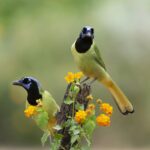
Discover the Backyard Birds of North Carolina
North Carolina is a wonderful place to become a backyard birdwatcher. From the Blue Ridge Mountains to the Piedmont and the Atlantic Coastal Plain, the state contains an impressive variety of forests, fields, wetlands, pine woods, gardens, and suburban neighborhoods. More than 400 migratory, wintering, and year-round bird species have been recorded in North Carolina, and many of the easiest to enjoy are birds that regularly live alongside people.
You do not need to travel to a wildlife refuge or hike deep into the forest to begin identifying North Carolina birds. Northern Cardinals may appear beneath a feeder, Carolina Wrens may sing from the porch railing, Red-bellied Woodpeckers may climb backyard trees, and American Goldfinches may gather around seed heads in the garden.
The birds you see will change somewhat depending on where you live and the time of year, but a surprisingly diverse bird community can often be found simply by watching your own yard.
🐦 Common Backyard Birds of North Carolina at a Glance
| Bird | Easy Identification Clue | When to Look |
|---|---|---|
| Northern Cardinal | Red male; brown female with reddish accents | Year-round |
| Carolina Wren | Rusty brown with bold white eyebrow | Year-round |
| Carolina Chickadee | Black cap and bib with white cheeks | Year-round |
| Tufted Titmouse | Gray bird with pointed crest | Year-round |
| Blue Jay | Blue, white, and black with a prominent crest | Year-round |
| Mourning Dove | Soft gray-brown body and pointed tail | Year-round |
| Red-bellied Woodpecker | Black-and-white back with red on head | Year-round |
| Downy Woodpecker | Tiny black-and-white woodpecker | Year-round |
| Eastern Bluebird | Blue upperparts with rusty chest | Year-round |
| American Robin | Orange breast and dark gray back | Year-round/seasonal flocks |
| Northern Mockingbird | Gray bird with white wing flashes | Year-round |
| House Finch | Streaked finch; males usually reddish | Year-round |
| American Goldfinch | Bright yellow male in summer | Year-round |
| Ruby-throated Hummingbird | Tiny green hummingbird | Spring through fall |
| White-throated Sparrow | Striped head with white throat | Mainly winter |
| Dark-eyed Junco | Gray-and-white ground-feeding sparrow | Mainly winter |
The precise combination varies considerably across the state. Mountain communities, pine-dominated Coastal Plain neighborhoods, and wooded Piedmont suburbs can each produce a somewhat different backyard bird list.
❤️ Northern Cardinal
Few North Carolina backyard birds are easier to recognize than the Northern Cardinal. The brilliant red male is unmistakable, with a tall crest, reddish bill, and black mask around the face. Females are much more subdued, appearing warm brown or buff with reddish wings, tails, and crests.
Cardinals frequently visit feeders but are also comfortable searching on or close to the ground. Sunflower and safflower seeds are excellent choices if you want to encourage them to spend more time around your yard. Platform and hopper feeders tend to suit their relatively large bodies better than tiny feeder perches.
Cardinals remain in North Carolina throughout the year, so they can bring welcome color to a gray winter landscape as well as summer gardens.

🎶 Carolina Wren
You may hear a Carolina Wren long before you actually see one.
These small rusty-brown birds produce astonishingly loud songs for their size. Look for a warm cinnamon-colored back, buff-colored underside, slightly curved bill, cocked tail, and especially the bold white eyebrow stripe running above the eye.
Carolina Wrens love brushy places. Dense shrubs, vines, woodpiles, brush piles, garden sheds, and other tucked-away corners can all attract their attention. Cornell notes that they frequently use tangled vegetation and backyard brush piles when moving and foraging close to the ground.
Leaving a little natural cover around the edges of the yard can therefore make your property much more appealing to wrens.
🖤 Carolina Chickadee
The energetic Carolina Chickadee is one of the classic small birds of the Southeast.
It has a black cap, black throat patch, bright white cheeks, gray back, and pale underside. Chickadees constantly move through branches searching for insects and other food, often hanging at unusual angles while inspecting leaves and twigs.
They are also enthusiastic feeder visitors. Black-oil sunflower seeds and peanuts can be especially attractive, and chickadees regularly mix with Tufted Titmice, nuthatches, and other small woodland birds.
Native plants are particularly valuable for chickadees because they support the caterpillars and other insects adults need when raising their young.

🌰 Tufted Titmouse
If you see a small gray bird with a pointed crest and enormous dark eyes, you have probably found a Tufted Titmouse.
Titmice are somewhat larger and more robust-looking than chickadees. They have gray upperparts, pale underparts, a dark forehead, and sometimes a wash of rusty color along their sides.
These curious birds regularly investigate feeders and readily take sunflower seeds and peanuts. They often carry a seed away rather than eating it while sitting on the feeder.
Tufted Titmice commonly travel with chickadees, nuthatches, and woodpeckers, particularly outside the breeding season.
💙 Blue Jay
The bold Blue Jay is difficult to overlook.
Its combination of blue wings and tail, white underparts, black markings, and prominent crest makes it one of the most distinctive large songbirds in a North Carolina backyard. Its calls can be equally conspicuous.
Blue Jays readily eat peanuts, sunflower seeds, nuts, and other large foods. A platform feeder or sturdy peanut feeder gives these fairly large birds enough space to land comfortably.
They also have a reputation for being noisy and assertive, but jays are intelligent, fascinating birds whose complex behavior can make them especially entertaining backyard visitors.
🕊️ Mourning Dove
The gentle-looking Mourning Dove is one of the easiest birds to spot on lawns, driveways, open ground, and low feeding areas.
Its soft gray-brown plumage, small head, black wing spots, and long pointed tail make a good identification combination. The familiar mournful cooing call is sometimes mistaken for an owl by new birdwatchers.
Mourning Doves are primarily seed eaters and frequently collect spilled seed beneath feeders. They may also use large tray or platform feeders that provide enough room for them to stand.
🔴 Red-bellied Woodpecker
Despite its name, the first thing most people notice about a Red-bellied Woodpecker is not its belly.
Instead, watch for a striking black-and-white barred back and bright red coloring on the head. Males have red extending from the forehead across the crown toward the back of the head, while females show a different arrangement of red around the head and nape.
These medium-sized woodpeckers are frequent visitors to wooded yards. Suet, peanuts, and sunflower seeds may bring them to feeders, but mature trees are equally important because they provide natural places to search for insects and establish cavities.
🪵 Downy Woodpecker
The Downy Woodpecker is one of the smallest North American woodpeckers and a familiar visitor to backyard feeders.
It is primarily black and white, with a white belly and patterned wings. Adult males have a small patch of red on the back of the head.
Downy Woodpeckers readily visit suet feeders and may also eat sunflower seeds and peanuts. Their small size allows them to forage on thin branches and stems that would not support a larger woodpecker.
If you are hoping to see woodpeckers regularly, adding a suet feeder is one of the simplest ways to begin. Suet feeders commonly attract Downy, Hairy, and Red-bellied Woodpeckers along with chickadees, titmice, and nuthatches.
🔵 Eastern Bluebird
Few sights are more beautiful than an Eastern Bluebird perched on a fence post or low branch.
Males have vivid blue upperparts combined with a rusty-orange chest and pale belly. Females are more subdued but still show blue in the wings and tail.
Bluebirds prefer relatively open surroundings with scattered trees rather than dense forest. Suburban properties bordering lawns, fields, farms, golf courses, parks, and other open spaces may provide excellent bluebird habitat.
Unlike many feeder birds, bluebirds are primarily insect and fruit eaters rather than seed specialists. Mealworms can sometimes attract them to backyard feeding stations. Nest boxes designed specifically for bluebirds can also provide nesting opportunities where suitable open habitat exists.
🧡 American Robin
The American Robin is familiar even to many people who do not consider themselves birdwatchers.
Robins have dark gray-brown backs, warm orange underparts, and a relatively upright posture. They frequently hop across lawns, pausing and tilting their heads while searching for earthworms and other invertebrates.
Although robins may appear around North Carolina throughout the year, their numbers and behavior can change with the seasons. Large groups may roam in search of fruit during the colder months.
Planting native berry-producing trees and shrubs is one of the best ways to provide natural food for robins and many other fruit-eating birds.
🎼 Northern Mockingbird
If one bird seems to be performing an entire neighborhood concert by itself, look for a Northern Mockingbird.
These gray-and-white songbirds are talented mimics capable of incorporating the sounds of many other bird species into their performances. They often sing from conspicuous locations such as rooftops, utility wires, treetops, and fence posts.
In flight, bold white patches in their wings become particularly noticeable.
Mockingbirds are less interested in ordinary seed feeders than cardinals and finches. A yard containing berries, insects, shrubs, open lawn, and natural vegetation is much more likely to appeal to them.
🏠 House Finch
House Finches are common around homes, shopping areas, towns, farms, and other developed landscapes.
Both sexes are heavily streaked, but adult males typically have reddish coloring around the face and chest. Females lack the red and appear brown and streaky overall.
House Finches readily visit feeders for sunflower seeds and other seeds. They often appear in small groups, giving you a chance to compare the differences among males, females, and immature birds.
💛 American Goldfinch
The appearance of the American Goldfinch changes dramatically with the seasons.
In breeding plumage, males are brilliant yellow with a black cap and dark wings. During winter, they become far more subdued, wearing dull yellowish-brown or olive tones. Females are less brightly colored than breeding males throughout the year.
Goldfinches are seed specialists. They frequently feed naturally on plants such as sunflowers, coneflowers, asters, and other seed-producing flowers, and they also readily visit feeders containing nyjer or sunflower seed.
Allowing some flowers to go to seed rather than immediately deadheading everything can create an attractive natural feeding station.
🌲 Brown-headed Nuthatch
The tiny Brown-headed Nuthatch is particularly associated with pine forests and can be a delightful backyard visitor in appropriate parts of North Carolina.
It has a bluish-gray back, pale underparts, and a warm brown cap. Like other nuthatches, it often moves headfirst down trunks and branches while searching bark for food.
Backyards with mature pine trees are more likely to attract this species. Peanuts, sunflower seeds, and suet can also appeal to nuthatches.
In neighborhoods where Brown-headed Nuthatches occur, preserving mature pines and dead trees where safe can be more valuable than relying entirely on feeders.
🌺 Ruby-throated Hummingbird
Warm weather brings one of North Carolina’s most anticipated backyard visitors: the Ruby-throated Hummingbird.
These tiny hummingbirds are emerald green above and pale below. Adult males display the brilliant ruby-red throat that gives the species its name, although the throat can look dark when light strikes it at the wrong angle.
Ruby-throated Hummingbirds are primarily spring-through-fall visitors in North Carolina. Native nectar-producing flowers can help support them, while properly maintained hummingbird feeders provide another source of energy.
The standard homemade hummingbird nectar recipe is one part plain white granulated sugar to four parts water. Red dye, honey, and artificial sweeteners are unnecessary and should not be added.
For more on hummingbirds, see our Hummingbirds: Species, Identification, Feeding & Backyard Guide.
❄️ White-throated Sparrow
Some North Carolina backyard birds are signs of winter, and the White-throated Sparrow is one of the most recognizable.
Look for a boldly striped head, a clean white throat patch, and a small yellow area between the eye and bill. These sparrows frequently forage on the ground beneath shrubs and feeders.
Brushy edges, leaf litter, low vegetation, and seed scattered naturally beneath plants can provide excellent winter foraging habitat.
When spring arrives, many White-throated Sparrows head north toward their breeding grounds.
🌨️ Dark-eyed Junco
The Dark-eyed Junco is another classic cool-season visitor, particularly familiar in the mountains and many Piedmont yards.
Eastern juncos generally have dark slate-gray upperparts contrasting with a white belly. Their pale pinkish bill is another useful clue.
Juncos usually feed on or close to the ground rather than clinging to hanging feeders. Millet, sunflower chips, and other scattered seeds can appeal to them, especially when placed where they can forage naturally.
Their appearance is one of those small signs that winter birding season has arrived.
🗺️ Backyard Birds by North Carolina Region
North Carolina’s geography means there is no single backyard bird list that fits every home.
⛰️ Mountains
Mountain yards can support familiar species such as cardinals, chickadees, titmice, wrens, woodpeckers, robins, and bluebirds while also offering better chances for birds associated with higher elevations and cooler forests. Dark-eyed Juncos are especially characteristic of mountain landscapes, although they occur elsewhere during winter.
🌳 Piedmont
The Piedmont’s mixture of mature hardwoods, pine woods, neighborhoods, farms, parks, and suburban gardens creates excellent habitat for classic backyard birds. Cardinals, Carolina Chickadees, Carolina Wrens, Tufted Titmice, Blue Jays, Mourning Doves, woodpeckers, finches, bluebirds, and mockingbirds are all reasonable birds to watch for.
🌲 Coastal Plain
Pine forests, wetlands, open agricultural areas, wooded neighborhoods, and coastal influences give eastern North Carolina its own birding character. Brown-headed Nuthatches are particularly worth watching for around mature pines, while gardens and suburban yards still attract many familiar statewide species.
Closer to the coast, backyard birdwatching can blend into an entirely different world of marsh, beach, and estuary birds.

🌿 How to Attract More North Carolina Birds
A feeder can be useful, but the best bird-friendly backyard is a habitat, not simply a feeding station.
North Carolina wildlife and gardening organizations emphasize native plants because they can provide seeds, berries, nectar, insects, nesting areas, and shelter. Native black-eyed Susans, coneflowers, asters, sunflowers, shrubs, trees, grasses, and other locally appropriate plants can all contribute to a more productive yard.
Think of your yard as several layers working together:
- Trees provide nesting places, insects, fruits, seeds, and high perches.
- Shrubs provide berries and protective cover.
- Flowers and grasses provide seeds, nectar, insects, and nesting material.
- Leaf litter creates habitat for insects and natural feeding areas.
- Water provides drinking and bathing opportunities.
- Dead wood, where it can safely remain, provides feeding and nesting opportunities for cavity-using birds.
Even a small garden can become valuable habitat when several of these features are combined.
🌻 Best Bird Foods for North Carolina Backyards
If you choose to supplement natural food with feeders, you do not need a complicated seed mixture.
NC State Extension recommends several foods commonly favored by backyard birds, including black-oil sunflower, safflower, white millet, and thistle or nyjer-type seed.
A simple feeding setup might include:
| Food | Birds It May Attract |
|---|---|
| Black-oil sunflower | Cardinals, chickadees, titmice, finches, nuthatches |
| Nyjer | American Goldfinches and other small finches |
| Peanuts | Blue Jays, woodpeckers, nuthatches, chickadees |
| Suet | Woodpeckers, nuthatches, chickadees, wrens |
| Mealworms | Eastern Bluebirds and other insect eaters |
| Sugar water | Hummingbirds |
If you are starting from scratch, our Bird Feeders 101: How to Choose the Perfect Feeder for Your Backyard explains the major feeder types and which birds they are designed to accommodate.
💧 Add Fresh Water
Water can attract birds that may never show much interest in your feeder.
A shallow bird bath gives birds somewhere to drink and bathe. Place it where you can watch it easily while still giving birds nearby cover to retreat toward if they feel threatened.
Keep the water fresh and the basin clean. During North Carolina’s hot summers, evaporation and algae can make regular maintenance especially important.
🧼 Keep Bird Feeders Clean
Feeding birds also comes with responsibility.
When many birds gather repeatedly in the same location, contaminated food, droppings, and dirty feeder surfaces can help spread disease. North Carolina wildlife officials note that feeders can contribute to transmission of illnesses including avian conjunctivitis, pox, and salmonellosis.
Clean feeders regularly, discard wet or moldy seed, and allow washed feeders to dry before filling them again. If obviously sick birds begin gathering around a feeding area, temporarily taking feeders down may be appropriate while the problem passes.
Natural landscaping can reduce dependence on feeders by giving birds access to food distributed throughout the yard.
🪟 Make Windows Safer for Birds
A beautiful bird-friendly yard can become dangerous if birds repeatedly collide with reflective windows.
Birds may interpret reflections of trees and sky as real habitat. Making the outside surface of problem windows visually obvious to birds can reduce this risk.
Feeder placement matters as well. If you use feeders near the house, consider their relationship to nearby windows and take steps to make large panes of glass more visible.
🔭 Tips for Identifying Backyard Birds
The easiest way to identify an unfamiliar bird is not to focus only on color.
Look at several clues together:
- Overall size
- Body shape
- Bill shape
- Tail length and shape
- Color pattern
- Wing markings
- Feeding behavior
- Location in the yard
- Song or call
- Time of year
A gray bird walking across your lawn is very different from a gray bird creeping headfirst down a tree trunk. Behavior can sometimes identify a bird faster than plumage.
Keep binoculars near a convenient window and make a habit of watching the yard for a few minutes each day. Before long, individual species that once seemed confusing will become familiar neighbors.
📅 What Birds Will You See During Each Season?
🌸 Spring
Spring brings increased singing, nesting activity, and returning migrants. Ruby-throated Hummingbirds arrive from the south, resident birds begin defending territories, and migration can produce unexpected visitors.
☀️ Summer
Summer is an excellent time to observe nesting behavior and recently fledged young. Juvenile birds often look surprisingly different from adults, making identification especially interesting.
🍂 Fall
Autumn migration adds movement to backyard bird populations. Some summer birds depart while winter visitors begin arriving. Native berry-producing plants can become busy feeding stations.
❄️ Winter
Winter can be one of the best feeder-watching seasons. White-throated Sparrows, Dark-eyed Juncos, and occasional irruptive finches may join resident cardinals, chickadees, titmice, woodpeckers, and other year-round birds.
❓ Frequently Asked Questions
What is the most recognizable backyard bird in North Carolina?
The Northern Cardinal is probably the easiest for beginners to recognize. Brilliant red males are highly distinctive, and cardinals are present throughout the year.
What small black-and-white chickadee lives in North Carolina?
The Carolina Chickadee is the typical chickadee across most of the state. It has a black cap and bib, white cheeks, gray back, and pale underside.
What hummingbirds live in North Carolina?
The Ruby-throated Hummingbird is the primary hummingbird most residents encounter during the regular warm-weather season. Other hummingbird species occasionally appear, particularly during migration or winter, but they are much less expected.
What is the best birdseed for North Carolina birds?
Black-oil sunflower seed is one of the best general-purpose choices because cardinals, chickadees, titmice, finches, nuthatches, and several other common backyard birds readily eat it.
How can I attract bluebirds?
Provide open habitat with nearby perches, avoid excessive pesticide use, consider a properly designed bluebird nest box, and offer mealworms if you want to experiment with supplemental feeding.
Do I need a bird feeder to attract birds?
No. Native trees, shrubs, wildflowers, grasses, insects, berries, seeds, water, and shelter can attract an impressive range of species without a feeder. North Carolina wildlife organizations specifically encourage using native plants to provide natural sources of food and habitat.
❤️ Enjoy the Birds Already Living Around You
One of the greatest things about backyard birdwatching is that there is no particular destination you need to reach.
You may begin by recognizing a cardinal. Then you notice that two different woodpeckers visit the same tree. A tiny chickadee starts coming to the feeder. A Carolina Wren builds a nest somewhere near the porch. In winter, sparrows you have never noticed before begin scratching through leaves beneath the shrubs.
Soon, a yard that once seemed quiet becomes a constantly changing landscape filled with songs, territories, feeding routines, migration, courtship, and family life.
North Carolina offers exceptional bird diversity, but enjoying it can begin with something as simple as looking out the window.
🔗 Related Articles
- Backyard Birds of Florida: Identification Guide
- Bird Feeders 101: How to Choose the Perfect Feeder for Your Backyard
- The Best Places to Hang Your Bird Feeder for Maximum Bird Watching
- Hummingbirds: Species, Identification, Feeding & Backyard Guide
- The Eastern Bluebird: A Comprehensive Guide to Attracting and Identifying This Vibrant Species
- Birds With Red Heads: North American Identification Guide
📚 Sources
- Audubon North Carolina — Birds of North Carolina
- North Carolina Wildlife Resources Commission — Birdwatching
- North Carolina Wildlife Resources Commission — Growing a Bird Sanctuary at Home
- NC State Extension — Managing Backyards and Other Urban Habitats for Birds
- NC State Extension — Landscaping for Wildlife with Native Plants
- Audubon North Carolina — Bird-Friendly Communities in North Carolina
- Cornell Lab of Ornithology — All About Birds
- Cornell Lab of Ornithology — Carolina Wren
- Cornell Lab of Ornithology — Tufted Titmouse
- Audubon — Get to Know These 20 Common Birds