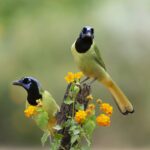
A busy flock of small brown birds suddenly arrives at your backyard feeder. At first glance, they might look like ordinary sparrows or winter-plumaged goldfinches. But as they flutter between feeding ports, you notice something unusual: delicate yellow markings along their wings, finely streaked bodies, and slender, sharply pointed bills.
You may be watching Pine Siskins, some of North America’s most unpredictable and entertaining winter feeder visitors.
Pine Siskins are small, energetic finches that travel in noisy flocks, often appearing in large numbers during years when natural seed supplies are scarce. They may crowd around nyjer feeders, hang upside down while searching for seeds, and move so quickly that identifying individual birds becomes a challenge.
What makes Pine Siskins particularly interesting is that their winter appearances vary enormously. One year, dozens might descend on your feeding station. The following winter, you may not see a single one.
Learning to recognize these little birds is especially rewarding because they can easily be overlooked among more familiar backyard finches.
In this guide, we’ll explore the key identification features of Pine Siskins, how to distinguish them from American Goldfinches and House Finches, where and when to look for them, and what their feeding behavior can reveal about their identity.
🐦 What Does a Pine Siskin Look Like?
Scientific name: Spinus pinus
The Pine Siskin is a small member of the finch family, Fringillidae, closely related to the American Goldfinch. Most Pine Siskins measure approximately 4.3 to 5.5 inches (11–14 centimeters) long, with slender bodies, short notched tails, and pointed wings.
At first glance, Pine Siskins appear mostly brown. Their feathers are marked with fine, dark streaks extending across the head, back, breast, and flanks. This streaky pattern gives them a somewhat sparrow-like appearance, particularly when they’re perched quietly.
However, closer observation reveals several distinctive features.
Pine Siskins have unusually narrow, pointed bills compared with many other finches. Their wings and tails contain yellow markings that may be difficult to see when the feathers are folded but become more noticeable during flight. Their overall shape is delicate, and their movements are quick and agile.
Unlike many songbirds with dramatic differences between male and female plumage, male and female Pine Siskins generally look quite similar.
Their subtle coloration can make them easy to overlook, but once you recognize the combination of streaked brown feathers, slender bills, and flashes of yellow, they become much easier to identify.
🔍 Five Key Field Marks for Identifying Pine Siskins
The best way to identify a Pine Siskin is to combine several field marks rather than relying on one feature alone.
1. Heavy Streaking Across the Body
One of the most noticeable features of Pine Siskins is their extensive brown streaking.
Their backs are marked with dark brown and buff-colored patterns, while the breast and belly usually display fine, dark streaks against a lighter background. Even the head can appear heavily marked.
This streaking is especially useful when distinguishing Pine Siskins from winter-plumaged American Goldfinches, which have comparatively smooth, unstreaked underparts.
At a crowded feeder, look for the birds that appear more heavily patterned than their neighbors. If nearly every part of the body seems streaked, a Pine Siskin is a strong possibility.
2. A Thin, Sharply Pointed Bill
Pine Siskins have remarkably slender bills for finches.
While House Finches and American Goldfinches have relatively stout, conical bills, the Pine Siskin’s bill appears narrower and more sharply pointed. This delicate shape is particularly noticeable when viewed from the side.
The bill is well suited to extracting small seeds from cones, seedheads, and specialized finch feeders.
If a brown, streaky bird is feeding beside an American Goldfinch, compare their bills. The siskin’s bill usually looks noticeably finer.
This is one of the most dependable identification clues, especially when yellow wing markings aren’t clearly visible.
3. Subtle Yellow Wing and Tail Markings
Despite their predominantly brown appearance, Pine Siskins possess yellow feather markings that can be surprisingly beautiful.
The yellow is usually concentrated along portions of the wings and tail. On a resting bird, these markings may appear as narrow yellow edges or patches partially hidden among the darker feathers.
When a Pine Siskin spreads its wings, adjusts its position, or takes flight, the yellow becomes much easier to see.
The intensity of the yellow varies among individuals. Some birds show only small amounts, while others display more extensive markings.
Because the yellow can be subtle or hidden, its absence in a brief view does not rule out a Pine Siskin.
4. A Short, Notched Tail
Pine Siskins have relatively short tails with a noticeable notch at the tip.
When the tail is folded, the notch may be difficult to see. However, a bird hanging from a feeder or balancing on a narrow perch may spread its tail enough to reveal the shape.
The combination of a short, notched tail and a slender, pointed bill helps distinguish Pine Siskins from many small sparrows, which often have different bill proportions and tail shapes.
American Goldfinches also have notched tails, so this feature is most useful when considered alongside plumage and bill shape.
5. Quick, Acrobatic Movements
Pine Siskins are active, agile birds that rarely remain still for long when feeding in a flock.
They cling to narrow perches, investigate tiny feeding openings, and sometimes hang upside down to reach seeds. At natural feeding sites, they may dangle from the tips of conifer branches while extracting seeds from cones.
Their movements often appear more restless than those of larger, heavier-bodied finches.
A flock of Pine Siskins can transform a quiet feeder into a lively gathering place, with birds constantly shifting positions and communicating through rapid, twittering calls.
These behaviors aren’t exclusive to Pine Siskins, but they provide helpful supporting evidence when paired with the bird’s physical features.
💛 Pine Siskin vs. American Goldfinch: How to Tell Them Apart
The American Goldfinch is one of the birds most frequently confused with the Pine Siskin, especially during winter.
During spring and summer, adult male American Goldfinches are brilliant yellow with black wings. In winter, however, both males and females become much duller, often displaying brownish or olive-colored plumage.
These subdued colors make winter goldfinches surprisingly similar to Pine Siskins.
Both species are small finches that enjoy nyjer and sunflower seeds. They may even feed together in the same flock, making careful identification especially important.
The most useful differences involve their breast markings, bill shapes, and wing colors.
| Feature | Pine Siskin | American Goldfinch in Winter |
|---|---|---|
| Overall color | Brown and heavily streaked | Pale brown or olive, relatively smooth |
| Breast | Noticeable dark streaks | Usually unstreaked |
| Bill | Thin and sharply pointed | Shorter, thicker, and conical |
| Wing markings | Yellow patches or edging | Pale white or buff wingbars |
| Tail | Short and notched | Notched, often appearing more pointed |
| Feeding behavior | Active, often in dense flocks | Active and social, often in flocks |
The easiest place to begin is the breast. A bird with strong brown streaks extending down its pale underside is more likely to be a Pine Siskin. A bird with a smooth, unstreaked breast and pale wingbars is more likely to be a winter American Goldfinch.
The bill provides an additional clue. Pine Siskins have narrower, more pointed bills, while goldfinches have broader, seed-cracking bills.
For additional details about goldfinch appearance and behavior, visit our American Goldfinch identification and species guide.
🪶 Pine Siskin vs. House Finch
Female House Finches are another common source of confusion.
Both birds have brown, streaked plumage, and both frequently visit backyard feeding stations. A quick glance at a female House Finch may reveal enough streaking to suggest a Pine Siskin.
However, House Finches are generally larger and more robust, with noticeably thicker bills.
A female House Finch has a rounded, stout bill designed for cracking seeds. A Pine Siskin’s bill is slimmer and more sharply pointed, giving its face a more delicate appearance.
House Finches also have longer-looking tails and generally lack the yellow wing and tail markings characteristic of Pine Siskins.
The streaking patterns can provide another clue. Female House Finches often show bold brown streaks on the breast and flanks, while Pine Siskins tend to have finer streaking distributed across much of the body.
When both species visit the same feeder, comparing their overall size and bill shape is particularly helpful.
🐤 Pine Siskin vs. Redpoll
Redpolls are small northern finches that may appear at feeding stations during winter, particularly in Canada and the northern United States.
Like Pine Siskins, they feed on small seeds, gather in flocks, and sometimes make unpredictable movements southward.
However, redpolls have several distinctive features that make identification easier.
The most obvious is the small red patch on the forehead, sometimes described as a red cap. Many also have a dark chin patch and pale, streaked bodies.
Pine Siskins lack the red forehead and instead show extensive brown streaking with subtle yellow markings in the wings and tail.
Their bill shapes also differ. Redpolls have relatively short, compact bills, while Pine Siskins have longer-looking, sharply pointed bills.
If you’re watching a lively flock of small winter finches, examining the forehead and bill is often enough to distinguish a redpoll from a Pine Siskin.
🎨 Do Male and Female Pine Siskins Look Different?
Male and female Pine Siskins are difficult to distinguish in the field because their plumage is remarkably similar.
Both sexes have heavily streaked brown feathers, slender bills, and yellow markings on the wings and tail. Although the extent and brightness of yellow coloration vary, this feature alone cannot reliably establish whether a bird is male or female.
Age also plays a role in appearance. Young Pine Siskins generally resemble adults, although juveniles may show buff-colored edging on some wing feathers.
Occasionally, birdwatchers encounter a rare variation called the green morph. These Pine Siskins have more extensive greenish-yellow coloration and often appear less heavily streaked than typical individuals.
Green-morph Pine Siskins are uncommon, and their unusual coloring can cause confusion with other finch species.
For most backyard birdwatchers, determining the sex of an individual Pine Siskin isn’t necessary. Recognizing the species through its body shape, bill, streaking, and wing markings is a much more practical goal.
🎶 What Does a Pine Siskin Sound Like?
Pine Siskins are often easier to hear than to see.
These lively finches constantly communicate while feeding and flying together. A flock may produce an almost continuous chorus of thin, high-pitched twittering notes.
Their most distinctive vocalization is a buzzy, rising call that is sometimes compared to the sound of a small zipper being pulled or a piece of paper being slowly torn.
This sharp, electrical-sounding note is particularly useful when identifying Pine Siskins among American Goldfinches.
Goldfinches have their own familiar flight calls, often described as a musical po-ta-to-chip pattern. Pine Siskins tend to sound harsher and more buzzy, although both species produce a range of vocalizations.
A large group of Pine Siskins may be audible before it reaches your feeder. Listen for repeated twittering and rising, wheezy calls coming from nearby trees.
Learning to recognize this distinctive sound can help you locate Pine Siskins even when their brown plumage blends into branches and winter vegetation.
You can listen to recordings in the Audubon Pine Siskin Field Guide.
🌲 Where Do Pine Siskins Live?
Pine Siskins are native to North America and are strongly associated with coniferous and mixed forests.
During the breeding season, many inhabit northern forests across Canada and the northern United States. They also breed in mountainous western regions, where conifer trees provide important natural food sources.
However, Pine Siskins are unusually mobile, and their seasonal movements are closely tied to the availability of seeds.
During winter, they may travel into lower elevations, more southerly regions, and suburban neighborhoods where they are rarely observed at other times.
They often visit woodland edges, parks, gardens, and backyards with suitable seed feeders.
In western North America, Pine Siskins may be regular visitors in some areas throughout the year. In eastern and central regions, their winter abundance can vary dramatically between seasons.
This changing distribution is one reason Pine Siskins are so interesting to backyard birdwatchers. A species that seems completely absent one winter may become one of the most numerous visitors the next.
❄️ Why Do Pine Siskins Appear in Large Flocks Some Winters?
Pine Siskins are famous for their unpredictable winter movements, sometimes called irruptions.
Unlike birds that follow relatively consistent migration routes each year, Pine Siskins respond strongly to changing food availability.
Their natural diet includes seeds from conifer trees such as pines, spruces, and firs, along with seeds from alders, birches, and other plants.
The production of these seeds varies considerably from year to year. When important food sources become scarce in northern forests, large numbers of Pine Siskins may travel farther south or into regions where they are not usually abundant.
During a major irruption, backyard feeders can suddenly attract unusually large flocks.
Some birdwatchers may see dozens of siskins gathering around nyjer feeders, while others report even larger concentrations. These flocks can remain in an area for varying lengths of time depending on food supplies and weather.
However, an irruption does not mean Pine Siskins will appear everywhere. Their movements remain irregular, and local conditions determine where birds gather.
This variability explains why a backyard may experience a memorable Pine Siskin winter followed by several seasons with few or no sightings.
Cornell’s Project FeederWatch helps document these changing patterns through observations submitted by backyard birdwatchers.
🌻 What Do Pine Siskins Eat at Bird Feeders?
Pine Siskins are primarily seed eaters, making them well suited to backyard feeding stations.
In natural habitats, they search for small seeds in conifer cones, deciduous trees, and herbaceous plants. Their slender bills allow them to extract food from narrow spaces and delicate seedheads.
At feeders, Pine Siskins are particularly attracted to nyjer seed, which is commonly sold as thistle seed. They also eat sunflower hearts, small sunflower pieces, and certain other seeds.
Nyjer feeders are especially popular because their tiny feeding openings are designed for small, agile finches.
Pine Siskins may cling directly to mesh feeders or perch on narrow feeding ports while extracting individual seeds. When feeding in groups, they often shift positions rapidly as other birds arrive.
Sunflower hearts can be another good choice because the protective outer shells have already been removed. This makes the food easier for small-billed birds to handle.
Freshness is important, particularly with nyjer. This seed can deteriorate when exposed to moisture, and old or spoiled seed may discourage birds from feeding.
If Pine Siskins suddenly stop using a feeder that still contains plenty of food, inspect the seed before assuming the birds have left the area.
Our guide to How Often Should You Change Bird Seed? explains how to recognize seed that needs replacing.
🏡 How to Attract Pine Siskins to Your Backyard
Attracting Pine Siskins begins with offering suitable food and creating a safe feeding environment, but their unpredictable movements mean there is no guarantee they will visit.
A dedicated nyjer feeder is one of the most effective options. Choose a feeder with small openings designed for finches, and fill it with a modest amount of fresh seed.
Sunflower hearts offered in a suitable tube feeder can provide another attractive food source.
Because Pine Siskins are social and may arrive in large groups, providing more than one feeding location can help reduce crowding. Spacing feeders apart may also limit direct contact between birds.
Natural landscaping provides additional opportunities. Native conifers, alders, birches, and seed-producing plants can attract finches when their natural foods are available.
Leaving suitable seedheads standing through autumn and winter may encourage siskins and other small seed-eating birds to investigate your garden.
Clean water can be another useful resource, particularly during freezing weather when natural water sources may be unavailable.
Most importantly, remember that Pine Siskins are nomadic. Even a well-maintained feeder may attract few birds during years when their movements take them elsewhere.
For more information about selecting feeders for different species, see Bird Feeders 101: How to Choose the Perfect Feeder for Your Backyard.
⚠️ Why Feeder Cleanliness Is Especially Important for Pine Siskins
Pine Siskins are among the finches that can be affected by outbreaks of salmonellosis, a bacterial disease that sometimes spreads through crowded backyard feeding stations.
Because these birds often feed in large, tightly packed flocks, contaminated food, water, or feeding surfaces can contribute to disease transmission.
Salmonellosis is caused by bacteria belonging to the genus Salmonella. Infected birds may become lethargic, appear unusually puffed up, or develop swollen eyelids. Some remain perched quietly for long periods and may allow people to approach unusually closely.
However, not every infected bird displays obvious symptoms, and similar symptoms can occur with other illnesses.
To reduce the risk of disease transmission, clean seed feeders regularly. Cornell recommends cleaning approximately every two weeks under ordinary conditions, with more frequent cleaning during periods of heavy use, wet weather, or suspected disease.
Feeders should be emptied and scrubbed to remove seed residue and droppings. Appropriate disinfection methods include a diluted bleach solution of one part household bleach to nine parts water, followed by thorough rinsing and complete drying before refilling. Follow product safety directions and never mix bleach with other cleaning chemicals.
The ground beneath feeders also needs attention. Remove accumulated hulls, droppings, and spoiled seeds to prevent contaminated material from building up.
If you notice a sick bird, promptly take down and clean your feeders and bird baths. If several birds appear ill, leave feeders down for at least a week to encourage the flock to disperse, and follow any local wildlife agency recommendations.
Avoid handling sick or dead birds with bare hands. Consult a licensed wildlife rehabilitator or local wildlife agency for guidance when necessary.
For a complete explanation of feeder maintenance, visit our How Often Should You Clean a Bird Feeder? guide.
📸 How to Photograph Pine Siskins for Identification
Pine Siskins can be challenging subjects for photography because they move quickly and often feed in crowded groups.
The best approach is to observe the flock before attempting to photograph individual birds. Notice which feeding ports they use most frequently and whether they pause on nearby branches before approaching the feeder.
Try photographing a bird from the side, where its slender bill and streaked breast are easier to see. A side view can also reveal the distinctive yellow markings along the folded wing feathers.
If possible, capture a Pine Siskin as it stretches or partially opens its wings. The yellow patches may become much more noticeable during these movements.
A photograph showing both the bill and breast is especially useful when distinguishing Pine Siskins from winter American Goldfinches.
Avoid relying on a single blurry image. Several photographs taken from different angles can reveal identifying details that aren’t immediately obvious in one picture.
When photographing a flock, look for individuals with different plumage patterns. Occasionally, a bird with more yellow or greenish coloration may stand out among the typical brown-streaked siskins.
Most importantly, maintain enough distance that the birds can continue feeding naturally without becoming stressed or repeatedly flushing from the area.
📝 A Quick Pine Siskin Identification Checklist
When an unfamiliar small brown bird arrives at your feeder, check these features before making an identification:
- Size: Small finch, approximately 4.3–5.5 inches long.
- Bill: Thin, narrow, and sharply pointed.
- Body: Brown with extensive dark streaking.
- Breast: Usually heavily streaked rather than plain.
- Wings: Subtle yellow patches or edging, sometimes hidden.
- Tail: Relatively short and notched, with yellow markings.
- Behavior: Active, agile, and often feeding in flocks.
- Voice: Thin twittering mixed with distinctive rising, buzzy calls.
- Season: Particularly noticeable during irregular winter movements.
No single feature guarantees identification, but a bird showing several of these characteristics is a strong candidate for Pine Siskin.
The most useful combination is a heavily streaked body, slender pointed bill, and subtle yellow in the wings or tail.
❓ Frequently Asked Questions About Pine Siskins
Are Pine Siskins rare backyard birds?
Pine Siskins are widespread in North America, but their abundance at individual feeding stations varies dramatically. In some regions, they are regular visitors, while in others they appear mainly during occasional winter irruptions. A backyard may attract large flocks one year and almost none the next.
What is the easiest way to identify a Pine Siskin?
Look for a small, heavily streaked brown finch with a narrow, sharply pointed bill and subtle yellow markings on its wings and tail. The combination of extensive streaking and a slender bill is especially helpful when distinguishing Pine Siskins from American Goldfinches.
Do Pine Siskins have yellow feathers?
Yes. Pine Siskins usually have yellow markings in their wings and tail, although these can be difficult to see when the feathers are folded. Some individuals show more extensive yellow than others, and the markings often become more noticeable when the bird takes flight.
What is the difference between a Pine Siskin and a goldfinch?
Pine Siskins are heavily streaked brown birds with narrow, sharply pointed bills and yellow wing markings. Winter American Goldfinches are generally smoother, less streaked birds with thicker, conical bills and pale wingbars. Both species may visit the same nyjer feeders.
Do Pine Siskins eat nyjer seed?
Yes. Nyjer seed is one of the foods most commonly used to attract Pine Siskins to backyard feeders. They readily use specialized finch feeders with tiny openings, and they also eat sunflower hearts and other small seeds.
Why are Pine Siskins suddenly at my feeder?
A sudden appearance may be associated with changing natural seed supplies or a regional winter irruption. Pine Siskins move widely in search of food, and large flocks can arrive in areas where they were previously uncommon.
Do Pine Siskins migrate every winter?
Pine Siskins do not follow the same predictable migration pattern as many other songbirds. Their winter movements depend strongly on food availability. Some populations remain in suitable areas year-round, while others travel considerable distances during certain winters.
Are Pine Siskins aggressive at feeders?
Pine Siskins can be assertive when feeding in large flocks. They may jostle for position, displace other small birds, or crowd around feeding ports. These interactions are normal social behavior, although crowded feeding conditions also make good feeder hygiene especially important.
Why do Pine Siskins hang upside down?
Pine Siskins are agile feeders that naturally cling to branch tips and seedheads. Hanging upside down allows them to reach seeds that might otherwise be difficult to access. This behavior is especially common when they forage in conifer trees or use mesh feeders.
Can Pine Siskins spread disease at feeders?
Yes. Like other flocking finches, Pine Siskins can be affected by diseases such as salmonellosis. Crowded feeders and contaminated food or water can contribute to transmission. Regular cleaning, fresh seed, and temporarily removing feeders when sick birds appear can help reduce risks.
🔗 Related Reading
Explore these additional guides from For the Birds to learn more about identifying winter finches and maintaining a healthy backyard feeding station.
- American Goldfinch: Identification, Habitat, Diet, Nesting & More
- Winter Bird Feeding Guide: What to Feed Birds and How to Help Them Through Cold Weather
- Bird Feeders 101: How to Choose the Perfect Feeder for Your Backyard
- How Often Should You Clean a Bird Feeder? A Complete Cleaning Guide
- How Often Should You Change Bird Seed? Keeping Your Feeders Fresh and Safe
- How to Keep Bird Seed Dry in Winter: Protecting Feeders From Snow, Ice, and Moisture
✨ Final Thoughts
Pine Siskins may not have the brilliant colors of male American Goldfinches or the striking patterns of Northern Cardinals, but these lively little birds are among the most fascinating visitors to winter feeding stations.
Their delicate bills, finely streaked plumage, subtle flashes of yellow, and restless flocking behavior make them distinctive once you know what to look for.
Perhaps the most exciting thing about Pine Siskins is their unpredictability. You can watch the same backyard feeder for years without seeing many, only to have a flock suddenly arrive and transform an ordinary winter morning into a memorable birdwatching experience.
The next time a group of small brown finches gathers around your nyjer feeder, look beyond their ordinary-looking colors. Examine their bills, search for yellow wing markings, and listen for their distinctive buzzy calls.
You may discover that those unfamiliar little birds are Pine Siskins, making one of their remarkable winter appearances in your backyard.
📚 Sources & Further Reading
- Cornell Lab of Ornithology — Pine Siskin Identification
- Cornell Lab of Ornithology — Pine Siskin Overview
- Cornell Lab of Ornithology — Pine Siskin Similar Species
- National Audubon Society — Pine Siskin Field Guide
- Project FeederWatch — Tracking Pine Siskin Movements
- Project FeederWatch — Salmonellosis
- Cornell Lab of Ornithology — How to Clean Your Bird Feeder