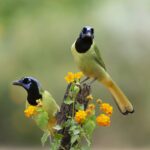
Sometimes all you can see of a bird is its outline.
A bird may be perched against a bright morning sky, flying too high overhead for its colors to show, sitting in deep shade, or disappearing into the evening light. Under those conditions, a field guide full of colorful plumage illustrations may not seem very helpful.
But the bird has not actually lost its identifying features.
Its body proportions, bill shape, wing shape, tail length, posture, neck, legs, and overall profile are still visible. Together, those characteristics create a silhouette that can often tell you what kind of bird you are looking at before you see a single feather color.
Learning bird silhouettes is one of the best ways to become faster and more confident at identification.
🐦 Start With the Whole Bird
Before concentrating on one tiny detail, look at the bird as a complete shape.
Does it look round and compact or long and slender? Is the head large compared with the body? Does the bird appear upright or horizontal? Is the tail unusually long? Does it seem almost neckless, or is a long neck one of its most obvious features?
These first impressions can immediately narrow the possibilities.
A compact finch has a very different outline from a lanky shorebird. A duck sitting on the water looks nothing like a heron standing at the edge of the same pond.
Try to identify the basic body plan before thinking about species.
📏 Use Size as a Supporting Clue
Size is useful, but it is difficult to judge accurately when a bird is distant or silhouetted.
Instead of trying to estimate exact inches, compare the bird with familiar species.
Is it smaller than a sparrow? About sparrow-sized? Closer to a robin? As large as a crow? Goose-sized or larger?
If several birds are together, comparisons become even easier.
A small bird sitting beside an American Robin gives you an immediate reference that you would not have if the bird were alone.
Size works best when combined with shape rather than used on its own.
👤 Look at the Bird’s Posture
Posture can transform an otherwise vague silhouette into something recognizable.
Some birds perch almost vertically.
Others hold their bodies horizontally.
Flycatchers often sit upright on exposed perches while watching for insects. Woodpeckers commonly cling vertically to tree trunks. Nuthatches move headfirst along bark in positions that would look unusual for most songbirds.
Shorebirds may stand tall on long legs, while many ground-feeding songbirds have a more compact stance.
Ask not only what the bird looks like, but how it holds itself.
🧠 Pay Attention to the Head
Head shape is easy to overlook because people are often searching for color patterns instead.
Notice whether the bird has a rounded head, flat crown, peaked head, crest, or noticeable forehead.
Does the head look large or tiny relative to the body?
Owls often appear large-headed and short-necked. Some ducks show distinctive head profiles. Cardinals have a conspicuous crest. Woodpeckers can show elongated head shapes created partly by their bills.
Even when a crest is flattened, the overall head profile may still provide a clue.
👃 Study the Bill Shape
The bill is one of the most useful parts of a silhouette.
A short, thick, triangular bill suggests a seed-eating bird such as a finch or sparrow.
A long, thin bill may belong to an insect-eating bird, hummingbird, or shorebird depending on the rest of the silhouette.
A hooked bill suggests a bird of prey.
A long, heavy spear-like bill can point toward a heron.
A broad, flattened bill immediately suggests waterfowl.
Do not worry about measuring the bill precisely. Instead, compare its length and thickness with the bird’s head.
Is it shorter than the head? About the same length? Twice as long?
Those proportions are often surprisingly distinctive.
🌻 Recognize Finch and Sparrow Silhouettes
Finches and many sparrows are relatively small, compact birds with sturdy conical bills.
At a distance, color may disappear completely, leaving you with what seems like a generic little bird.
Look at the bill first.
Finches tend to have substantial seed-cracking bills, although exact proportions vary among species. Sparrows also commonly have conical bills but differ in body shape, tail length, posture, and behavior.
Some finches look chunky and short-tailed. Others appear slimmer.
Silhouette alone may not always get you to species, but recognizing “small seed-eating songbird” is already an important step.
🎵 Recognize Wren Silhouettes
Wrens often combine small bodies with relatively long, slender bills and distinctive tails.
Many hold the tail noticeably upright, creating a silhouette that can be recognized even in poor light.
They frequently move through dense vegetation rather than sitting motionless for long periods.
When you see a tiny bird with a fine bill and a tail cocked toward the sky, a wren should be among your possibilities.
The exact species can then be narrowed using size, habitat, range, song, and any markings you can see.
❤️ Recognize Cardinal Silhouettes
Northern Cardinals provide excellent practice for silhouette identification.
The tall crest immediately changes the shape of the head.
The bird also has a large, thick bill and a relatively long tail.
Even when an individual is completely backlit and appears black, the combination of crest, heavy bill, and long tail can make a cardinal recognizable.
This is a useful reminder that brilliant color is not always the most important identification feature—even for a bird famous for its color.
🐦 Recognize Crow and Raven Silhouettes
Crows and ravens both appear as large, dark birds, so silhouette becomes particularly valuable.
Common Ravens generally look heavier and more powerful, with larger bills and thicker necks.
Tail shape becomes especially useful in flight. A raven’s spread tail is often wedge-shaped, while an American Crow’s is more rounded or fan-shaped.
Ravens can also appear longer-winged and may soar more frequently.
It is best to combine silhouette with flight behavior, voice, habitat, and size rather than relying on any single characteristic.
🪵 Recognize Woodpecker Silhouettes
A woodpecker clinging vertically to a tree trunk already provides an enormous behavioral clue.
Its silhouette often shows a straight, sturdy bill projecting from the head and a relatively stiff tail pressed toward the tree for support.
Woodpeckers are built differently from ordinary perching songbirds because their bodies are adapted for climbing vertical surfaces.
When they fly, many woodpeckers also use a distinctive undulating pattern.
Combining the perched silhouette with that flight style can make identification much easier.
🐤 Recognize Flycatcher Silhouettes
Many flycatchers sit upright on exposed branches, wires, fences, or posts while watching for flying insects.
Their bills often look relatively broad and flat compared with the narrow pointed bills of some other songbirds.
They may suddenly leave the perch, catch an insect, and return to the same or a nearby position.
When plumage details are hidden, that combination of upright silhouette, bill shape, exposed perch, and behavior can strongly suggest a flycatcher.
Exact species may still require voice, range, habitat, or visible field marks.
🦉 Recognize Owl Silhouettes
Owls usually have distinctive proportions.
Their heads are large relative to the body, their necks seem very short, and their bodies often look compact and broad.
Some species have ear tufts that alter the outline of the head, although those tufts are not actually ears.
Others have smoothly rounded heads.
A perched owl may look almost like a large oval with a head attached.
At dusk, this bulky, large-headed silhouette can sometimes be more obvious than any facial or plumage details.
🦅 Recognize Hawk Silhouettes
Hawks can often be grouped by proportions before individual species are considered.
Buteos such as Red-tailed Hawks generally have broad wings and comparatively broad bodies, with tails that look shorter relative to the wings.
Accipiters such as Cooper’s Hawks have shorter rounded wings and noticeably longer tails.
That long tail helps them maneuver through woodland.
When perched, also notice the chest, head projection, leg proportions, and tail length.
When flying, wing-to-tail proportions become even more useful.
🦅 Recognize Falcon Silhouettes
Falcons tend to look sleek.
In flight, their long, tapered, pointed wings contrast strongly with the broader, rounder wings of many hawks.
A flying Peregrine Falcon can have an almost streamlined, aerodynamic appearance.
American Kestrels share the pointed-wing falcon shape but are much smaller.
When you see a raptor with sharply pointed wings rather than broad rounded ones, falcon should move high on your list of possibilities.
🦅 Recognize Eagle Silhouettes
Eagles are large, broad-winged raptors.
In flight, their outer primary feathers may be visibly separated, creating the “fingered” appearance seen in many large soaring birds.
Their wings are long and substantial rather than sharply pointed.
A soaring eagle can look remarkably steady.
When identifying a distant eagle, avoid depending solely on perceived size. Distance can make even a huge bird appear small.
Wing length, tail proportions, head projection, flight style, and plumage pattern provide better evidence.
🦃 Recognize Vulture Silhouettes
Vultures are among the best birds for practicing silhouettes because they spend so much time soaring against the sky.
Turkey Vultures have long wings and relatively long tails. They commonly soar with their wings raised in a shallow V and frequently tilt from side to side.
Black Vultures have shorter tails and more compact proportions.
At a great distance, you may see almost no plumage detail, yet the combination of wing posture, tail length, and soaring style can still separate the two.
🦆 Recognize Duck Silhouettes
Ducks have distinctive proportions whether sitting on water or flying.
On the water, their bodies generally appear low and horizontal, with relatively short necks compared with geese or swans.
Their bills are broad and flattened.
In flight, many ducks look compact and powerful, with pointed wings and rapid wingbeats.
Some species have noticeably large heads, long necks, or elongated tails.
Once you recognize the basic duck silhouette, head and bill shape can help narrow the group even further.
🪿 Recognize Goose Silhouettes
Geese have heavy bodies and long necks.
In flight, the neck remains extended forward, while the legs trail behind.
The combination creates a stretched horizontal silhouette quite unlike that of a duck.
Their broad wings move with powerful, regular strokes.
Flocks often fly in lines or V-shaped formations, although this should not be treated as a requirement.
Even a single distant goose is often identifiable as a goose from its neck-to-body proportions alone.
🦢 Recognize Swan Silhouettes
Swans exaggerate the long-necked waterfowl shape even further.
Their very long necks can be nearly as visually prominent as their large bodies.
On the water, that long curved or upright neck immediately separates them from most ducks and geese.
In flight, swans extend the neck forward and may look extraordinarily long from bill to tail.
Their great size can help, but body proportion is more dependable when distance is uncertain.
🌊 Recognize Cormorant Silhouettes
Cormorants can confuse beginners because their dark bodies, long necks, and aquatic habits do not fit the familiar duck shape.
They have long necks, fairly long bodies, hooked bills, and tails that can appear more substantial than those of many waterbirds.
They often swim very low in the water.
Cormorants are also famous for perching with their wings spread open.
A dark waterbird standing upright with its wings extended to either side creates one of the more distinctive silhouettes around lakes, rivers, and coasts.
🪶 Recognize Heron Silhouettes
Herons look tall and angular when standing.
Their long legs, long pointed bills, and exceptionally long necks create an unmistakably stretched silhouette.
But flight changes the picture.
Herons typically retract the neck, folding it back toward the shoulders rather than holding it straight forward. This creates a surprisingly compact head-and-neck profile while the long legs trail behind.
That neck posture is one of the easiest ways to distinguish a flying heron from a crane.
🏞️ Recognize Crane Silhouettes
Cranes are also long-legged, long-necked birds, but they generally fly with their necks extended straight forward.
Their legs trail well behind the body.
The result is a long silhouette at both ends.
Seeing that fully extended neck is a major clue when comparing cranes with herons or egrets.
On the ground, cranes stand tall and can appear more substantial than many herons, but distance makes size difficult to judge.
Use neck posture, body proportions, habitat, and behavior together.
🏖️ Recognize Shorebird Silhouettes
Shorebirds come in many shapes, but bills and legs are particularly useful.
Some have very long legs and long straight bills.
Others are compact, short-billed birds that scurry across beaches.
Bills may be straight, curved upward, or curved downward.
Instead of trying to identify a distant shorebird by subtle brown-and-gray plumage, first look at the overall proportions.
How long is the bill compared with the head? Do the legs look long or short? Is the body plump or slender?
Those structural clues can dramatically reduce the number of possibilities.
🌊 Recognize Gull Silhouettes
Gulls generally have sturdy bodies, relatively large heads, medium-to-long bills, and long wings.
Standing gulls often look front-heavy compared with more delicate terns.
In flight, their long wings allow them to flap and glide efficiently.
Tail shape, bill proportions, wing length, and body bulk all help separate gulls from other coastal birds.
Identifying the exact gull species can still be difficult because plumage changes with age, but recognizing the basic gull silhouette is much easier.
🪽 Recognize Tern Silhouettes
Terns tend to look more delicate than gulls.
Their bodies are slimmer, their wings are long and pointed, and many have deeply forked tails.
Their bills can appear long and sharp.
A flying tern may seem light and buoyant before it suddenly points downward and dives toward the water.
When viewed only as a silhouette, that combination of pointed wings, slim body, sharp bill, and often forked tail can distinguish a tern from a heavier gull.
🌬️ Recognize Swallow Silhouettes
Swallows have streamlined bodies and long, pointed wings.
Many species also have forked or notched tails.
They spend considerable time in the air, often making rapid turns while catching insects.
Against the sky, the narrow body and swept-back wings create a graceful, aerodynamic silhouette.
Different swallow species vary in tail shape and proportions, so those details can become useful once you recognize the bird as a swallow.
🌪️ Recognize Swift Silhouettes
Swifts can look superficially similar to swallows but usually create a different impression.
Their long, narrow, curved wings can form a crescent or boomerang-like silhouette.
The body appears relatively small between those large wings.
Swifts spend an extraordinary amount of time flying and may race through the sky with rapid, flickering wingbeats.
When you see what looks like a flying crescent rather than a conventional bird shape, consider a swift.
🌸 Recognize Hummingbird Silhouettes
Hummingbirds are tiny but structurally distinctive.
Their bills are long and narrow, their bodies compact, and their wings may become almost invisible during hovering because they move so rapidly.
A perched hummingbird often looks like a tiny body with a disproportionately long bill.
In flight, hovering behavior may identify the group before silhouette does.
When the bird pauses on a branch, however, bill-to-body proportions become extremely useful.
🕊️ Recognize Dove and Pigeon Silhouettes
Doves and pigeons have small heads, plump bodies, and relatively short bills.
Their chests often look full, creating a rounded silhouette.
Many have longish tails compared with their bulky bodies.
In flight, their wings can look pointed, and takeoff may be fast and explosive.
The small-headed, heavy-chested body shape is particularly useful for recognizing them when perched on wires, rooftops, or bare branches.
🐦 Tail Shape Can Transform an Identification
After considering overall body shape, study the tail.
Is it long or short?
Does it end in a straight edge, rounded curve, central point, notch, or deep fork?
A deeply forked tail immediately narrows the field.
A long wedge-shaped tail can distinguish a raven from a crow in flight.
An extremely long tail can draw attention toward groups such as certain flycatchers, magpies, or accipiters.
Tail proportions are often easier to see in silhouette than subtle feather markings.
🪽 Learn the Basic Wing Shapes
Flying birds reveal another set of silhouette clues through their wings.
Broad wings with separated “fingers” at the tips are common among many large soaring birds.
Long pointed wings suggest fast-flying groups such as falcons, swallows, terns, and some waterfowl, although body and tail proportions separate those groups.
Shorter rounded wings are often associated with maneuverability.
Do not identify a bird from wing shape alone. Use it to determine which general type of bird fits the entire silhouette.
👣 Check the Legs
Legs can provide surprisingly strong clues.
Are they almost invisible beneath the body, or do they extend far below a perched bird?
Do they trail behind the tail in flight?
Long-legged birds such as herons, cranes, flamingos, and many shorebirds have distinctive outlines.
Short-legged songbirds create a very different silhouette.
Even the way a bird stands can help. Some appear high above the ground on long legs, while others seem almost to sit directly on their feet.
🌳 A Perched Silhouette Is Different From a Flying One
Do not expect the same bird to have the same apparent shape in every situation.
A heron’s enormous neck nearly disappears when folded during flight.
A hawk’s broad wings dominate its flying silhouette but vanish when perched.
A cardinal’s tail may appear especially long on a bare branch but less obvious when it is moving through dense foliage.
Try to learn birds in multiple positions.
Watch familiar birds perched, feeding, taking off, and flying away. This helps your brain connect several silhouettes with the same species.
🌅 Backlighting Can Actually Help
Birders usually think of backlighting as a problem because it hides color.
For silhouette practice, it can be an advantage.
When a bird is positioned against a bright sky, the absence of distracting plumage forces you to notice structure.
Look at the head, bill, body, tail, wings, neck, and legs as simple geometric relationships.
With practice, you may find that a strongly backlit bird is easier to place into the correct family than a colorful but confusing view through dense vegetation.
🎨 Don’t Guess a Color From a Silhouette
Strong backlighting can distort color badly.
A bright red cardinal may look completely black.
A pale bird may appear dark brown.
Reflected light can sometimes add misleading colors around the edges.
If the lighting is poor, deliberately ignore color.
Concentrate on the bird’s shape until you have narrowed your options. If the bird later moves into better light, use plumage as confirmation.
🔭 Use Binoculars to Study Proportions
Binoculars can reveal fine structural differences that are difficult to see with the naked eye.
But before raising them, look at the bird’s general silhouette.
Then keep your eyes fixed on the bird as you bring the binoculars into position.
Once magnified, inspect the bill-to-head ratio, tail length, head shape, leg proportions, and posture.
When observing birds in flight, avoid concentrating so heavily on one feature that you lose the overall shape.
The silhouette is a whole-bird clue.
📸 A Photograph Can Preserve the Shape
Even a poor photograph can be useful for silhouette identification.
A dark or blurry image may still capture body proportions, tail shape, wing length, head profile, and bill size.
After the bird leaves, examine the image without worrying about whether it is attractive enough to share.
Sometimes increasing the brightness reveals plumage. Other times the most useful information remains the outline itself.
A photograph also gives you time to compare proportions carefully rather than relying on a few seconds of observation.
📝 Describe the Shape Before Naming the Bird
When you see an unfamiliar silhouette, describe it before guessing.
You might think:
Small bird, round body, thick triangular bill, medium tail.
Or:
Large bird, broad wings, short tail, small-looking head.
Or:
Tall bird, extremely long legs, dagger-like bill, long neck.
Those descriptions are much more useful than immediately thinking, “Maybe it’s a sparrow” or “It looks like some kind of hawk.”
Collect the evidence first.
Then identify.
🌳 Add Behavior to the Silhouette
Shape becomes much more powerful when combined with behavior.
A small bird with a pointed bill clinging to a tree trunk suggests a different group from an identically sized bird catching insects in midair.
A long-legged bird probing mud differs from one standing motionless beside a pond.
A large broad-winged bird circling high overhead differs from one flying rapidly through a forest.
Silhouette tells you how the bird is built. Behavior often tells you why it is built that way.
Together, they can be remarkably diagnostic.
🌎 Add Habitat, Location, and Season
A silhouette rarely exists in isolation.
Consider where you saw the bird.
A long-billed silhouette on an ocean beach presents different possibilities from a similar shape in a forest.
Think about geographic range as well. Not every species occurs everywhere.
Finally, consider the season.
Migration can introduce unfamiliar silhouettes for a few weeks each year, while resident birds may remain familiar throughout the seasons.
Shape should narrow the field. Habitat, range, season, sound, behavior, and plumage can then confirm the identification.
🧠 Learn Families Before Species
Silhouette identification becomes much easier when you stop expecting yourself to immediately name every bird.
Start with broad categories.
Can you recognize a duck?
A gull?
A hawk?
A woodpecker?
A finch?
A shorebird?
A heron?
Once those basic shapes become familiar, begin noticing differences within each group.
First you recognize “hawk.” Later you recognize “buteo.” Eventually you may recognize a Red-tailed Hawk before you see its red tail.
That progression is exactly how identification skills develop.
⭐ Practice With Birds You Already Know
You do not need rare birds to practice silhouette identification.
Watch the familiar species around your home.
Look at an American Robin against the evening sky.
Notice a cardinal on a bare branch.
Study the outline of a crow flying overhead.
Watch how a woodpecker looks when clinging to a trunk and then compare its shape when it flies away.
Because you already know the identification, you can concentrate entirely on learning the shape.
Over time, those familiar silhouettes become reference points for unfamiliar birds.
🐦 Shape Is Often More Reliable Than Color
Color attracts our attention, but shape provides some of the most durable clues in bird identification.
Light can change how colors look.
Males and females may have different plumage.
Juveniles may look unlike adults.
Feathers can change with season.
But the basic proportions of a species remain much more consistent.
When the bird becomes nothing more than a dark shape against the sky, look at the head, bill, neck, body, wings, legs, and tail.
Notice how those parts fit together.
Then add behavior, habitat, location, season, flight style, song, and any field marks you eventually manage to see.
With enough practice, a silhouette stops looking like an anonymous black bird.
It starts looking like a finch, a woodpecker, a falcon, a heron—or perhaps even a familiar species you can recognize before it ever moves into the light.
🔗 Related Articles
- Bird Identification: How to Identify the Birds You See
- How to Identify Birds by Flight
- How to Identify Birds by Song
- Bird Species Guide