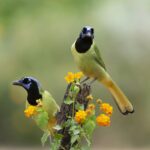
A birdhouse can be much more than a charming garden decoration. Choose the right design, place it in suitable habitat, and you may give a cavity-nesting bird a safe place to raise its young.
The key is choosing a birdhouse for the birds rather than simply for its appearance.
Different birds need different entrance-hole sizes, interior dimensions, mounting heights, and surrounding habitats. A box designed for a chickadee is not necessarily suitable for a bluebird, while a decorative house with a large doorway and tiny floor may not be safe for any nesting species at all.
Fortunately, choosing a good birdhouse becomes much easier once you know what to look for.
🐦 What Makes a Good Birdhouse?
A well-designed birdhouse—often called a nest box—should imitate some of the important qualities of a natural tree cavity while protecting the birds inside from weather and predators.
Look for a birdhouse with:
| Feature | Why It Matters |
|---|---|
| Correct entrance-hole size | Helps attract the intended bird species |
| Untreated wood | Provides a natural, insulating structure |
| Thick walls | Help buffer temperature changes |
| Ventilation | Allows hot air to escape |
| Drainage | Prevents water from collecting inside |
| Sloped, overhanging roof | Helps protect the nest from rain |
| No exterior perch | Makes access more difficult for predators |
| Rough interior below entrance | Helps young birds climb toward the opening |
| Opening side or roof | Makes monitoring and cleaning easier |
| Predator protection | Reduces access by raccoons, snakes, cats, and other predators |
Cornell Lab of Ornithology’s NestWatch recommends untreated wood such as pine or cedar, walls at least about 3/4 inch thick, drainage openings, ventilation, an extended roof, and easy access for cleaning.
Those functional details are far more important than decorative shingles, bright paint, or elaborate shapes.
🏡 First Decide Which Bird You Want to Attract
Before buying a birdhouse, look at the birds already living around your property.
Only cavity-nesting birds are likely to use a traditional birdhouse. Robins, cardinals, Mourning Doves, and many other familiar backyard birds normally build open nests and are unlikely to move into an enclosed box.
Common North American birds that may use nest boxes include:
- Eastern, Western, and Mountain Bluebirds
- House Wrens
- Carolina Wrens
- Black-capped Chickadees
- Carolina Chickadees
- Mountain Chickadees
- Tree Swallows
- Tufted Titmice
- White-breasted Nuthatches
- Red-breasted Nuthatches
- Brown-headed Nuthatches
- Great Crested Flycatchers
- Prothonotary Warblers
- Purple Martins
- Wood Ducks
- Eastern and Western Screech-Owls
- American Kestrels
Knowing your target species is important because there is no universal birdhouse that works equally well for every bird.
📏 Choose the Correct Entrance-Hole Size
The entrance hole is one of the most important measurements on a birdhouse.
A hole that is too small prevents your target bird from entering. A hole that is unnecessarily large may allow larger competitors or predators to reach the nest.
Here are examples of NestWatch recommendations for several familiar North American cavity nesters:
| Bird | Recommended Entrance Hole |
|---|---|
| House Wren | 1 inch round |
| Black-capped Chickadee | 1 1/8 inches round |
| Carolina Chickadee | 1 1/8 inches round |
| Prothonotary Warbler | 1 1/4 inches round |
| Tufted Titmouse | 1 1/4 inches round |
| White-breasted Nuthatch | 1 1/4 inches round |
| Tree Swallow | 1 3/8 inches round |
| Eastern Bluebird | 1 1/2 inches round |
| Western Bluebird | 1 1/2 inches round |
| Mountain Bluebird | 1 9/16 inches round |
| Carolina Wren | 1 1/2 inches round or appropriate slot entrance |
| Great Crested Flycatcher | 1 3/4 inches round |
| Northern Flicker | 2 1/2 inches round |
| Eastern Screech-Owl | 3 inches round |
| American Kestrel | 3 inches round |
These measurements illustrate why choosing the species first is so useful. A house intended for a chickadee may look almost identical to a bluebird box from a distance, yet the entrance dimensions can be quite different.
Always check a reliable species-specific nest-box plan before purchasing or building your box.
🪵 Choose Natural, Durable Materials
For most backyard nest boxes, untreated wood is one of the best materials.
Cedar, pine, cypress, and similar woods can provide insulation while creating a surface birds can grip easily. Thick wooden walls help protect the nest from rapid temperature changes.
Avoid pressure-treated lumber or wood treated with potentially harmful preservatives.
A natural wood interior is generally best. If you want to paint or finish the exterior, choose a bird-safe product and keep coatings away from the interior and entrance hole.
Natural or light exterior colors can also be useful in hot climates because very dark surfaces may absorb more solar heat.
☀️ Ventilation Is Essential
A birdhouse can become surprisingly hot during warm weather.
Nestlings cannot simply leave the nest when temperatures rise, making proper ventilation particularly important.
Good boxes have small ventilation holes or gaps near the upper portion of the walls. The openings allow rising hot air to escape while still leaving the nest protected from rain.
This becomes especially important if your birdhouse receives significant sun exposure.
In hot regions, shade can be valuable as well. Avoid placing a box where it will bake in strong afternoon sunlight for hours if suitable shaded or morning-sun locations are available.
💧 Make Sure the Birdhouse Has Drainage
Rain occasionally finds its way into even a well-designed birdhouse.
Without drainage, moisture can accumulate around the nest.
Look underneath the box. There should be drainage openings in the floor or gaps at the corners that allow water to escape.
A recessed floor and an overhanging roof can provide additional weather protection.
The roof should ideally slope slightly so rain runs away rather than collecting on top.
🏠 Look for a Roof With a Generous Overhang
A good birdhouse roof serves several purposes.
It shades the entrance, helps keep rain away from the nest, and may make it more difficult for predators to reach inside.
Cornell’s NestWatch recommends a sloped roof that extends beyond the front and sides of the box.
When comparing two similarly sized houses, the one with the larger protective roof is often the better choice for actual nesting birds.
🚫 Skip the Perch
The tiny peg underneath the entrance may make a birdhouse look adorable.
The birds generally don’t need it.
Cavity-nesting birds can enter the opening without standing on an exterior perch. A perch may instead make it easier for predators or competing birds to gain access to the entrance.
For a functional nest box, no perch is usually better.
🐣 Check the Inside of the Birdhouse
The inside matters almost as much as the outside.
One particularly important feature is the surface underneath the entrance.
Young birds preparing to fledge need to climb toward the opening. If the interior wall is extremely smooth, that can be more difficult.
A quality box may have rough unfinished wood or shallow horizontal grooves below the entrance that act like a tiny ladder.
Deep boxes for birds such as Wood Ducks require even more specialized interior climbing surfaces so ducklings can reach the entrance.
🦝 Protect the Nest From Predators
A birdhouse can concentrate eggs, nestlings, and adult birds in one predictable location, so predator protection deserves serious attention.
Possible nest-box predators include:
- Raccoons
- Snakes
- Cats
- Squirrels
- Chipmunks
- Other birds
One of the most effective strategies for many small backyard nest boxes is mounting the house on a free-standing metal pole equipped with a predator baffle rather than attaching it directly to a tree.
Trees and wooden fence posts can provide convenient climbing routes for predators.
Predator guards come in several designs, including cone-shaped baffles, stovepipe-style baffles, and guards mounted around the entrance.
The best setup depends on the birds you are attracting and the predators common in your area.
📍 Put the Birdhouse in the Right Habitat
A perfectly constructed birdhouse can remain empty if it is installed in the wrong location.
Birds choose nesting areas based on habitat as well as the box itself.
Bluebirds
Bluebirds generally favor open or semi-open environments with low vegetation and scattered trees.
Suitable locations can include:
- Large lawns
- Meadows
- Pastures
- Orchards
- Field edges
- Open rural landscapes
Eastern Bluebird boxes are commonly mounted around 3 to 6 feet high, while Mountain and Western Bluebird boxes are commonly placed around 4 to 6 feet high.
Chickadees
Chickadees prefer wooded surroundings, woodland edges, mature trees, and similar habitats.
Depending on the species, boxes are commonly placed roughly 4 to 15 feet above the ground.
House Wrens
House Wrens readily inhabit suburban environments and can use boxes around yards, gardens, forest edges, and shrubby areas.
NestWatch recommends approximately 5 to 10 feet for House Wren boxes.
Tree Swallows
Tree Swallows prefer open country, often near water.
Meadows, marshes, ponds, and open fields can all provide suitable habitat. Boxes are commonly mounted around 5 to 6 feet high.
Screech-Owls
Screech-owl boxes are much larger than songbird houses and are normally placed considerably higher, often around 10 to 30 feet above the ground.
The lesson is simple: match the box to the bird and the bird to the habitat.
🧭 Which Direction Should a Birdhouse Face?
There is no single compass direction that is ideal for every birdhouse in every location.
Local weather and habitat matter.
As a general principle, try to protect the entrance from prevailing winds and intense afternoon sun.
Some species-specific recommendations are more precise. NestWatch, for example, lists eastern exposure for Tree Swallow boxes and notes preferences among the bluebirds that favor facing the entrance toward open habitat.
In a very hot backyard, avoiding prolonged afternoon sun can be particularly valuable.
Instead of automatically pointing every birdhouse in the same direction, consider:
- Prevailing wind
- Afternoon sun
- Nearby trees
- Open flight paths
- Habitat preferences of the target bird
🌳 Tree, Fence, or Pole?
A tree may seem like the most natural place for a birdhouse, but it is not necessarily the safest.
For many small nest boxes, a free-standing metal pole offers advantages because it can be paired with a predator baffle and positioned away from branches that predators could use to reach the box.
Fence posts and trees are easier for raccoons, squirrels, snakes, and other climbing animals to navigate.
A pole also makes it easier to place the box at the correct height and orientation.
🧹 Choose a Birdhouse You Can Open
One of the easiest ways to spot a decorative birdhouse masquerading as a functional one is to ask:
Can I open it?
A good nest box should have a hinged side, front, roof, or other access panel.
You will need access to:
- Inspect the condition of the box
- Monitor nesting activity responsibly
- Remove old nesting material when appropriate
- Check for damage
- Clean the house between nesting seasons
Avoid houses that are permanently sealed except for the entrance hole.
Beautiful construction does little good if the interior can never be maintained.
🪹 Should You Put Nesting Material Inside?
For most small songbird boxes, you do not need to build a nest for the birds.
Birds generally bring their own nesting materials.
Some specialized boxes are different.
Certain cavity nesters, including screech-owls and Wood Ducks, benefit from an appropriate layer of untreated wood chips or shavings because they do not construct the same type of elaborate nest used by many songbirds.
Always follow recommendations for the particular species your nest box is designed to attract rather than filling every birdhouse with nesting material.
🎨 Are Decorative Birdhouses Safe?
Some are. Many are not.
A decorative birdhouse can be perfectly functional if it also provides:
- Correct interior dimensions
- Proper entrance size
- Ventilation
- Drainage
- A protective roof
- Safe materials
- Cleaning access
- Adequate insulation
The problem is that many ornamental birdhouses are designed primarily to decorate a garden.
Common warning signs include:
- Very large entrance holes
- Thin walls
- No ventilation
- No drainage
- Permanently sealed construction
- Tiny interior space
- Large decorative perches
- Dark metal surfaces exposed to full sun
- Paint or finishes inside the nesting chamber
There is nothing wrong with using decorative birdhouses as garden art. Just don’t assume every house-shaped ornament is suitable for nesting birds.
🌡️ Think About Summer Heat
Heat deserves more attention when choosing and positioning a nest box.
Recent research and guidance highlighted by Audubon shows that poorly positioned nest boxes can become dangerously hot during extreme weather.
You can help reduce the risk by choosing a box with good ventilation and adequate wall thickness and by being thoughtful about sun exposure.
Shade is especially helpful for woodland species that naturally nest in sheltered environments.
Birdhouses for species that require open habitat, such as bluebirds and swallows, may receive more sunlight, making good ventilation, appropriate construction, and careful orientation even more important.
🗓️ When Should You Put Up a Birdhouse?
Ideally, install nest boxes before birds begin searching for breeding territories and nesting cavities.
Cornell’s NestWatch recommends having boxes ready by around February in southern regions and by mid-to-late March farther north.
That doesn’t mean a box installed later will never be used. Birds sometimes discover new cavities throughout the season, and a properly maintained birdhouse can remain in place for future years.
Putting it up early simply gives prospective residents more time to find it.
🐦 Don’t Be Discouraged if Birds Ignore It at First
You may install what appears to be the perfect birdhouse and then watch it remain vacant.
That does not necessarily mean you did anything wrong.
Birds have many reasons for choosing one nesting location over another. Food availability, competition, habitat, predators, nearby vegetation, territorial boundaries, and the availability of natural cavities can all influence the decision.
Sometimes a box isn’t occupied until a later season.
Instead of constantly moving it, make sure the box meets the needs of a species that actually occurs in your area and that the surrounding habitat is appropriate.
Then give the birds time to find it.
🌿 Make the Rest of Your Yard Bird-Friendly
A birdhouse works best as part of a larger habitat.
Bird parents still need food, water, shelter, and safe places to forage.
You can make your backyard more attractive by adding:
- Native trees and shrubs
- Native flowering plants
- Insect-friendly garden areas
- Clean bird baths
- Suitable bird feeders
- Dense cover
- Leaf litter and natural foraging areas
- Reduced pesticide use
A nest box alone cannot turn unsuitable habitat into perfect habitat.
Combine a well-designed birdhouse with the things birds need throughout the rest of their day and your chances of attracting backyard birds become much better.
Our Backyard Birding Guide has more ideas for turning your outdoor space into a welcoming habitat for birds.
✅ Quick Birdhouse Buying Checklist
Before buying a birdhouse, ask yourself:
- Is this box designed for a bird that lives in my area?
- Is the entrance hole the correct size?
- Are the interior dimensions appropriate?
- Is it made from untreated, durable material?
- Are the walls thick enough to provide insulation?
- Does it have ventilation?
- Can water drain from the bottom?
- Does the roof overhang the entrance?
- Is there unnecessary exterior perching?
- Can I open the box for cleaning?
- Is the interior surface rough enough for fledglings to climb?
- Can I mount it securely?
- Can I add predator protection?
- Do I have suitable habitat nearby?
If the answer is yes to those questions, you are probably looking at a much better birdhouse than the prettiest ornamental model on the shelf.
❓ Frequently Asked Questions
What is the best birdhouse for a backyard?
There is no single best birdhouse for every backyard. The best choice is a sturdy, ventilated, well-drained wooden nest box designed specifically for a cavity-nesting bird that lives in your area.
What color birdhouse attracts the most birds?
Birds are generally more concerned with cavity dimensions, habitat, safety, and location than decorative color. Natural wood tones and light, unobtrusive exterior colors are good choices, particularly where overheating is a concern.
Should a birdhouse have a perch?
Usually not. Cavity-nesting birds can enter their nest without an exterior perch, and a perch may make access easier for predators or competitors.
Should you put anything inside a birdhouse?
Most small songbird nest boxes can be left empty because birds will bring their own nesting material. Some specialized boxes for owls, ducks, and certain other cavity nesters may require untreated wood chips or shavings.
Where is the best place to put a birdhouse?
That depends on the bird. Bluebirds prefer open habitat, chickadees generally favor wooded settings, Tree Swallows prefer open areas often near water, and wrens commonly use boxes near shrubs and woodland edges. Match the location to the species.
How high should a birdhouse be?
Different birds prefer different heights. Small backyard species may use boxes anywhere from roughly 3 to 15 feet above the ground, while owl and kestrel boxes are commonly positioned considerably higher. Follow recommendations for your target species.
When should birdhouses be cleaned?
Nest boxes should be checked and cleaned as appropriate between nesting attempts or after the breeding season, while avoiding disturbance to active nests. An opening panel makes this much easier.
❤️ Give Birds a House They Can Actually Use
Choosing a birdhouse isn’t really about finding the cutest miniature cottage for your garden.
It’s about creating a safe nesting cavity.
Start with the birds that live around you. Choose a box with the right entrance size and interior dimensions. Look for durable untreated wood, ventilation, drainage, a protective roof, cleaning access, and predator protection. Then place it in habitat that matches the species you hope to attract.
The result may not be the fanciest birdhouse in the neighborhood.
But when a pair of chickadees, wrens, bluebirds, or swallows begins carrying nesting material through the entrance, it becomes something much better—a tiny piece of backyard habitat being put to use.
🔗 Related Articles
- Backyard Birding: How to Attract, Feed & Enjoy Birds at Home
- Bird Feeders 101: How to Choose the Perfect Feeder for Your Backyard
- Creating Your Own Oasis: The Benefits of Having a Bird Bath in Your Garden
- How to Attract Robins to Your Garden
📚 Sources
- Cornell Lab of Ornithology NestWatch — Features of a Good Birdhouse
- Cornell Lab of Ornithology NestWatch — Nest Box Placement
- U.S. Fish & Wildlife Service — Backyard Birds
- National Audubon Society — How to Build a Bluebird Nest Box
- National Audubon Society — How to Keep Bird Nest Boxes From Turning Lethal in Extreme Heat