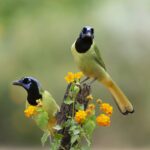
A bird repeatedly pecking at a window or fluttering against a car mirror is often trying to chase away what it believes is another bird. The reflected image looks like a rival inside its territory, and the bird responds by confronting it.
This behavior is especially familiar during the breeding season, when many birds defend the areas where they nest and raise young. It can be noisy and persistent, but understanding the cause makes the response straightforward: hide the reflection that is provoking the bird.
🐦 The Reflection Looks Like a Rival
A territorial bird can react to its reflection as though another member of its species has entered the area. It may approach the glass, spread its wings, peck, or repeatedly flutter toward the image. What looks puzzling from inside the house is a recognizable attempt to drive away a competitor.
The reflection makes an unusually persistent opponent because it remains whenever the bird returns. A short break in the tapping does not necessarily mean the situation has ended. If the reflective surface remains exposed, the bird can encounter the same apparent intruder again. Changing that surface is more useful than repeatedly interrupting the bird while leaving the image visible.
🌸 Why It Happens More During the Breeding Season
In many North American backyard species, territorial behavior becomes particularly noticeable in spring and early summer. Birds are establishing nesting areas, finding mates, and raising young, so another bird of the same species can be treated as a competitor. A window beside that defended area may repeatedly present an image that appears to challenge its occupant.
The timing varies with the species and local breeding season. Some birds stop after a short period, while others continue longer, particularly when they raise more than one brood. Reflection attacks can also occur outside the usual nesting months. The season provides a useful clue, but the bird’s behavior and the surface it is confronting matter too.
🪶 Which Birds Commonly Attack Their Reflections?
American Robins and Northern Cardinals are well-known examples, but bluebirds, California Towhees, Chipping Sparrows, and Song Sparrows may also confront their reflections. Birds that nest close to homes are especially noticeable because windows and vehicle mirrors sit within the areas they use.
Both males and females can show this behavior. Identifying the bird can help you understand what you are observing, but it does not change the first practical step. Whether the visitor is a cardinal at a patio door or a towhee at a parked car, look for the reflective surface that keeps attracting its attention.
🔎 Is Every Peck at a Window a Reflection Attack?
Birds visit windows for several reasons. A bird confronting its image may repeatedly flutter, posture, and peck at the same patch of glass. A bird quietly inspecting a frame could instead be searching for insects or spiders. The British Trust for Ornithology also notes that some birds, particularly tits in Britain, peck at window putty.
Accidental window collisions have another explanation: birds may mistake reflected scenery or a clear view through glass for somewhere they can fly. Observe from a distance rather than assuming every contact with a window is territorial.
| What you observe | Possible explanation |
|---|---|
| Repeated pecking, posturing, or fluttering at an image | The bird may be confronting a perceived rival. |
| Careful searching around frames, corners, or webs | The bird may be looking for food. |
| A direct flight into glass followed by a fall or apparent stunning | The bird may have suffered an accidental collision and needs prompt attention. |
For more about accidental collisions, read Why Do Birds Fly Into Windows?.
🩹 Can a Bird Hurt Itself?
Reflection attacks usually carry a lower risk of serious injury than a bird striking glass at speed. Even so, persistent fighting can cause exhaustion or minor injuries, and it takes time away from other activities. Hiding the image helps the bird stop spending energy on a confrontation it cannot resolve.
Seek advice from a licensed wildlife rehabilitator if a bird appears injured, cannot fly normally, or is found grounded after hitting the glass. A bird that seems temporarily stunned may have injuries that are not obvious. Keep pets away, avoid unnecessary handling, and follow the rehabilitator’s instructions. Do not offer an injured bird food or water.
🪟 How to Stop Attacks at a Window
The most direct approach is to obscure the reflection from outside. A temporary covering of paper, cardboard, or securely fitted fabric can hide the image. Cover the pane the bird is confronting, and check from outdoors that an exposed section is not still acting like a mirror. Choose an attachment method compatible with the window and frame, and keep the material secure.
An opaque soap coating is another temporary option recommended by bird-conservation organizations. It needs to mute the reflected image rather than leave most of the glass shiny. Check the window manufacturer’s care guidance before applying anything, particularly to coated glass, and renew the treatment if rain removes it. A small test area can help establish whether the material is suitable and removable.
For a longer-lasting approach, consider a properly fitted exterior screen or an appropriate exterior window film that reduces the misleading reflection. These options can also support collision prevention. Windows that are difficult to reach may require professional installation; assess exterior visibility without leaning or climbing into an unsafe position.
🧵 Why Closing the Curtains May Not Stop It
Curtains and blinds sit behind the glass, while the bird is responding to an image visible from outside. The reflection can remain even when the room is completely hidden. In some conditions, a darker background behind the glass makes the reflected image more prominent.
Check the result from the bird’s side of the window instead of judging it from indoors. If you can still see a recognizable reflection, the trigger remains. An exterior covering addresses that directly, while an indoor curtain may change the room’s appearance without removing the image the bird is confronting.
🚗 What to Do About Car Mirrors
When a bird attacks a parked vehicle’s side mirror, folding the mirror inward may hide or redirect the reflected image enough to help. If that does not work, use a securely fitted, non-reflective cover while the car is parked. The aim is to cover the mirror itself rather than place another shiny object beside it.
Remove every temporary cover and restore the mirrors to their proper driving positions before moving the vehicle. If the bird shifts its attention to a window or another reflective panel, parking elsewhere may provide a practical temporary solution. Check which surface is attracting it before choosing a cover, since hiding one mirror will not necessarily address another exposed reflection.
🪞 What About Garden Mirrors?
Garden mirrors can create the same problem. A bird may confront its reflected image, investigate it out of curiosity, or mistake reflected scenery for real space. The RSPB recommends removing or covering a garden mirror when birds are repeatedly reacting to it.
A securely fitted, non-reflective cover can provide an immediate response while you decide whether to remove the mirror permanently. Check that the whole reflective face is hidden, including any narrow uncovered strip around the edges. Observe from a distance to see whether the bird loses interest once the image is gone.
🔵 Can Bird Window Decals Help?
Decals designed for collision prevention can help make glass visible, and they may also discourage reflection attacks. For collision protection, they need to form a closely spaced pattern across the exterior pane. One sticker in a corner leaves most of the window unchanged.
If the bird continues confronting its image between the markings, use a temporary covering that hides the reflection more completely. The practical test is whether the image provoking the attacks remains available. For details about choosing and spacing markers, see Do Bird Window Decals Really Work?.
⏳ How Long Will the Behavior Last?
Many episodes settle within days or weeks, but there is no dependable deadline for every bird. Territorial activity can continue through a longer breeding period, and the bird may resume attacking if the reflection becomes visible again. A covering that works for one afternoon may need to stay in place longer.
Once the bird has stopped returning, you can try removing a temporary covering and watch from a distance. If the attacks resume, restore it. Keep accidental collision prevention in mind when making that decision: a window can remain dangerous to passing birds even after the territorial visitor loses interest. Our guide to 10 Ways to Make Your Windows Safer for Birds covers those longer-term options.
🔗 Related Articles
- Why Do Birds Fly Into Windows?
- Do Bird Window Decals Really Work?
- 10 Ways to Make Your Windows Safer for Birds
📚 Sources & Further Reading
- Cornell Lab of Ornithology: A Bird Keeps Attacking My Window or Car Mirror—What Should I Do?
- FLAP Canada: How to Stop Birds From Attacking Windows
- Audubon: Why Birds Attack Windows and Mirrors—and How You Can Stop Them
- British Trust for Ornithology: Window Strikes and Birds Attacking Windows
- RSPB: Why Blue Tits Peck at Garden Mirrors
- FLAP Canada: Bird-Window Collision Questions and Answers
- American Bird Conservancy: Bird-Safe Window Solutions for Homes
- FLAP Canada: What to Do When You Find an Injured Bird