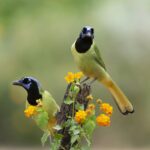
A bright orange beak can be one of the easiest field marks to notice when you are trying to identify an unfamiliar bird. Against black, white, gray, or brightly colored plumage, an orange bill can stand out from surprisingly far away.
But an orange beak alone usually is not enough to identify a bird. Bill color can change with age, sex, breeding season, and even lighting conditions. Some species have bills that are best described as orange-red, while others range from yellow-orange to deep tangerine.
Fortunately, when you combine bill color with the bird’s size, body shape, plumage, habitat, and location, the possibilities quickly become much easier to narrow down.
From enormous South American toucans to tiny Australian finches and elegant seabirds along sandy coastlines, here are nine fascinating birds with orange beaks and the clues that can help you identify them.
If you are still learning how to narrow down an unfamiliar bird, our Bird Identification Guide explains how to use bill shape, color, habitat, behavior, and other field marks together.
🐦 Birds With Orange Beaks at a Glance
| Bird | Scientific Name | Orange-Beak Clue | Typical Habitat |
|---|---|---|---|
| Toco Toucan | Ramphastos toco | Enormous orange bill with black tip | Savannas, woodland, forest edges |
| Northern Cardinal | Cardinalis cardinalis | Thick reddish-orange bill | Thickets, gardens, woodland edges |
| American Oystercatcher | Haematopus palliatus | Long orange-red bill | Beaches, mudflats, salt marshes |
| Atlantic Puffin | Fratercula arctica | Colorful orange breeding bill | North Atlantic coasts and islands |
| Mute Swan | Cygnus olor | Large orange bill with black base | Lakes, ponds, rivers, estuaries |
| Zebra Finch | Taeniopygia guttata | Small bright orange to red-orange bill | Dry grasslands and open country |
| Common Blackbird | Turdus merula | Male has orange-yellow bill | Gardens, parks, hedgerows, woodland |
| Orange-billed Sparrow | Arremon aurantiirostris | Brilliant orange bill | Humid tropical forest understory |
| Royal Tern | Thalasseus maximus | Long, bright orange bill | Warm coastlines and sandy beaches |
🧡 1. Toco Toucan

Few birds possess a bill as spectacular as the Toco Toucan (Ramphastos toco). Its enormous orange bill can look almost impossibly large compared with the rest of the bird, making this South American species one of the easiest orange-beaked birds to recognize.
The Toco Toucan is mostly black, with a white throat and upper breast, blue skin around the eye, red undertail feathers, and an enormous yellow-orange to orange bill ending in a prominent black tip.
Despite its appearance, the bill is relatively lightweight. It helps the toucan reach fruit growing on branches that may be too small to support the bird’s weight. Toco Toucans are primarily fruit eaters, although they may also consume insects, eggs, and small animals.
Their bills serve another surprising purpose: temperature regulation. A network of blood vessels inside the large bill allows the bird to release excess body heat.
Where Toco Toucans live
Unlike some toucans associated primarily with humid rainforest, the Toco Toucan frequently inhabits more open environments. Look for it in savannas, open woodland, gallery forests, palm groves, forest edges, plantations, and other landscapes with scattered trees across much of central and eastern South America.
Best identification clue: An enormous orange bill with a black tip combined with a mostly black body and brilliant white throat.
You can learn more about these extraordinary tropical birds in our complete Toucan Guide.
❤️ 2. Northern Cardinal

For many North American birdwatchers, the Northern Cardinal (Cardinalis cardinalis) may be the most familiar bird with an orange-red beak.
Adult males are unmistakable when seen clearly: brilliant red plumage, a pointed crest, a black mask surrounding the face, a long red tail, and a thick reddish-orange bill.
Females are more subtly colored. They are primarily warm brown or tan, but they still possess reddish highlights in the crest, wings, and tail. Their bright red-orange bills can be particularly noticeable against their subdued plumage.
That thick, triangular bill is designed for handling seeds, although cardinals also eat fruits and insects. They readily visit bird feeders and are especially attracted to sunflower seeds.
Where Northern Cardinals live
Northern Cardinals occur across much of the eastern and central United States and into Mexico and parts of Central America. They favor woodland edges, shrubby areas, thickets, parks, gardens, and suburban neighborhoods.
They usually remain within the same general region year-round rather than making long seasonal migrations.
Best identification clue: Look for a prominent crest, thick orange-red bill, and either bright red plumage in males or warm brown plumage with reddish accents in females.
🌊 3. American Oystercatcher

If you spot a chunky black-and-white shorebird walking along a beach with an exceptionally long orange-red bill, there is a good chance you are looking at an American Oystercatcher (Haematopus palliatus).
Adult American Oystercatchers have a black head and upper breast, white underparts, brownish upper wings, sturdy pinkish legs, yellow eyes surrounded by reddish eye rings, and a striking orange-red bill.
The bill is not merely decorative. Oystercatchers use it to deal with shellfish and other marine invertebrates, probing coastal habitats and opening prey such as oysters, clams, and mussels.
Their appearance is particularly dramatic when the brilliant bill and eye stand out against the otherwise dark-and-white plumage.
Where American Oystercatchers live
American Oystercatchers are coastal specialists. They occur on beaches, barrier islands, rocky shorelines, mudflats, salt marshes, and shellfish reefs.
In the United States, they are especially associated with the Atlantic and Gulf coasts, although the species has a much broader distribution through parts of the Americas.
Best identification clue: A large black-and-white shorebird with a long, straight, vivid orange-red bill and bright yellow eye.
🌊 4. Atlantic Puffin

With its upright posture, black-and-white plumage, and oversized colorful bill, the Atlantic Puffin (Fratercula arctica) is one of the most recognizable seabirds in the Northern Hemisphere.
Breeding adults develop a spectacular bill patterned with orange, yellow, gray, and darker markings. Their pale faces contrast sharply with black upperparts and white underparts, giving them the whimsical appearance that has earned puffins nicknames such as “sea parrots.”
That appearance changes outside the breeding season. The bill becomes smaller and duller, and the face takes on a grayer appearance. Juvenile puffins also have less dramatic bills.
Atlantic Puffins are highly adapted for life at sea. They use their wings to propel themselves underwater while pursuing small fish.
Where Atlantic Puffins live
Atlantic Puffins inhabit the North Atlantic and spend much of their lives at sea. During breeding season, they gather on rocky islands and coastal cliffs where they nest in burrows or protected crevices.
Birdwatchers in North America may encounter breeding colonies in portions of northeastern Canada and Maine, while major populations also occur around Iceland, the British Isles, Scandinavia, and other North Atlantic regions.
Best identification clue: A compact black-and-white seabird with a large triangular bill containing vivid orange during breeding season.
🦢 5. Mute Swan

The combination of pure white plumage and a vivid orange bill makes the Mute Swan (Cygnus olor) particularly easy to recognize.
Adults are enormous white waterbirds with exceptionally long necks that are often held in a graceful S-shaped curve. The bill is bright orange with black around the base, and adults possess a distinctive black knob where the bill meets the forehead.
The knob tends to be more prominent in males.
Young Mute Swans look considerably different. Cygnets may be grayish or whitish, and their bills are duller and lack the brilliant orange coloration of mature adults.
Where Mute Swans live
Mute Swans are native to parts of Europe and Asia but were introduced to North America, where established populations now occur in several regions.
They inhabit lakes, ponds, slow-moving rivers, coastal bays, estuaries, and urban park ponds.
Although elegant in appearance, Mute Swans can be highly territorial, particularly around nests and young. They can also compete with native waterfowl in areas where they have been introduced.
Best identification clue: An enormous white swan with a curved neck, orange bill, and conspicuous black knob at the base of the bill.
🐤 6. Zebra Finch

Not every bird with an orange beak is large or tropical. The tiny Zebra Finch (Taeniopygia guttata) carries one of the brightest bills relative to its body size.
Wild adult Zebra Finches are small, compact seed-eating birds. Males are especially attractive, with gray upperparts, orange cheek patches, black-and-white facial markings, barred throats, chestnut-colored sides dotted with white, and brightly colored bills.
Bill color varies somewhat between the sexes. Adult males generally have redder bills, while females tend toward orange or orange-red. Juveniles begin life with much darker bills.
Zebra Finches are highly social and may gather in substantial flocks, particularly around dependable sources of water.
Where Zebra Finches live
Zebra Finches are strongly associated with Australia’s dry interior, where they inhabit arid and semi-arid grasslands, open woodland, scrub, and areas near watercourses.
They are particularly well adapted to unpredictable rainfall and may breed rapidly when favorable wet conditions arrive.
The Zebra Finch is also widely kept in captivity, so many people encounter this species first as an aviary bird.
Best identification clue: A tiny gray finch with a brilliant orange or red-orange conical bill; males also have distinctive orange cheek patches.
🖤 7. Common Blackbird

The Common Blackbird (Turdus merula) provides one of the most dramatic examples of how an orange bill can transform an otherwise dark bird.
Adult males are largely glossy black, creating a striking background for their bright yellow-orange to orange bill and similarly colorful eye ring.
Females look very different. They are primarily brown, with lighter or mottled underparts, and their bills can range from brownish to yellowish rather than displaying the male’s vivid orange coloration.
Common Blackbirds belong to the thrush family and are accomplished singers. Males frequently sing from prominent perches, particularly during the breeding season.
They feed on a wide range of foods, including earthworms, insects, berries, and other fruits, often searching through lawns or leaf litter.
Where Common Blackbirds live
Common Blackbirds are widespread across Europe and also occur through portions of western Asia and North Africa. They have additionally been introduced into several other parts of the world.
They have adapted remarkably well to living around people and can be common in gardens, parks, farmland, hedgerows, woodland, and urban green spaces.
Best identification clue: An adult male that is almost completely black except for a brilliant orange-yellow bill and matching eye ring.
🌿 8. Orange-billed Sparrow

Some bird names make identification almost too easy. The Orange-billed Sparrow (Arremon aurantiirostris) is named for its unmistakable orange bill.
This attractive tropical sparrow is very different from the familiar brown sparrows many North American birdwatchers know. Depending on geographic variation, it typically combines a bold black-and-white head pattern with olive or greenish upperparts and pale underparts.
But the bright orange bill is the feature most likely to grab your attention.
Orange-billed Sparrows spend much of their time close to the forest floor, where they search through leaf litter and low vegetation for insects, spiders, seeds, and fruit.
Because they remain relatively low and can be surrounded by dense tropical vegetation, birders may hear movement in the leaf litter before getting a clear view.
Where Orange-billed Sparrows live
Orange-billed Sparrows are found from parts of southern Mexico and Central America into northwestern South America, including areas of Costa Rica, Panama, Colombia, Ecuador, and northern Peru.
They are primarily associated with humid tropical forests, particularly dense understory vegetation in lowland and foothill habitats.
Best identification clue: A striking tropical sparrow with a brilliant orange bill, contrasting head pattern, and habit of foraging close to the forest floor.
🧡 9. Royal Tern

Along warm coastlines, a long orange bill can point toward the elegant Royal Tern (Thalasseus maximus).
Royal Terns are large, sleek seabirds with pale gray backs, white underparts, pointed wings, black legs, and a distinctive shaggy black crest. Their long, dagger-shaped bills are a vivid orange that stands out sharply against their otherwise pale plumage.
Breeding birds have more extensive black on the crown, while nonbreeding adults develop a white forehead and retain black primarily toward the rear of the head.
Royal Terns are skilled fish hunters. They patrol above shallow coastal water before plunging down to capture small fish and crustaceans.
Where Royal Terns live
Royal Terns favor warm coastal environments and are often seen around sandy beaches, barrier islands, bays, estuaries, and shallow ocean waters.
They frequently gather in groups on open beaches and sandbars and may nest in dense colonies on sandy islands.
If you are birdwatching along the Atlantic or Gulf Coast of the United States, particularly in the Southeast, they can be a conspicuous presence.
Best identification clue: A large, pale tern with a shaggy black crest and a long, unmistakably bright orange bill.
🔎 How to Identify a Bird With an Orange Beak
Bill color is a wonderful starting point, but several very different birds can share an orange or orange-red bill.
Begin by considering the bird’s overall size. A Zebra Finch is tiny compared with a Mute Swan, while a Toco Toucan’s enormous bill immediately places it in an entirely different category.
Next, examine the shape of the bill.
A Northern Cardinal has a short, thick, triangular bill suited to cracking seeds. An American Oystercatcher has a long, straight bill adapted to feeding along shorelines. A Royal Tern carries a narrow, daggerlike bill for catching fish, while a Toco Toucan possesses an extraordinarily large bill designed to reach and manipulate food.
Habitat provides another powerful clue.
An orange-beaked bird standing beside saltwater could be an oystercatcher or tern. One swimming across a park lake might be a Mute Swan. A tiny bird in Australia’s dry grasslands could be a Zebra Finch, while an enormous orange bill among South American woodland strongly suggests a Toco Toucan.
Finally, consider age, sex, and season. Bill color is not always permanent. Atlantic Puffins become far more colorful during breeding season, juvenile Zebra Finches have dark bills, and female Common Blackbirds do not necessarily show the brilliant orange bill characteristic of adult males.
For more help narrowing down an unfamiliar bird, visit our complete Bird Identification Guide.
🆚 Quick Orange-Beak Identification Guide
| If You Saw… | Check First For… |
|---|---|
| Huge orange bill with black tip | Toco Toucan |
| Red bird with crest and orange-red bill | Northern Cardinal |
| Black-and-white shorebird with long orange-red bill | American Oystercatcher |
| Black-and-white seabird with colorful triangular bill | Atlantic Puffin |
| Huge white waterbird with orange bill | Mute Swan |
| Tiny gray finch with orange bill | Zebra Finch |
| Black songbird with orange-yellow bill | Common Blackbird |
| Tropical forest sparrow with brilliant orange bill | Orange-billed Sparrow |
| Pale coastal bird with long orange bill and black crest | Royal Tern |
❓ Frequently Asked Questions
What common bird has an orange beak?
In eastern North America, the Northern Cardinal is one of the most familiar backyard birds with an orange-red beak. Adult males are bright red, while females are brown with reddish highlights, but both sexes have thick reddish-orange bills.
What black bird has an orange beak?
The adult male Common Blackbird is an excellent match. It has nearly all-black plumage combined with a bright yellow-orange or orange bill and colorful eye ring. The species is especially common in Europe.
What black-and-white bird has an orange beak?
Several species fit that description. American Oystercatchers have black-and-white plumage with long orange-red bills, while breeding Atlantic Puffins combine black-and-white bodies with colorful bills containing bright orange. Royal Terns are also largely pale with black head markings and bright orange bills.
What large white bird has an orange beak?
The Mute Swan is one of the most recognizable examples. Adults have pure white plumage and a vivid orange bill with a black base and prominent black knob.
What small bird has an orange beak?
The Zebra Finch is an excellent example. These tiny Australian finches have bright orange to red-orange bills as adults. The Orange-billed Sparrow of Central and South America is another small bird with a particularly vivid orange bill.
Do birds’ beaks change color?
Yes. Bill color can change with age, sex, breeding condition, and season. Atlantic Puffins develop much more colorful bills during the breeding season, juvenile Zebra Finches have dark bills, and male Common Blackbirds generally show brighter bills than females.
❤️ Why Orange Beaks Are Such Useful Field Marks
Orange may be the first feature that catches your eye, but the real value of bill color comes when it is combined with other clues.
A bird’s bill tells you something about how it lives. Short, powerful bills can crush seeds. Long, narrow bills can reach into sand, mud, or water. Oversized bills may help birds manipulate fruit or regulate temperature. Sharp seabird bills make excellent tools for capturing slippery prey.
Learning to notice these differences turns a simple observation — “I saw a bird with an orange beak” — into a much stronger identification.
Look at the bill. Then notice the bird’s shape, plumage, behavior, habitat, location, and season.
Together, those clues can transform a momentary glimpse into a confident identification.
Continue exploring unfamiliar birds through our Bird Species Guide or browse the complete Bird Identification Guide.
🔗 Related Articles
- Bird Identification: How to Identify the Birds You See
- Bird Species Guide
- Toucan
- Birds With Red Chests: Identification Guide
- Backyard Birds of Florida: Identification Guide
📚 Sources
- Cornell Lab of Ornithology — Northern Cardinal
- Cornell Lab of Ornithology — American Oystercatcher
- Cornell Lab of Ornithology — Atlantic Puffin
- Cornell Lab of Ornithology — Mute Swan
- Cornell Lab of Ornithology — Royal Tern
- eBird — Toco Toucan
- BirdLife Australia — Zebra Finch
- RSPB — Blackbird
- American Ornithological Society — Orange-billed Sparrow